

When Austin temperatures reach triple digits, air conditioning becomes essential for business operations. A single breakdown can mean lost revenue and unhappy customers.
A commercial HVAC maintenance contract helps prevent those problems. It ensures that your system receives regular service and inspections throughout the year.
For Austin businesses, routine maintenance is not a luxury; it is protection against costly downtime. This guide explains what these agreements include, how they work, and how regular preventive service helps reduce operating costs while extending the life of your system.
Key Takeaways
- Regular maintenance prevents costly breakdowns. A commercial HVAC maintenance contract keeps your system running smoothly and avoids sudden failures during Austin’s long summers.
- Quarterly service fits Austin’s climate best. Four scheduled visits a year help your HVAC system handle heavy cooling demand and stay efficient year-round.
- Know what your contract includes. Always check which services, parts, and response times are covered so there are no surprises when you need help.
- Choose a trusted local partner. Work with a licensed Austin company like Abba HVAC that offers transparent pricing, reliable response, and experienced technicians.
What Is a Commercial HVAC Maintenance Contract?
A commercial HVAC maintenance contract is a written agreement between a business and an HVAC company. It defines what services will be provided, how often maintenance occurs, and how emergencies are handled.
This arrangement creates a predictable maintenance schedule. It keeps systems efficient, reduces surprise costs, and extends equipment lifespan.
Contract, Agreement, and Service Plan
These terms often appear together but differ slightly.
- A contract is a detailed legal document that outlines clear terms, pricing, and responsibilities.
- An agreement is less formal but still sets basic expectations.
- A service plan functions like a subscription. You pay a fixed fee for scheduled visits each year.
For most Austin companies, a flexible contract that combines structure and adaptability works best. It allows for growth and seasonal demands without added complexity.
Who Benefits from Maintenance Contracts in Austin
Commercial HVAC maintenance contracts support any Austin business that depends on consistent comfort and uptime. They are especially valuable for:
- Restaurants and Cafés: Keep kitchens and dining areas cool to protect food quality and ensure comfortable service.
- Retail Stores: Maintain pleasant shopping environments that encourage customers to stay longer.
- Office Buildings: Create stable indoor temperatures that boost productivity and air quality.
- Property Managers: Simplify scheduling and guarantee timely HVAC care across multiple units.
- Healthcare Facilities and Warehouses: Protect temperature-sensitive materials and maintain compliance with comfort and safety standards.
Routine maintenance prevents breakdowns during Austin’s summer peaks, stabilizes energy use, and lowers operational stress on equipment.
Results a Contract Should Deliver
A quality HVAC maintenance contract should guarantee real results, not just routine visits. It should deliver:
- Fewer Repairs: Early detection of wear and faulty parts prevents emergency breakdowns.
- Energy Efficiency: Clean filters, coils, and balanced airflow can cut energy use by 10–25%.
- Longer System Life: Regular care adds years to equipment performance, protecting your investment.
- Reliable Comfort: Consistent indoor conditions improve employee focus and customer satisfaction.
- Transparent Service: Detailed reports and fast response times ensure accountability.
A well-structured contract is more than maintenance; it’s an operating strategy that keeps Austin businesses productive, comfortable, and in control of long-term costs.
Plan Types and Service Frequency (Quarterly, Biannual, Annual)
Austin’s long cooling season demands consistent maintenance. Choosing the right commercial HVAC maintenance plan depends on your business size, system type, and usage patterns.
A good plan balances cost with reliability. It ensures your equipment runs efficiently, preventing expensive downtime during peak summer or sudden cold spells.
Basic vs. Comprehensive vs. Custom Plans
Every business has different needs. The table below shows how service levels typically vary.
| Plan Type | Frequency | Coverage | Ideal For |
|---|---|---|---|
| Basic | Twice a year | General inspection, filter cleaning, and minor adjustments | Small offices with light HVAC use |
| Comprehensive | Quarterly | Full inspection, tune-up, priority emergency service | Restaurants, retail, and high-use facilities |
| Custom | Tailored to operations | Site-specific services, duct checks, and extended reporting | Multi-location or complex commercial setups |
For example, a small professional office may need service twice yearly, while a restaurant kitchen in downtown Austin benefits from quarterly visits.
Recommended Schedules for Austin’s Climate
Austin’s climate demands a proactive approach to HVAC maintenance. Long, humid summers push cooling systems to their limits, while mild winters mean heating units need less frequent attention, but still benefit from regular checks to prevent off-season wear.
For most commercial buildings, a quarterly maintenance plan provides the ideal balance between reliability and cost control.
- Spring: Complete cooling inspection and coil cleaning before temperatures rise.
- Summer: Mid-season performance and efficiency check to reduce strain during peak operation.
- Fall: Heating system inspection, thermostat calibration, and air filter replacement.
- Winter: General system tune-up to prepare for temperature shifts and indoor air demands.
This schedule ensures consistent performance, extends equipment life, and prevents unexpected downtime during Austin’s hottest months, when repair response times and costs are highest.
Add-ons and Enhancements
Beyond basic maintenance, businesses can strengthen comfort and efficiency with tailored add-ons.
- Duct Cleaning: Improves airflow and reduces energy waste.
- Filter Replacement Programs: Maintain indoor air quality and reduce dust or allergens.
- Energy Audits: Identify inefficiencies and potential cost-saving upgrades.
- Indoor Air Quality (IAQ) Testing: Detect pollutants and maintain healthier work environments.
These enhancements help Austin businesses lower operating costs, improve employee comfort, and demonstrate a proactive commitment to building wellness.
Now that you understand the scheduling and add-on options, let’s explore what every commercial HVAC maintenance contract should include for maximum long-term value.
Scope of Work: What Your Contract Should Include
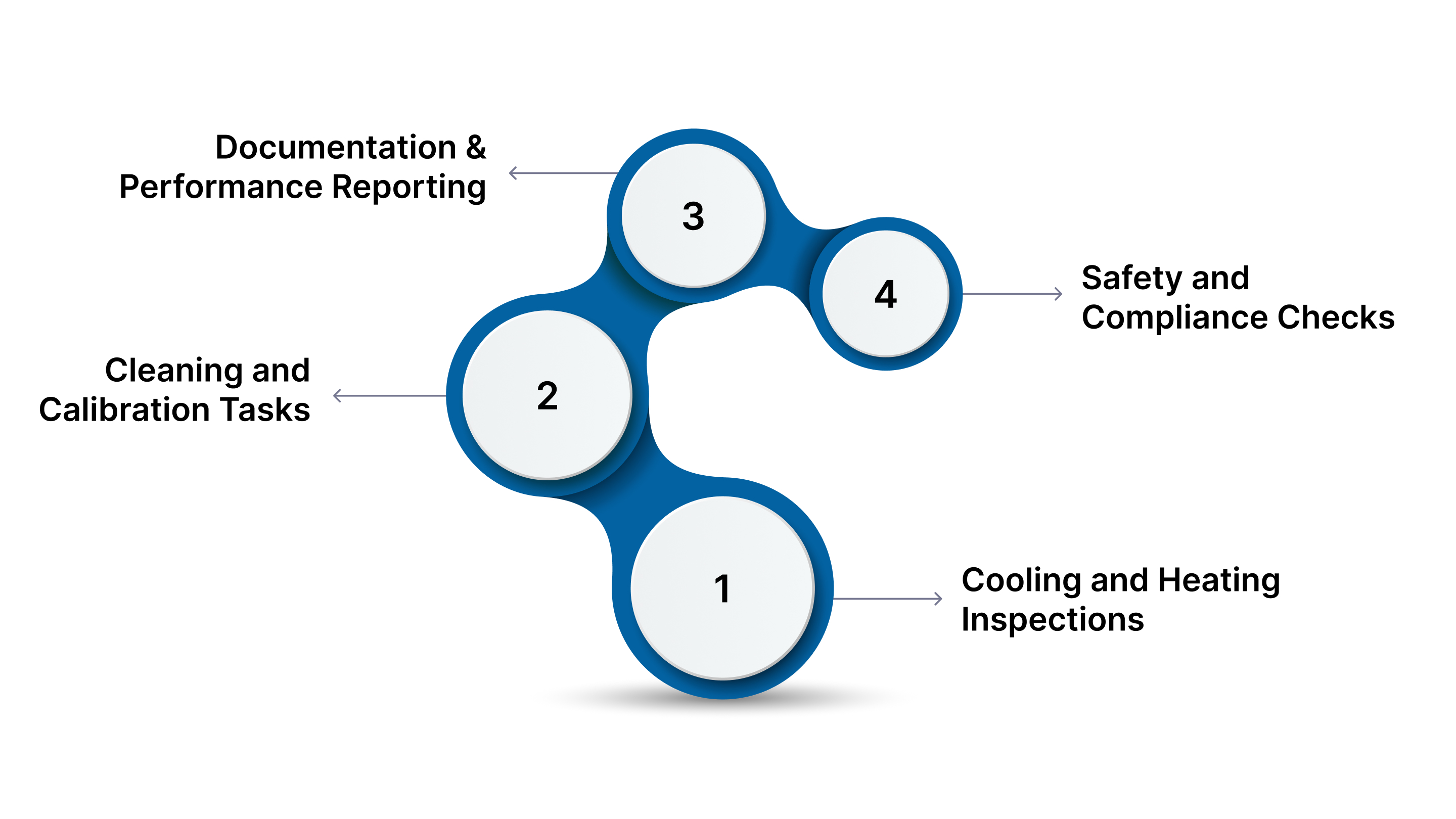
The scope of work is the heart of every maintenance agreement. It defines what tasks your technician will perform and how often.
A detailed scope prevents misunderstandings and ensures accountability between you and your HVAC provider.
Cooling and Heating Inspections
Each visit should include a full system inspection covering:
- Air conditioners, heat pumps, and rooftop units
- Thermostat calibration and control testing
- Refrigerant level checks
- Blower motor and belt inspection
These steps confirm that systems are safe and operating efficiently.
Cleaning and Calibration Tasks
Proper cleaning and calibration improve performance and prevent long-term damage. Key tasks include:
- Cleaning condenser and evaporator coils
- Flushing condensate drain lines
- Checking air filters and replacing them if needed
- Lubricating moving parts to reduce friction and noise
Technicians also measure airflow and system pressures to maintain balance and comfort.
Documentation and Performance Reporting
Reliable HVAC companies, such as Abba HVAC, always document each visit. Reports should include:
- Work completed
- Noted issues or recommendations
- Readings of system pressures and temperatures
Detailed documentation builds a maintenance history, making future troubleshooting faster and more accurate.
Safety and Compliance Checks
Austin businesses must comply with local safety and environmental standards. Regular checks should cover:
- Electrical safety and connection testing
- Verification of refrigerant handling certifications
- Carbon monoxide safety testing for heating systems
- Proper labeling and record-keeping for maintenance tasks
A complete scope of work ensures consistency, transparency, and compliance, protecting both your business and your HVAC investment.
Pro Tip: Ask for a copy of your technician’s inspection checklist after each visit. It helps you track what was done and identify recurring issues.
Inclusions, Exclusions, and Emergency Response SLAs
A strong commercial HVAC maintenance contract clearly defines what is covered and what is not. These details prevent confusion when service is needed most.
Austin businesses should always verify inclusions, exclusions, and emergency response times before signing an agreement. Doing so ensures both sides have realistic expectations.
Typical Inclusions
Most contracts include the following services:
- Scheduled inspections and tune-ups
- Filter cleaning or replacement
- Coil and drain cleaning
- Lubrication and adjustment of moving parts
- Refrigerant checks and minor top-ups
- Priority scheduling for emergency repairs
These items cover routine maintenance tasks that keep systems efficient and reliable year-round.
Common Exclusions
Even the best HVAC maintenance contracts have limits. Understanding what’s not included prevents frustration and unexpected costs later.
Typical exclusions include:
- Major Component Replacement: Parts such as compressors, coils, or fan motors are often excluded because they represent full equipment replacement rather than preventive maintenance.
- Repairs Due to Neglect or Damage: Issues caused by skipped maintenance, improper operation, or accidental impact are not covered under standard agreements.
- External Electrical or Structural Work: Electrical problems outside the HVAC system, such as power supply issues or wiring upgrades, are handled separately.
- System Redesign or Upgrades: If a unit is too old or undersized, upgrading to meet new performance standards falls outside normal maintenance coverage.
For instance, if an aging rooftop unit fails because of worn components, replacement would be billed as a separate project. Knowing these exclusions helps facility managers plan budgets more accurately and avoid unexpected repair costs.
Priority Response and SLAs
A Service Level Agreement (SLA) defines how quickly service teams respond when a problem occurs. For Austin businesses, these terms ensure comfort and continuity during critical hours.
Strong commercial HVAC contracts typically include:
- Emergency Response: Within 24 hours for unexpected system outages.
- Same-Day Service: During extreme heat or severe weather.
- Priority Scheduling: For preventive tune-ups and inspections.
Well-defined SLAs guarantee faster response, minimized downtime, and predictable service, key to keeping employees, customers, and operations comfortable during Texas heatwaves.
Pricing, Payment Terms, and How to Budget
Knowing how HVAC contracts are priced helps you plan long-term budgets and compare providers fairly. Prices vary based on system size, building type, and maintenance frequency.
Austin businesses should choose a plan that balances affordability with complete coverage. Paying less for fewer visits often leads to higher repair costs later.
Cost Drivers
Several factors affect the total cost of a maintenance contract:
- Number of systems: More units mean longer inspection times.
- System size and complexity: Larger rooftop or multi-zone systems require more labor.
- Accessibility: Hard-to-reach units increase service time and safety requirements.
- Frequency: Quarterly plans cost more per year but lower the risk of expensive failures.
- Optional add-ons: Energy audits, duct cleaning, or IAQ services can add value but increase price.
For small businesses in Austin, annual maintenance typically ranges from $300–$600 per unit, depending on the system type and plan details.
Payment Options
Reliable HVAC providers offer flexible payment structures, such as:
- Annual payments: One-time payment with possible discounts.
- Quarterly billing: Matches seasonal service visits.
- Monthly plans: Easier budgeting with smaller payments.
Discuss which schedule aligns best with your accounting cycle. Transparent pricing and clear invoices build trust between your business and your HVAC partner.
Parts and Labor Discounts
Many contracts include discounts on parts or repair labor. These savings help offset maintenance costs over time.
For example:
- 10–15% off replacement parts for contract holders
- Reduced hourly rates for after-hours emergency service
- Free diagnostic visits for active contracts
These benefits make preventive maintenance plans a smart investment rather than an added expense.
Pro Tip: Before signing, ask your provider to list all additional charges, such as diagnostic fees or overtime rates. This ensures complete cost transparency.
Measuring Value: Downtime, Energy, and Lifespan
A commercial HVAC maintenance contract should not be judged only by its cost. The real value lies in reduced downtime, energy savings, and longer system life.
Now that we have covered pricing, let us see how to measure performance and ensure your investment pays off.
Reducing Downtime
Downtime disrupts business operations. When an HVAC system stops, employees, customers, and products are affected.
Preventive maintenance reduces this risk through:
- Regular inspections that identify early warning signs
- Scheduled tune-ups before peak cooling or heating seasons
- Fast response times during emergencies
For example, a quarterly inspection can detect a weak capacitor before it causes a complete system failure.
Improving Energy Efficiency
Routine maintenance helps HVAC systems run more efficiently. Dirty coils, clogged filters, or low refrigerant levels force the system to use more power.
A clean and balanced system reduces monthly utility bills by up to 10–20 percent, depending on building size and usage.
Businesses in Austin benefit most when tune-ups are done before the summer season, as energy demand spikes sharply during hot months.
Extending Equipment Lifespan
Well-maintained systems last longer. Regular inspections catch minor issues before they become major repairs.
A commercial HVAC unit in Austin can last 15–20 years with consistent maintenance. Neglect can shorten that lifespan by half.
Keep a record of each service visit. Over time, this documentation shows a clear link between preventive care and performance.
Tracking ROI
To track return on investment (ROI):
- Compare your repair costs before and after starting a contract.
- Review monthly energy bills for efficiency gains.
- Monitor service reports for fewer recurring issues.
Over time, consistent data proves how maintenance agreements deliver value far beyond the service fee.
Choosing the Right HVAC Partner in Austin
Selecting the right HVAC contractor is as important as the contract itself. The best provider offers reliability, experience, and transparent communication.
Austin’s growing commercial sector has many HVAC providers, but only a few specialize in long-term business support.
10-Point Vendor Checklist
Before signing an agreement, evaluate your options carefully. Ask these ten questions:
- Is the contractor licensed and insured in Texas?
- How long have they served the Austin market?
- Do they provide 24/7 emergency service?
- Are technicians certified for commercial systems?
- Do they include full maintenance reports after each visit?
- What are their guaranteed response times?
- Are parts and labor warranties included?
- Can they service multiple locations under one plan?
- Do they have positive local references or testimonials?
- Are their pricing and payment terms clearly written?
This checklist ensures you choose a provider committed to safety, performance, and accountability.
Questions to Ask Before Signing
Go beyond the basics. Before finalizing your HVAC contract, ask:
- What specific maintenance tasks are included in each visit?
- How will emergencies outside business hours be handled?
- Are replacement parts of original manufacturer quality?
- How long is the contract term, and can it be adjusted as your business grows?
These questions help you find a service partner who understands your operations, not just your equipment.
Red Flags to Avoid
Some warning signs indicate an unreliable contractor:
- Vague service descriptions or missing task lists
- Prices that are unusually low without details
- No written SLAs or response commitments
- Lack of proof of insurance or certification
Pro Tip: A dependable HVAC partner should communicate clearly, follow a consistent schedule, and provide updates after every service visit. Consistency builds trust and ensures uninterrupted comfort.
Abba HVAC: Custom Commercial Maintenance Agreements
We’ve been serving the Greater Austin area since 2007, providing commercial clients with customized maintenance plans designed for long-term comfort, energy efficiency, and reliability.
In addition to HVAC, we also handle ductwork, basic electrical, and plumbing services, making us your one-stop provider for complete building comfort solutions.
Every agreement we create is flexible. We tailor each plan to match your building size, system type, and business hours, ensuring your maintenance schedule fits your operation, not the other way around.
Our focus is on building lasting partnerships, not just responding to service calls.
Plan Features
- Each of our commercial HVAC maintenance agreements includes:
- Quarterly inspections are designed for Austin’s long cooling season
- Full-system tune-ups for both heating and cooling units
- 24/7 emergency response with guaranteed priority service
- Comprehensive performance reports after every visit
- Exclusive discounts on parts and labor for active clients
These features provide year-round comfort, predictable costs, and peace of mind knowing your systems are always performing efficiently.
We proudly serve businesses across:
- Austin
- Cedar Park
- Round Rock
- Georgetown
- Leander
- Pflugerville
Every client receives what we call “Dad-level care and professional-grade service.” Our licensed and insured technicians deliver reliable, responsive support, backed by nearly two decades of experience in keeping Central Texas comfortable.
Conclusion
A well-structured commercial HVAC maintenance contract is one of the most valuable tools a business can have. It keeps comfort systems running smoothly, prevents unexpected breakdowns, and protects your investment through every Austin season.
Now that we have covered the essential elements, plan types, scope, pricing, and provider selection, you can make informed decisions with confidence.
Reliable HVAC maintenance is more than routine service; it’s a long-term business strategy that ensures comfort, safety, and consistent performance.
To turn that strategy into action, partner with a trusted local expert. Contact Abba HVAC today to create a maintenance agreement tailored to your building’s needs, schedule, and budget.
FAQs
1. How much does a commercial HVAC maintenance contract cost in Austin?
Costs vary based on system size and plan frequency. Most businesses pay between $300 and $600 per unit each year for routine maintenance.
2. How often should commercial HVAC systems be serviced?
Quarterly maintenance works best for Austin’s extended cooling season. Systems should be inspected before summer and winter to prevent seasonal failures.
3. Are replacement parts covered under maintenance contracts?
Standard contracts cover labor for routine visits but not major part replacements. You can add parts coverage or warranty extensions as upgrades.
4. Can I use an online contract template?
You can use a template as a reference, but it should always be customized to meet Austin’s building codes, safety rules, and climate conditions.
5. What happens if I skip maintenance visits?
Skipping visits increases the risk of breakdowns, higher energy bills, and shorter equipment lifespan. Consistent maintenance keeps performance steady year-round.