A reliable HVAC system is the backbone of every commercial building, keeping employees comfortable, operations steady, and energy bills under control. That’s why preventive maintenance is so important. It ensures your system runs efficiently year-round instead of breaking down when you need it most.
According to the U.S. Department of Energy (DOE), the goal for the next decade is to reduce the all-in installed cost of HVAC, water heating, and refrigeration equipment by 50% for American families and businesses. This national effort underscores how crucial efficient HVAC systems and proper maintenance are for long-term cost savings and sustainability.
In this guide, we’ll break down what commercial HVAC preventive maintenance involves, why it matters, and how it helps your business save money while improving comfort and reliability.
Key Highlights
- Preventive maintenance = long-term savings. Regular care keeps your HVAC running efficiently, cutting energy costs by up to 40%.
- Comprehensive coverage. Includes filter changes, coil cleaning, refrigerant checks, thermostat calibration, and airflow inspection.
- System-specific plans. Rooftop units, VRF systems, chillers, and split systems each need tailored maintenance schedules.
- Neglect costs more. Poor maintenance leads to breakdowns, uneven temperatures, and shortened equipment life.
- Seasonal strategy matters. Schedule maintenance in spring and fall to prep for heavy-use seasons.
- Partner with professionals. Licensed teams like Abba HVAC provide reliable, energy-efficient commercial service and 24/7 support.
What Is Commercial HVAC Preventive Maintenance?
Commercial HVAC preventive maintenance involves routine inspections, cleaning, and servicing of heating, ventilation, and air conditioning systems to prevent breakdowns and maintain peak efficiency.
Unlike residential systems, commercial units are larger, more complex, and run continuously to support operations. This makes consistent maintenance critical, not only to preserve comfort but to avoid costly repairs and unexpected downtime.
Common System Types and Their Maintenance Needs
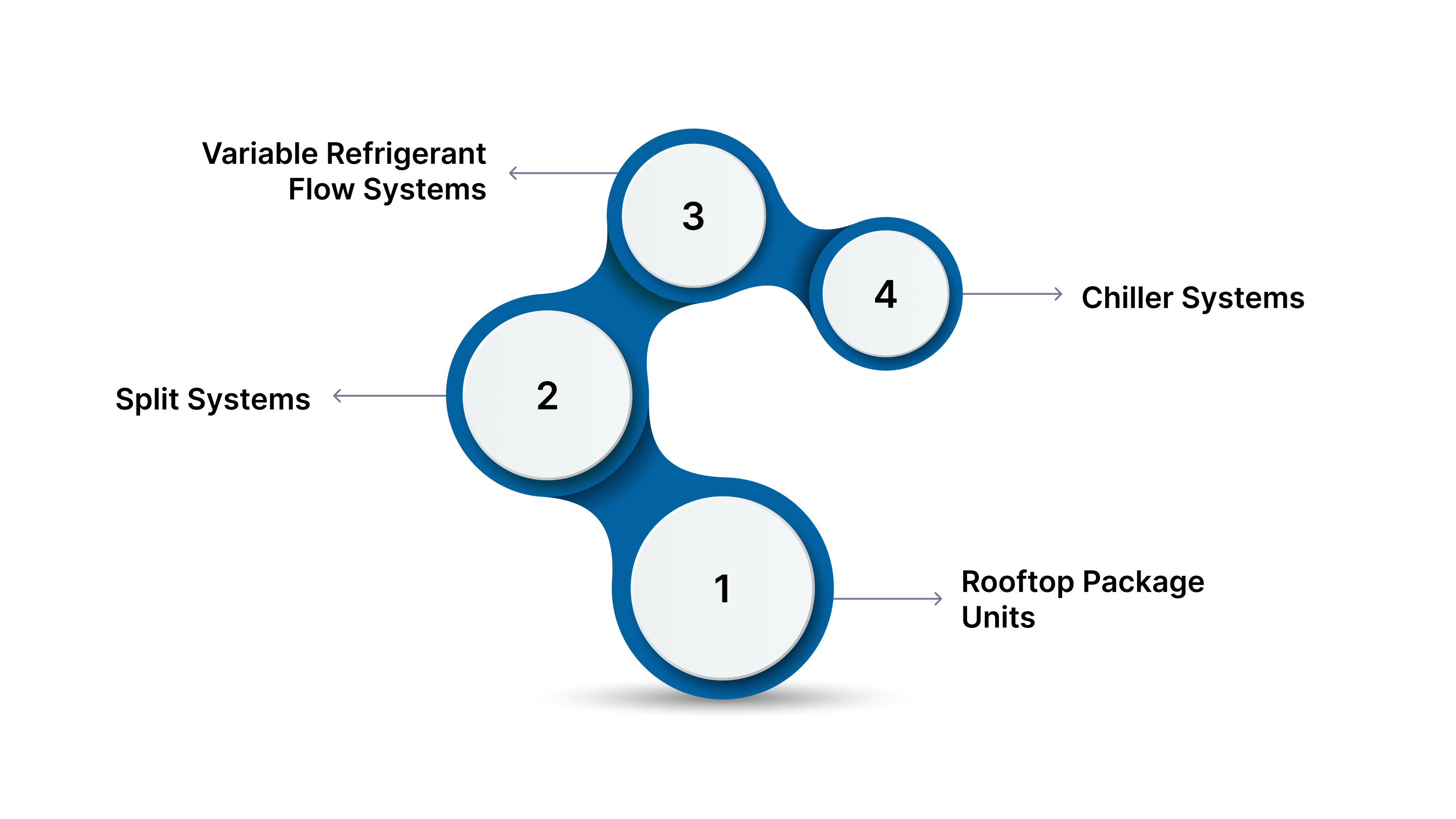
Different types of commercial HVAC systems require varying approaches to maintenance. Understanding the specific needs of your setup helps ensure optimal performance and efficiency.
- Rooftop Package Units: All-in-one systems that combine heating and cooling in a single outdoor unit. Maintenance includes quarterly inspections, condenser coil cleaning, air filter changes, and refrigerant checks.
- Split Systems: Common in smaller commercial spaces, these systems have separate indoor and outdoor units. Maintenance should include air handler servicing, outdoor unit cleaning, refrigerant line inspection, and thermostat calibration.
- Variable Refrigerant Flow (VRF) Systems: These advanced systems offer simultaneous heating and cooling. They require specialized maintenance that includes electrical component testing, refrigerant monitoring, and control system verification.
- Chiller Systems: Found in larger buildings, chillers need regular water treatment, tube cleaning, and compressor upkeep. Cooling tower maintenance is especially critical to prevent reduced efficiency and high energy costs.
Keeping up with the specific maintenance needs of your HVAC system type helps prevent unexpected failures and costly downtime. Schedule your commercial HVAC preventive maintenance with Abba HVAC today for expert care, lower costs, and lasting comfort.
Next, let’s explore what’s included in a comprehensive commercial HVAC preventive maintenance plan.
What’s Included in a Commercial HVAC Preventive Maintenance Checklist?
A preventive maintenance plan covers all the essential checks and services needed to keep your commercial HVAC system running efficiently, safely, and within warranty requirements. Regular inspections help detect small issues before they grow into costly breakdowns.
Here’s what’s typically included:
- Air Filter Replacement: Keeps indoor air clean and prevents airflow blockages.
- Coil Cleaning (Evaporator & Condenser): Improves efficiency and prevents system overheating.
- Refrigerant Level Check: Ensures optimal cooling and prevents compressor strain.
- Thermostat Calibration: Verifies accurate temperature control and consistent comfort.
- Electrical System Inspection: Detects faulty wiring or loose connections early.
- Ductwork Inspection & Cleaning: Enhances airflow and maintains air quality.
- Belt & Motor Lubrication: Reduces wear and tear on moving parts.
- Drain Line & Pan Cleaning: Prevents water buildup, leaks, and mold growth.
- System Performance Testing: Confirms balanced airflow and energy efficiency.
Together, these steps keep your system performing at its best, extending its lifespan and avoiding costly downtime.
Recommended Commercial HVAC Maintenance Schedule
Commercial HVAC systems run harder and longer than residential ones, so they require a more structured maintenance routine. Staying on schedule helps prevent costly surprises and keeps energy performance consistent year-round.
Here’s a simple breakdown:
- Quarterly (Every 3 Months): Replace air filters, inspect thermostats, clean coils, and check refrigerant levels.
- Biannual (Spring & Fall): Conduct a full system inspection before seasonal temperature changes, ensuring both heating and cooling functions are ready.
- Annually: Perform deep cleaning, duct inspection, electrical testing, and performance optimization to extend the system’s lifespan.
Many facility managers find that a quarterly maintenance plan strikes the best balance between cost and reliability.
The Cost of Neglecting Commercial HVAC Maintenance
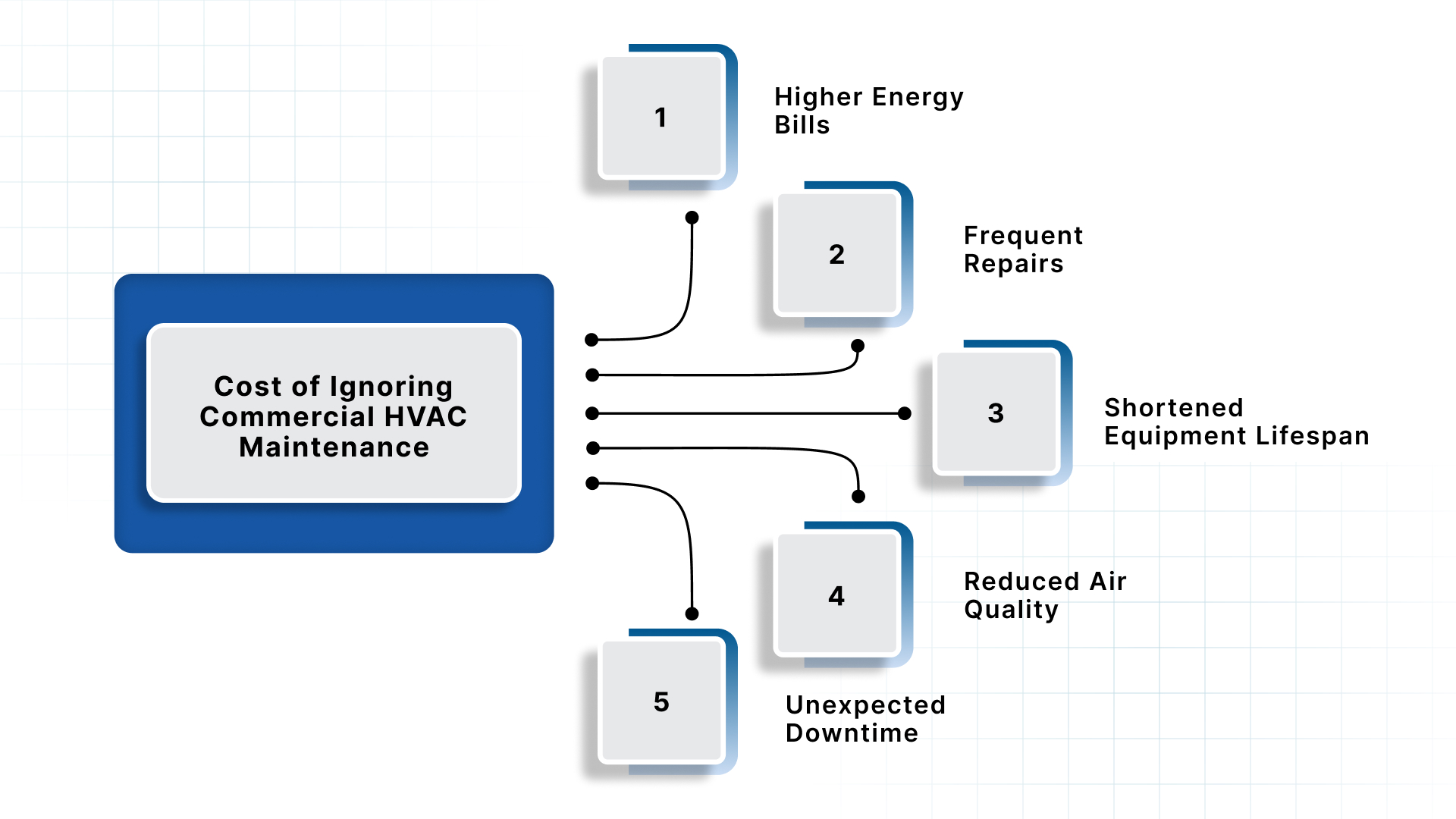
Skipping or delaying HVAC maintenance might seem like a short-term cost saver, but it often leads to much higher expenses in the long run. Poorly maintained systems lose efficiency, experience frequent breakdowns, and can even compromise indoor air quality and employee comfort.
Here’s what neglecting maintenance can cost your business:
- Higher Energy Bills: Dust-clogged coils, dirty filters, and refrigerant leaks force your system to work harder, increasing energy use by up to 30%.
- Frequent Repairs: Minor issues like worn belts or loose wiring can turn into expensive component failures if not addressed early.
- Shortened Equipment Lifespan: Regular tune-ups can extend system life by several years; neglect does the opposite.
- Reduced Air Quality: Dirty ducts and filters circulate allergens and pollutants, affecting employee health and productivity.
- Unexpected Downtime: A sudden HVAC breakdown can disrupt operations and cause customer discomfort, especially during peak business hours.
Preventive maintenance isn’t just about saving on repair costs; it’s about ensuring consistent performance, comfort, and reliability.
Next, let’s see how Abba HVAC helps businesses keep their systems efficient, reliable, and compliant year after year.
Trusted by Texas Businesses for Over a Decade: Abba HVAC
When it comes to maintaining complex commercial HVAC systems, experience and precision matter. Abba HVAC has been helping Texas businesses, from office complexes to retail centers, keep their systems performing efficiently, safely, and reliably year after year.
Our technicians provide:
- Customized preventive maintenance plans tailored to your building type and usage.
- Energy-efficient optimization that helps lower operating costs.
- Detailed inspection reports for compliance and equipment tracking.
- 24/7 emergency support to minimize downtime and disruptions.
With a proactive maintenance strategy from Abba HVAC, you can focus on running your business, while we make sure your climate control never misses a beat.
Smart Seasonal Strategies for Reliable HVAC Performance
Every season brings its own challenges for commercial HVAC systems. Following a seasonal maintenance plan helps ensure your system runs efficiently year-round, preventing sudden failures and optimizing energy use during peak months.
Here’s a quick breakdown of what to focus on each season:
- Spring: Inspect and clean coils, replace air filters, and test the cooling function before summer demand.
- Summer: Monitor refrigerant levels, clear condensate drains, and ensure thermostats and sensors are calibrated.
- Fall: Switch focus to heating, inspect burners, heat exchangers, and safety controls while cleaning ducts and vents.
- Winter: Check airflow balance, inspect belts and motors, and schedule mid-season performance checks for consistent comfort.
Regular seasonal maintenance not only boosts energy efficiency but also extends your HVAC system’s lifespan and reliability.
Final Words
Commercial HVAC preventive maintenance isn’t just a checklist; it’s an investment in your business’s comfort, safety, and long-term savings. Regular tune-ups ensure every component runs efficiently, energy bills stay predictable, and your system lasts years longer with fewer emergencies.
When maintenance is done proactively, it protects both your bottom line and your peace of mind. Keep your business running smoothly all year long with Abba HVAC’s expert commercial maintenance services. From rooftop units to chillers, their licensed technicians provide reliable, energy-efficient care that prevents costly downtime.
Schedule your preventive maintenance with Abba HVAC today and experience the difference a professional partner makes in your system’s performance and longevity.
FAQs
1. How often should commercial HVAC systems be serviced?
Most commercial HVAC systems should receive preventive maintenance at least twice a year, once before cooling season (spring) and once before heating season (fall). High-use or mission-critical facilities may benefit from quarterly service for consistent performance.
2. What’s the difference between preventive and reactive HVAC maintenance?
Preventive maintenance is scheduled, proactive care aimed at preventing breakdowns and extending system life. Reactive maintenance, on the other hand, happens after a failure, often costing more in repairs, energy use, and downtime.
3. How long does a commercial HVAC maintenance visit take?
The duration depends on the system size and complexity. Most routine visits take 1–3 hours, while large multi-unit systems may require a full day for comprehensive inspection and cleaning.
4. Does preventive maintenance really save money?
Yes. Studies show that preventive maintenance can reduce overall HVAC costs by up to 40% through improved efficiency, fewer breakdowns, and longer equipment lifespan, making it a smart long-term investment.
5. What happens if commercial HVAC maintenance is neglected?
Neglecting maintenance can lead to poor air quality, higher energy bills, frequent breakdowns, and even early system failure. Over time, this can cause significant comfort loss and financial strain on your business operations.