
A well-functioning gas furnace keeps your home warm, safe, and energy-efficient during colder months, but even the best system has a lifespan. Many homeowners wonder: how long do gas furnaces last, and when is the right time to replace one?
On average, a gas furnace can last between 15 to 20 years with proper maintenance and quality installation. However, several factors, from usage patterns to component wear, can influence how long yours will continue operating efficiently.
In this blog, we’ll explore the typical lifespan of gas furnaces, key signs of ageing systems, and when replacement makes more sense than another repair.
Key Highlights
- Most gas furnaces last 15–20 years, depending on maintenance, installation quality, and usage patterns.
- ENERGY STAR recommends planning for replacement after 15 years to improve efficiency and reduce long-term costs.
- Factors like poor maintenance, incorrect installation, humidity, and inadequate ventilation can shorten a furnace’s lifespan.
- Watch for rising energy bills, frequent repairs, uneven heating, and strange noises, all signs that your furnace may need replacement.
- Extend your furnace’s life with annual tune-ups, clean filters, balanced airflow, and proper ventilation.
- Partnering with a licensed, reliable HVAC professional ensures safe installation, regular upkeep, and long-term performance.
How Long Do Gas Furnaces Last?
The lifespan of a gas furnace largely depends on its brand, installation quality, and maintenance routine. While most units are built to last around two decades, their performance may begin to decline after 15 years.
Another practical guideline from the ENERGY STAR® program highlights that homeowners should start planning for replacement once a furnace is older than 15 years. ENERGY STAR-qualified units are at least 15% more efficient than standard models and can deliver substantial long-term savings, especially as older systems gradually lose efficiency over time.
What Factors Can Shorten the Lifespan of a Furnace?
Even a high-quality gas furnace can wear out faster if it’s exposed to poor conditions or improper installation. Recognizing the factors that shorten furnace life helps you take preventive steps to protect your system and avoid unexpected breakdowns.
Key factors that can shorten furnace lifespan:
- Irregular maintenance: Skipping annual inspections or cleanings allows dirt, soot, and wear to build up, straining vital components over time.
- Poor installation: Incorrect sizing, misaligned ducts, or poor airflow balance force the furnace to run longer and harder, reducing efficiency and lifespan.
- Neglected air filters: A clogged filter limits airflow, causing overheating and added stress on the blower motor and heat exchanger.
- High humidity or moisture exposure: Furnaces installed in damp basements or poorly ventilated areas are more prone to rust, corrosion, and electrical issues.
- Improper location: Installing the furnace in tight or dusty spaces can restrict ventilation, overheat components, and increase the risk of premature failure.
- Inadequate ventilation: Poor airflow around the unit traps heat and combustion gases, leading to reduced performance and potential safety hazards.
- Frequent on/off cycling: Short cycling due to thermostat issues or poor system design causes extra wear on mechanical and ignition parts.
- Ignoring small repairs: Overlooking unusual noises, smells, or leaks can turn minor problems into major damage that shortens overall system life.
When a furnace starts showing signs of wear or reduced performance, it’s often the result of one or more of these factors building up over time.
Recognizing these early warning signs can help you decide whether a repair will do the job, or if it’s time to start planning for a full replacement.
Common Signs It’s Time to Replace Your Furnace
No furnace lasts forever, and while most systems give years of reliable service, they often start showing subtle signs of decline before failing. Recognizing these early warnings can help you plan, avoid emergency breakdowns, and make a smart replacement decision on your schedule.
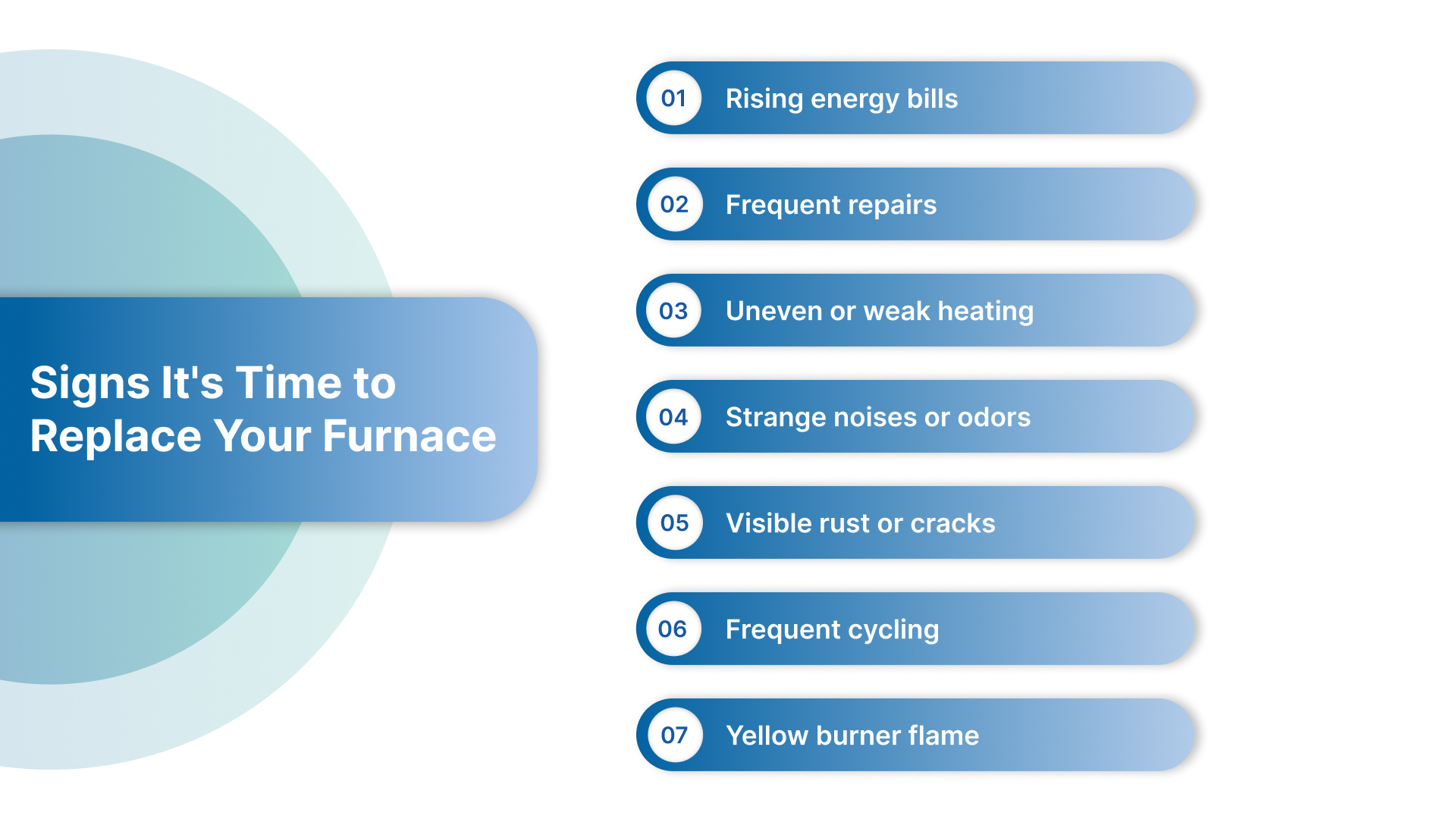
Here are the most common signs your furnace may need replacement soon:
- Rising energy bills: If your heating costs are climbing despite consistent usage, it’s a sign your furnace is losing efficiency. Older units have to work harder to maintain the same comfort level.
- Frequent repairs: Repeated service calls within a short period often mean internal components are wearing out, and repair costs may soon outweigh replacement.
- Uneven or weak heating: If some rooms stay cold while others overheat, your system’s airflow or heat output may no longer be balanced.
- Strange noises or odors: Rattling, buzzing, or popping sounds can point to worn parts or motor issues, while burning smells may indicate dust buildup or electrical faults.
- Visible rust or cracks: Corrosion or damage to the heat exchanger can lead to dangerous carbon monoxide leaks and reduced system safety.
- Frequent cycling: If your furnace turns on and off too often, it may be struggling to maintain temperature due to efficiency loss or thermostat problems.
- Yellow burner flame: A healthy furnace flame should burn steady and blue; a yellow or flickering flame can signal incomplete combustion or a ventilation issue.
While replacement may be inevitable for older systems, taking care of your furnace through consistent maintenance and smart operation can significantly delay that day.
Let’s look at a few practical ways to extend the lifespan of your gas furnace and keep it running efficiently for years to come.
How to Extend the Lifespan of Your Gas Furnace
While no furnace lasts forever, regular upkeep and a few preventive steps can significantly extend its service life. By maintaining clean airflow, scheduling professional inspections, and addressing small issues promptly, you can keep your system efficient and reliable for many winters to come.
Here are key ways to help your furnace last longer:
- Schedule annual maintenance: A professional HVAC tune-up ensures your system runs safely and efficiently. Technicians can identify issues like worn belts, dirty burners, or low airflow before they cause breakdowns.
- Replace air filters regularly: Dirty filters restrict airflow, forcing your furnace to work harder. Replacing them every 1–3 months improves performance and reduces unnecessary strain.
- Maintain proper ventilation: Keep vents, ducts, and exhaust pipes clear of blockages to ensure proper air circulation and prevent overheating or carbon monoxide buildup.
- Monitor thermostat settings: Avoid constantly changing temperature settings. Consistent operation helps reduce stress on components.
- Ensure correct installation and duct sealing: Poor installation or leaky ducts cause inefficiency and premature wear. Having ducts inspected and sealed maintains even airflow and energy savings.
- Keep the area around the furnace clean: Dust, debris, and clutter can restrict air intake and pose a fire hazard. Maintain a clear space of at least three feet around your unit.
- Address minor issues early: Strange noises, inconsistent heating, or short cycling often signal problems that can worsen if ignored. Quick repairs protect key components and extend your furnace’s life.
A well-maintained gas furnace can easily exceed 20 years of service, saving you money on both repairs and energy costs over time.
Keep Your Home Warm and Efficient with Abba HVAC
When your furnace starts showing signs of wear, you need more than a quick fix; you need a trusted team that understands comfort, efficiency, and long-term reliability. That’s where Abba HVAC comes in.
With nearly two decades of experience serving homes and businesses, Abba HVAC provides comprehensive heating repair, replacement, and maintenance services designed to keep your system performing at its best, season after season.
Instead of pushing unnecessary replacements, our certified technicians take the time to diagnose the real issue, extend system life where possible, and ensure every installation meets top safety and efficiency standards.
Here’s what makes Abba HVAC the right choice for your furnace needs:
- Expert Heating Repair: From faulty igniters to airflow problems, our team quickly identifies and resolves heating issues to restore comfort fast.
- Energy-Efficient Replacements: When it’s time for a new system, we recommend modern, ENERGY STAR-qualified furnaces that improve comfort and cut energy costs.
- Preventive Maintenance Programs: Regular tune-ups help detect wear early, extend furnace life, and maintain peak efficiency all year round.
- Full-Service HVAC Expertise: Beyond heating, we offer complete HVAC, ductwork, plumbing, and electrical solutions, keeping every system in sync.
- Licensed, Insured, and Local: Fully licensed and insured since 2007, Abba HVAC delivers professional-grade service with the personal care homeowners trust.
With Abba HVAC, you can count on precise workmanship, honest advice, and long-term comfort backed by years of local expertise.
Final Words
A well-maintained gas furnace doesn’t just keep your home warm; it protects your comfort, safety, and long-term energy savings. While most furnaces can last around two decades, planning ahead and responding to early signs of wear ensures you’re never caught off guard in the middle of winter.
Whether your system needs a tune-up, a repair, or a full replacement, Abba HVAC delivers dependable, professional service built on years of experience and customer trust. With licensed technicians, transparent recommendations, and 24/7 availability, we help you stay comfortable and confident in your home year-round.
Ready to make your furnace last longer or explore efficient replacement options? Contact Abba HVAC today for expert guidance and reliable service you can count on.
FAQs
1. How long do gas furnaces typically last?
Most gas furnaces last between 15 and 20 years, depending on factors like maintenance, installation quality, and usage. Regular tune-ups and clean filters can help extend their lifespan even further.
2. When should I consider replacing my furnace?
If your furnace is over 15 years old, requires frequent repairs, or causes rising energy bills, it’s time to plan for a replacement. ENERGY STAR recommends upgrading to a newer, more efficient model to save on energy costs.
3. Can a gas furnace last more than 20 years?
Yes, with proper care and ideal conditions, some furnaces can last up to 25 years. However, older systems lose efficiency over time, so replacement may be more cost-effective in the long run.
4. What maintenance helps extend furnace life?
Schedule annual professional inspections, replace air filters regularly, clean vents and ducts, and ensure proper ventilation. Addressing small issues early prevents major breakdowns and helps your furnace run efficiently year after year.
5. How can Abba HVAC help with furnace maintenance and replacement?
Abba HVAC offers expert heating repair, energy-efficient replacements, and preventive maintenance tailored to your home. With 24/7 service and certified technicians, we help ensure reliable heating and lasting comfort.