_____________________________________________________________________
When it comes to heating and cooling your home or business, choosing the right system can significantly impact your comfort and energy bills. The cost difference between mini-split heat pump and HVAC system is one of the most important factors to consider, along with efficiency and performance.
The cost, efficiency, and performance of these systems vary, which can influence both upfront and long-term expenses. Whether upgrading an old system or installing a new one, it's essential to weigh these factors carefully.
In this article, let's explore the breakdown of mini-split heat pumps and HVAC systems, compare their pros and cons, and help determine which option is most suitable for your needs.
At a glance
Mini-split heat pumps offer energy-efficient heating and cooling without the need for ductwork, making them ideal for homes without existing ducts.
Traditional HVAC systems use ducts for heating and cooling, suitable for larger homes or spaces with existing ductwork.
Mini-split systems provide zoning control, allowing for individual room temperature adjustments, reducing energy waste.
Upfront costs for mini-splits can be higher than HVAC systems, but they offer long-term energy savings due to their efficiency.
Both systems require proper installation and regular maintenance for optimal performance and longevity.
What Is a Mini-Split?
A mini-split is a type of ductless heating and cooling system that provides both heating and cooling without the need for ductwork. It consists of an outdoor unit connected to one or more indoor units, allowing for precise temperature control in individual rooms or zones.
Mini-split systems are ideal for homes or businesses that don't have existing ducts or where flexibility and energy efficiency are a priority.
Pros & Cons of Mini-Split
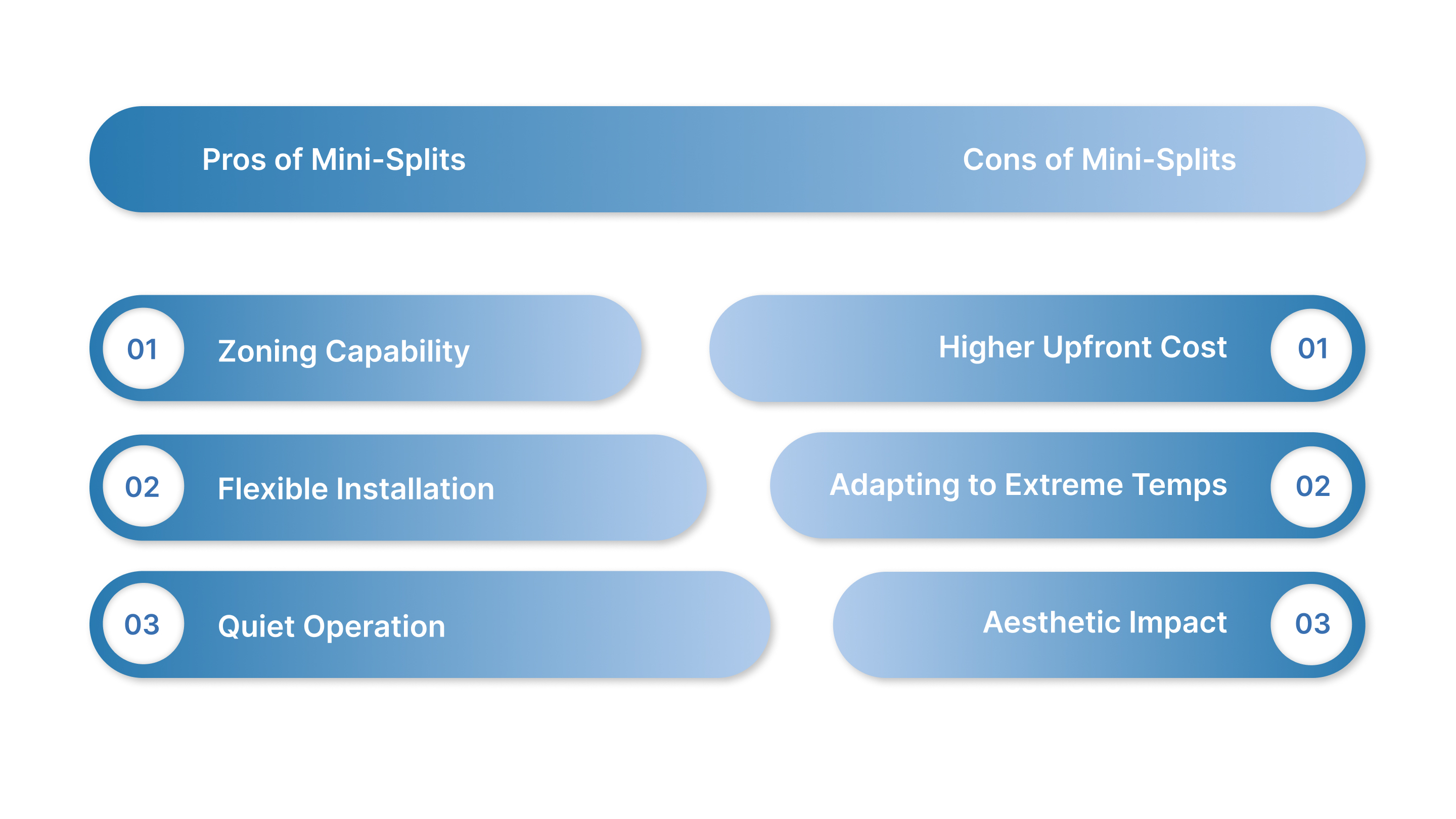
Pros of Mini-Splits:
Zoning Capability: Mini-splits allow independent temperature control for each room or zone, reducing energy waste by only conditioning the areas in use. This is especially useful in multi-story homes or spaces with varying temperature needs.
Flexible Installation: Mini-split systems can be installed in homes without ducts, older buildings, or rooms like sunrooms or garages, making them a versatile solution for heating and cooling hard-to-reach areas.
Quiet Operation: Mini-splits operate at whisper-quiet levels, with some models producing noise as low as 19 decibels, which is quieter than a whisper or rustling leaves.
Cons of Mini-Splits:
Higher Upfront Cost: Installing a multi-zone mini-split system can be costly due to the need for multiple indoor units. However, the energy savings over time can offset the higher initial investment.
Performance in Extreme Temperatures: While some high-performance models work well in cold conditions, mini-splits may lose efficiency in freezing temperatures, requiring additional heating sources in harsher climates.
Aesthetic Impact: The indoor units of mini-splits are mounted on walls, which may affect the visual appeal of your space. Although sleeker models exist, their placement still requires thoughtful consideration to balance style and function.
Ideal For:
Homeowners without existing ductwork or those seeking energy-efficient zoning.
Businesses require precise temperature control in individual rooms or spaces.
Room additions or spaces like garages and sunrooms that need efficient heating and cooling solutions.
Now that you know the pros, cons, and ideal applications of mini-splits, let's look into what a traditional HVAC system is and how it compares to mini-split systems in terms of functionality and efficiency.
What Is a Traditional HVAC System?
A traditional HVAC system typically consists of two primary components: a furnace for heating and an air conditioner (AC) for cooling. These systems rely on ductwork to distribute conditioned air throughout the building.
The furnace heats the air in the winter by burning gas or using electricity, while the AC cools the air in the summer through refrigeration. Unlike mini-split heat pumps, which offer heating and cooling in one system, traditional HVAC systems require separate units for each function.
Pros & Cons of Traditional HVAC Systems
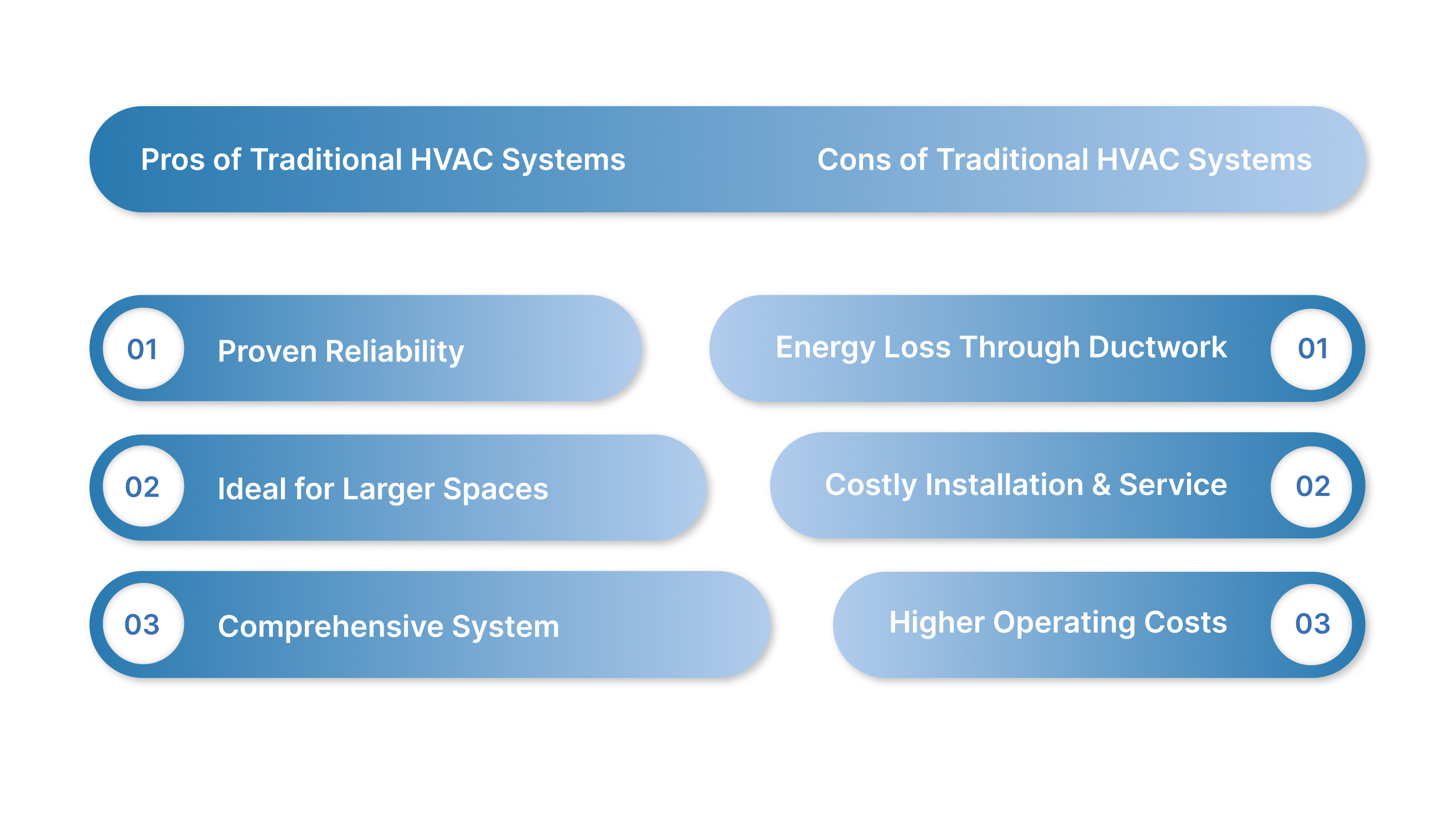
Pros of Traditional HVAC Systems:
Proven Reliability: Traditional HVAC systems have been around for decades and are well-tested, providing consistent heating and cooling for large homes or commercial spaces. Their long-standing history means that they are widely understood, with readily available parts and service.
Ideal for Larger Spaces: HVAC systems with ductwork are ideal for larger homes or buildings with multiple rooms and floors, providing consistent temperature control across all areas.
Comprehensive System: Traditional systems offer a whole-home solution for heating and cooling, making them a strong choice for properties that already have existing ductwork.
Cons of Traditional HVAC Systems:
Energy Loss Through Ductwork: Ductwork can lead to up to 30% energy loss, especially if the ducts are poorly insulated or leaky, reducing the system's overall efficiency.
Higher Operating Costs: Traditional HVAC systems tend to have higher operating costs due to the separate units for heating and cooling, which can be less energy-efficient than integrated solutions like mini-split heat pumps.
Higher Installation and Maintenance Costs: Installing a traditional HVAC system can be expensive due to the need for ductwork. Additionally, regular maintenance is required for both the furnace and the air conditioner, leading to higher long-term costs.
Next, let's look into a detailed cost comparison between a mini-split heat pump and a traditional HVAC system to help you understand which option offers the best value for your needs.
Cost Comparison: Mini Split Heat Pump vs HVAC
When deciding between a mini-split heat pump and a traditional HVAC system, understanding the cost differences is crucial for making an informed decision. Both systems vary in terms of initial installation, operating costs, and long-term savings.
Here's a breakdown of the costs and key differences between mini-split heat pumps and traditional HVAC systems:
Factor | Mini Split Heat Pump | Traditional HVAC System |
Upfront Installation Cost | Typically $3,000 to $5,000 (depends on number of zones and system size) | $4,000 to $7,000 (includes ductwork and installation) |
Energy Efficiency | Up to 30% more energy-efficient than traditional systems | Energy losses through ducts can reach 30% or more |
Maintenance Costs | Generally lower; minimal ductwork, easy filter cleaning | Higher; ductwork cleaning and system-wide maintenance required |
Operating Costs (annually) | Lower; energy savings from efficient zoning and direct heating/cooling | Higher; heating/cooling via ducts increases energy use |
Lifespan | Typically lasts 15-20 years | Typically lasts 15-25 years, but ductwork may require repair/replacement |
Note: The costs listed above are general estimates and may vary based on the size of the system, installation complexity, geographical location, and additional features or upgrades.
Next, let’s explore which system is best suited for your home, based on your specific heating, cooling, and budget needs.
Mini-Split vs. Traditional HVAC: Which One Is Right for Your Home?
Choosing between a mini-split and a traditional HVAC system depends on factors like your home's size, energy efficiency goals, and heating and cooling needs.
Here's a quick guide to help you choose the right one.
Consider Your Home Size:
Mini-Split: Ideal for smaller homes, room additions, or spaces without existing ducts.
Traditional HVAC: Best for larger homes or buildings with multiple rooms and floors.
Evaluate Energy Efficiency:
Mini-Split: Offers better energy savings due to zoning and no ductwork.
Traditional HVAC: Ducts can lead to energy losses of up to 30%.
Assess Climate:
Mini-Split: Works well in mild to moderate climates but may require supplemental heating in extreme cold.
Traditional HVAC: More reliable in cold climates, especially with a furnace.
Maintenance Needs:
Mini-Split: Requires minimal maintenance, mainly filter cleaning.
Traditional HVAC: Requires regular duct cleaning and maintenance for both furnace and AC.
Budget and Upfront Costs:
Mini-Split: Higher initial cost per unit but lower long-term operating costs.
Traditional HVAC: Lower upfront costs but higher energy consumption and maintenance costs.
When it comes to choosing and installing the right heating and cooling system, the decision can be overwhelming. Abba HVAC offers expert installation, maintenance, and energy-efficient solutions to help you get the most out of your mini-split heat pump or traditional HVAC system.
Let's now look into why Abba HVAC is the right choice for your heating and cooling needs.
Why Choose Abba HVAC for All Your Heat Pump Installation Needs?
Abba HVAC is a full-service HVAC contractor based in Austin, Texas, offering expert installation, repair, and maintenance services for mini-split heat pumps and traditional HVAC systems.
Serving areas including Cedar Park, Round Rock, Georgetown, Leander, and Pflugerville, their experienced team ensures personalized, energy-efficient solutions for both residential and commercial clients. With over 20 years of industry expertise, Abba HVAC is your trusted partner for reliable HVAC services.
What Abba HVAC Offers:
Expert Heat Pump Installation: Professional installation of energy-efficient heat pumps to enhance comfort and savings.
24/7 Emergency Service: Fast response to HVAC issues to ensure your system is always operational.
Routine Maintenance: Regular tune-ups and inspections to maintain system efficiency and prevent costly repairs.
Energy-Efficiency Solutions: Helping reduce energy costs through tailored solutions and energy audits.
Licensed and Insured Technicians: Fully certified professionals providing top-notch, safe HVAC services.
With Abba HVAC, you're assured of reliable heat pump installation and ongoing support to keep your system running at peak performance.
Wrapping Up
Choosing between a mini-split heat pump and a traditional HVAC system depends on your home's size, energy needs, and climate. Mini-splits provide energy efficiency and zoning control, while traditional HVAC systems are ideal for larger homes with existing ductwork.
Abba HVAC, with over 20 years of expertise, offers professional heat pump installation and maintenance to ensure your system runs efficiently and meets your comfort needs.
Contact Abba HVAC today for expert guidance and installation that fits your specific requirements!
FAQs
What's the difference in energy efficiency between a mini-split heat pump and a traditional HVAC system?
Mini-split heat pumps are generally more energy-efficient than traditional HVAC systems because they don't suffer energy losses from ducts. With zoning capabilities and targeted heating and cooling, mini-splits can save energy by only conditioning the rooms in use.
How much can I save on energy bills with a mini-split heat pump?
Mini-split heat pumps can reduce energy bills by up to 30% compared to traditional HVAC systems due to their energy-efficient design and the ability to control the temperature in individual rooms or zones, minimizing waste.
Is a mini-split heat pump effective in cold weather?
While mini-split heat pumps are efficient in moderate climates, some high-performance models are designed to work in colder temperatures. However, their efficiency may drop in extreme cold, and supplemental heating may be necessary.
How long do mini-split heat pumps last compared to traditional HVAC systems?
Mini-split heat pumps typically last around 15-20 years with proper maintenance, while traditional HVAC systems can last 15-25 years, depending on the quality of ductwork and system components. Regular maintenance can extend the lifespan of both systems.
Do mini-split heat pumps require more maintenance than traditional HVAC systems?
Mini-split heat pumps generally require less maintenance than traditional HVAC systems since they don't have ductwork that needs regular cleaning. However, it's important to clean filters regularly and schedule annual professional inspections for optimal performance.