Ever notice your energy bills climbing even though your HVAC runs nonstop? The problem might not be your system, but your ducts. Over time, ductwork can leak, clog, or deteriorate, forcing your unit to work harder just to keep up.
According to the National Renewable Energy Laboratory, up to 40% of heating and cooling energy is lost through damaged or poorly sealed ducts. That’s money and comfort literally slipping through the cracks.
In this guide, we’ll break down the real signs that your ducts need replacing, what the process involves, and how much it typically costs. Knowing when to act could mean the difference between a quick fix and years of wasted energy.
Key Takeaways:
Ductwork matters: Your home’s duct system acts like its lungs; impacting air quality, comfort, and HVAC efficiency more than most people realise.
Know the signs early: Uneven temperatures, higher energy bills, and musty odors are early warnings of duct issues that shouldn’t be ignored.
Duct repair vs. replacement: Repair is often the smarter first step for minor leaks or insulation loss, while full replacement is best for ageing, damaged, or inefficient systems.
Choose expertise over shortcuts: Professional technicians understand airflow dynamics, proper sealing, and insulation, solving the root cause instead of masking it.
Breathe cleaner with Abba HVAC: With 20+ years of local Austin experience, Abba HVAC delivers duct cleaning, sealing, and restoration that actually improve air quality and performance.
What Is Duct Replacement?
Duct replacement is the complete removal and professional installation of the air-distribution network that moves heated or cooled air through your home. It’s more than swapping old tubes.
It’s a system's job to replace damaged, undersized, or contaminated runs with properly sized, sealed, and insulated ductwork. This is so your HVAC can deliver the airflow it was designed for.
Here's What to Expect During Air Duct Replacement:
Detailed inspection and duct leakage test (to find where air is escaping),
Duct design (Manual D) to size supply and return runs correctly,
Removal of the damaged sections (attic, crawlspace, or in-wall),
Installation of new ducts (flex, sheet metal, or insulated board, chosen for the job), and
Sealing, insulating, and commissioning the system with airflow (CFM) and pressure checks.
Why that matters: old or poorly fitted ducts can lose conditioned air into attics or wall cavities, create uneven rooms, and force your HVAC to run longer. Replacing the ducts restores balanced airflow, improves efficiency, and protects indoor air quality, especially important in hot, humid climates.
Understanding duct replacement sets the stage, but the real insight comes from recognizing the quiet clues your home gives when it’s time for one.
Top Signs Your Home Needs Duct Replacement
Duct problems can hide in attics, crawl spaces, and walls. When they fail, the effects are visible (high bills, dust, uneven rooms) or audible (whistles, rattles).
Below are the strongest, research-supported signs that replacement, not just sealing or repair, may be needed.
Sign | Quick check | Why it matters |
|---|---|---|
Uneven rooms | Compare the temperatures in the rooms after 10–15 minutes. | Air loss or poor sizing → comfort problems. |
Rising energy bills | Bills are up, but usage is the same. | Leaky ducts waste conditioned air (costs money). |
Visible damage | Look for rust, holes, and crushed flex. | Physical failure = big leaks and contamination. |
Musty smells/dust | Smell from vents or dusty registers. | Duct contamination pulls dirt into your air. |
Frequent short cycles | HVAC cycles on/off rapidly. | System strain from leaks or improper airflow. |
Noisy ducts | Whistles, rattles, and banging at the start. | Loose joints or gaps → airflow loss and wear. |
Repeated patch repairs | Lots of tape/patches visible. | Ongoing fixes often mean time for replacement. |
Old system (15+ yrs) | Check installation/age records. | Materials degrade — replacement is often best. |
When the signs start stacking up, the next question naturally follows: What’s this really going to cost me, and why? Understanding the factors behind duct replacement pricing helps you see where your money goes and how to make it count.
How Much Does Duct Replacement Cost?
Duct replacement pricing varies wildly because every house is different. To give you a clear picture, here’s a researched breakdown of realistic price ranges, the factors that move the needle, sample scenarios, and smart questions to get an accurate quote.
Quick headline numbers:
Typical full-system duct replacement for a whole home generally runs from about $1,500 to $7,000+, depending on size and access.
Per-linear-foot estimates commonly fall in the $16–$23 range, depending on material, region, and complexity. Expect higher rates when walls/slabs must be opened.
Partial replacements or targeted repairs are much cheaper, often $200–$1,000, and are priced per run or per register.
Please Note: These costs can vary depending on your home’s air quality, duct material, labor rates, and the HVAC company you choose.
These numbers only tell part of the story. The real difference lies in what’s behind the cost.
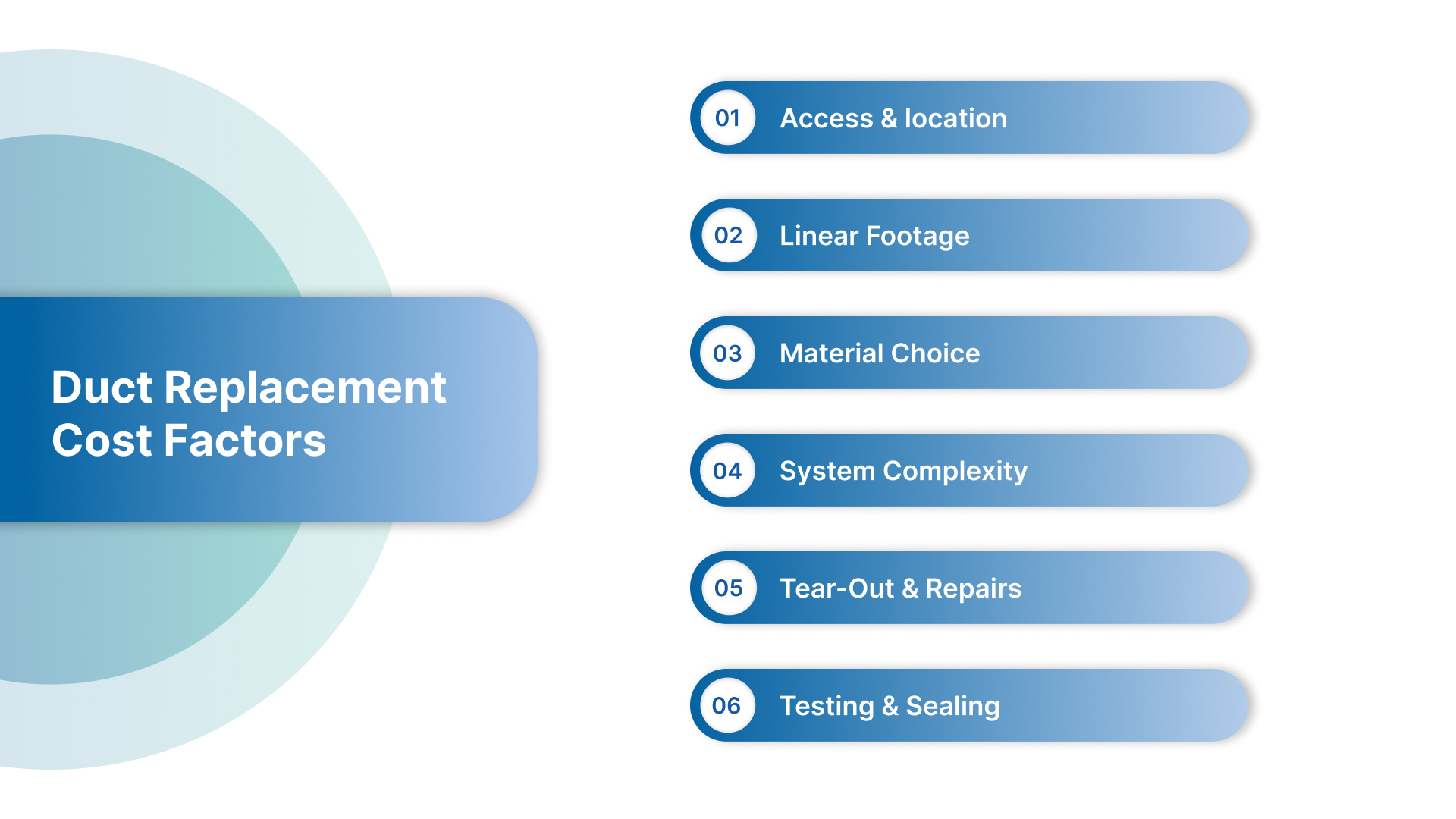
Duct Replacement Cost Factors
When it comes to duct replacement, the real cost isn’t just about materials or labor; it’s about how your home breathes. Every bend, leak, and material choice affects your system’s efficiency, comfort, and even long-term energy bills.
Before choosing a quote, understand what truly drives your duct replacement cost.
Access & location — Attic or basement duct runs are far cheaper to replace than ducts inside walls or under slab foundations. Slab work can multiply labor and restoration costs.
Linear footage needed — The more duct length you replace, the higher the material and labor totals; contractors often quote by linear foot.
Material choice — Flexible duct is cheapest; galvanized sheet metal and insulated duct board cost more but last longer and perform better in many climates.
System complexity & zoning — Multi-story homes, many registers, or zoned systems require more fittings, transitions, and balancing work.
Tear-out & finish repairs — Cutting into walls or ceilings adds drywall, paint, and sometimes flooring repairs to the invoice.
Testing, sealing & commissioning — Proper replacement includes leakage testing, sealing (mastic or Aeroseal), and airflow balancing. All of these add to labor but dramatically improve final performance.
Understanding the costs is one thing, but time is another key factor homeowners consider before scheduling the work.
How Long Does Duct Replacement Take?
The time required to replace ductwork depends on your home’s layout, accessibility, and the extent of the damage. For most single-family homes, a complete duct replacement typically takes 1–3 days.
Smaller partial replacements may take just 4–8 hours, while complex setups, such as ducts hidden in walls or under floors, can stretch up to a week.
What truly affects the duration is:
Access: Attic or crawlspace runs are fastest. In-wall or under-slab ducts take far longer due to cutting, rerouting, or alternate solutions.
House size & complexity: More registers, zones, or stories mean more fittings and balancing.
Extent of replacement: Replacing a few damaged runs is quick; rebuilding an entire trunk-and-branch system takes days.
Finishes & restoration: If walls/ceilings are opened, time to patch, drywall and paint expands the timeline.
Testing & commissioning: Proper jobs include leakage testing, sealing, and airflow balancing — add a few hours but prevent callbacks.
Tips to keep the job fast and smooth:
Provide clear access to the attic and basement, and create a parking/working area.
Confirm permit timing and whether finish repairs are included.
Ask the contractor for a day-by-day plan and commissioning deliverables upfront.
Knowing how long the process takes is one thing, but deciding whether you actually need a full replacement or just a repair is where most homeowners pause.
Duct Repair vs. Duct Replacement: Which Is Right for You?
Many homeowners face a familiar dilemma: should you repair your ductwork or replace it altogether? The answer isn’t always obvious. Small leaks or insulation issues can often be fixed quickly, but older or deteriorating ducts may silently drain energy and indoor comfort.
The key is knowing where your system stands. Here’s how repair and replacement really compare:
Factor | Duct Repair | Duct Replacement |
|---|---|---|
When It’s Needed | Minor leaks, loose joints, or insulation wear | Significant damage, corrosion, or outdated duct materials |
Age of System | Less than 10 years old | Over 15–20 years old |
Airflow Issues | Mild inconsistencies that improve after sealing | Persistent hot/cold spots throughout the home |
Energy Efficiency | Improves slightly after fixing leaks | Significant long-term improvement and lower energy bills |
Time Required | 2–6 hours for most repairs | 1–3 days for complete installation |
Best For | Homeowners with newer systems or small issues | Homes with recurring problems or poor air quality |
Once you’ve decided on the right approach, it’s just as important to have trusted experts like Abba HVAC ensure your air stays clean and your system runs at its best.
Breathe Cleaner Air with Abba HVAC
Most homeowners rarely think about their ductwork until something feels off. The truth is, your ducts act like the lungs of your home, and when they’re neglected, they quietly spread dust, allergens, and inefficiency.
That’s where Abba HVAC steps in. With over 20 years of expertise, our team provides professional duct cleaning, repair, and installation services that fix problems at the source, not just the symptoms.
Instead of rushing to a costly replacement, our technicians identify what truly needs attention, restoring airflow, comfort, and indoor air quality in less time and at lower cost.
Here’s what makes Abba HVAC different:
Professional Duct Cleaning – Eliminate years of dust, mould, and allergens to breathe cleaner air and improve HVAC efficiency.
Duct Leak Detection & Sealing – Stop 20–30% of air loss by locating and sealing hidden leaks for better comfort and lower bills.
Duct Repair & Restoration – Fix damaged or disconnected ducts to restore proper airflow and consistent temperature control.
New Duct Installation – Expertly designed and installed systems that deliver balanced airflow and long-term reliability.
Duct Insulation Upgrades – Prevent energy loss and condensation by properly insulating ducts in unconditioned areas.
Airflow Balancing & Optimization – Fine-tune airflow across rooms for even comfort and peak HVAC performance.
Once you’ve chosen the right professionals to restore your home’s comfort and air quality, the next step is getting your space ready.
How to Prepare Your Home for Duct Replacement
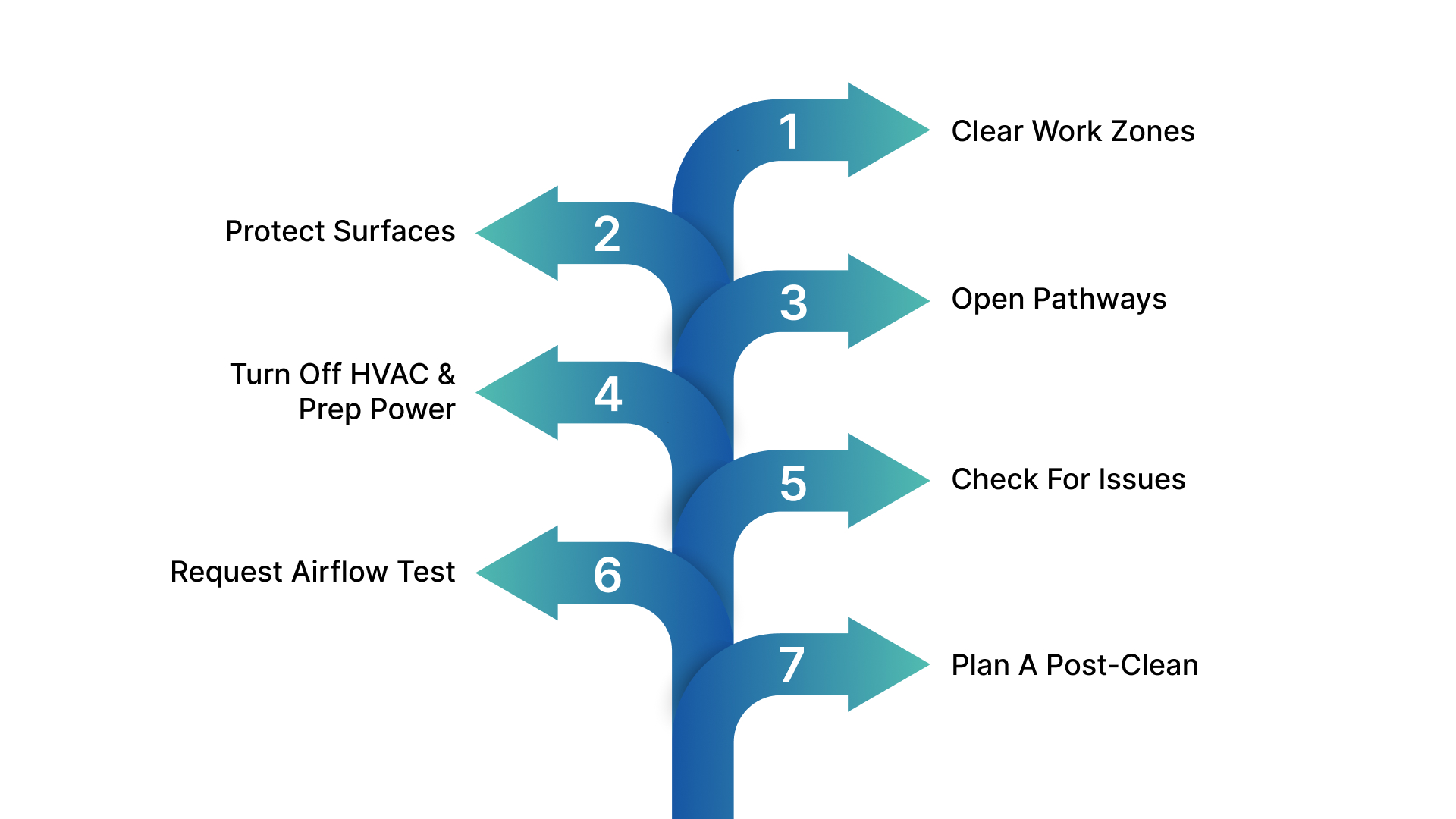
Proper preparation can make your duct replacement faster, cleaner, and less disruptive. A few smart steps before the technicians arrive help ensure a smoother installation and protect your belongings.
Here’s how to get your home ready the smart way:
1. Clear the Work Zones
Ductwork often runs through attics, crawl spaces, and basements. Move furniture, décor, and valuables out of the way to give technicians easy access. This reduces the risk of damage and speeds up installation.
2. Protect Surfaces and Belongings
Lay down dust sheets or plastic covers over furniture and electronics; duct removal can stir up debris, especially in older systems. Ask your contractor if they’ll bring protective coverings, or prepare your own in advance.
3. Make Pathways Accessible
Technicians will need to move in and out frequently with tools and materials. Keep entryways, driveways, and hallways clear so they can work efficiently. If possible, leave an open parking spot close to the main access point.
4. Turn Off HVAC and Prep Power Access
Before work begins, turn off your HVAC system and confirm if the crew needs access to your circuit breaker. This prevents system strain and ensures safety while they disconnect and replace ducts.
5. Check for Any Pre-existing Issues
Inspect your attic or crawl space for leaks, pests, or insulation damage beforehand. Addressing these issues now ensures your new ducts aren’t compromised later.
6. Ask for an Airflow Test After Installation
A professional contractor should test your system’s airflow and pressure balance post-installation. This ensures your ducts are sealed properly and your HVAC system performs at peak efficiency.
7. Schedule a Deep Clean Afterwards
Even with the best precautions, dust can settle during duct replacement. Plan for a quick post-project cleaning or air duct sanitization to keep your indoor air fresh and allergen-free.
Wrapping Up
Once your new ducts are in place, you’ll feel the difference: cleaner air, balanced temperatures, and an HVAC system that finally works with your home, not against it. However, a smooth installation starts with the right team.
At Abba HVAC, we don’t just replace ducts, we restore comfort and confidence in your air. With 24/7 emergency service, full-service HVAC solutions, and local Austin expertise, our technicians know exactly what it takes to keep your system running flawlessly in Central Texas conditions.
Whether it’s upgrading your ductwork, improving air quality, or tackling a midnight breakdown, we’re just a call away. Book your service with Abba HVAC today and experience air done right.
FAQs
1. How do I know if I need duct repair or a full replacement?
If your ducts have minor leaks, poor insulation, or limited wear, repair or sealing is often enough. However, if they’re old, corroded, mould-infested, or collapsing, replacement ensures long-term performance and cleaner air.
2. How long does a duct replacement take?
Most residential duct replacements are completed within one to three days, depending on your home’s size and layout. Abba HVAC’s team works efficiently to minimize downtime and disruption.
3. Will duct repair or replacement improve my indoor air quality?
Absolutely. Properly sealed and installed ducts prevent dust, allergens, and pollutants from circulating in your home; a difference you can often feel within days.
4. Can I stay at home during duct replacement?
Yes. While the process can be a bit noisy, our technicians ensure safety and cleanliness throughout. You can comfortably remain at home while we handle the heavy lifting.
5. How do I know if a ductwork service company is credible?
Look for licensing, insurance, a clear scope of work (including testing/sealing), references from your region (like Austin), and an emergency support option.