Even in Austin’s mild winters, reliable heating matters. Cold snaps can arrive suddenly, leaving homes uncomfortable and energy bills unpredictable. The right heating system keeps every room warm, maintains indoor air quality, and helps manage monthly costs.
With so many systems, furnaces, heat pumps, and ductless units, choosing the best option can feel confusing. Each system offers different levels of comfort, energy efficiency, and long-term value.
This guide explains how home heating systems work, compares options for Austin homeowners, and shows which solutions deliver the best performance for your space and budget.
Key Takeaways
Austin homeowners need efficient systems. Heat pumps and hybrid systems work best for Austin’s mild winters, balancing comfort and low energy use.
Modern systems save money long-term. Upgrading to a high-efficiency furnace or heat pump can cut heating costs by up to 30% each season.
Maintenance prevents costly repairs. Regular tune-ups and duct inspections help extend your system’s lifespan and avoid sudden winter breakdowns.
Abba HVAC delivers trusted local service. Since 2007, Abba HVAC has provided Austin homeowners with expert installation, maintenance, and year-round comfort solutions.
How Home Heating Systems Work
Heating a home may sound complex, but the process follows a simple idea: move heat where you need it, when you need it. Understanding the basics helps you choose the right system for your space and avoid common performance issues.
The Basics of How Heating Systems Operate
Every heating system has three main parts:
A heat source: this could be a furnace, heat pump, or boiler.
A distribution system: ducts, vents, or pipes that move warm air or water through the home.
A control system: usually a thermostat that regulates temperature automatically.
When the temperature drops below your thermostat’s setting, the heating unit activates. It generates heat and distributes it through ducts or pipes to maintain a steady indoor climate. Once the target temperature is reached, the system shuts off until heat is needed again.
Austin homes often rely on central HVAC systems that both heat and cool. This dual function makes maintenance and system efficiency especially important. When one side struggles, the other is usually affected.
Common Heating Challenges in Austin Homes
Because Austin winters are generally mild, heating systems often sit idle for much of the year when the first cold front hits, that long downtime can expose hidden issues, from clogged filters to sluggish airflow and inefficient heat transfer.
Homeowners commonly face problems such as:
Uneven warmth between rooms or levels, especially in older homes with limited insulation.
Leaky or aging ductwork that lets warm air escape before it reaches living spaces.
Thermostat calibration errors, causing systems to short-cycle or underheat.
Heat pumps struggle to keep up during sudden cold snaps when temperatures dip near freezing.
These challenges rarely mean your system needs replacement. In many cases, a professional tune-up, duct sealing, or the addition of zoning controls can make a dramatic difference.
Regular maintenance also helps ensure your system responds quickly and efficiently when the next Austin cold spell arrives.
Pro Tip: Before winter arrives, schedule a seasonal inspection with Abba HVAC. Catching small issues early prevents costly repairs and helps your system run efficiently when you need it most.
Types of Home Heating Systems (with Local Cost and Use Cases)
Not all heating systems are built the same. The best choice for your home depends on your comfort preferences, home size, and Austin’s climate conditions.
Below are the main types of residential heating systems you’ll find in Central Texas, along with where each one works best.
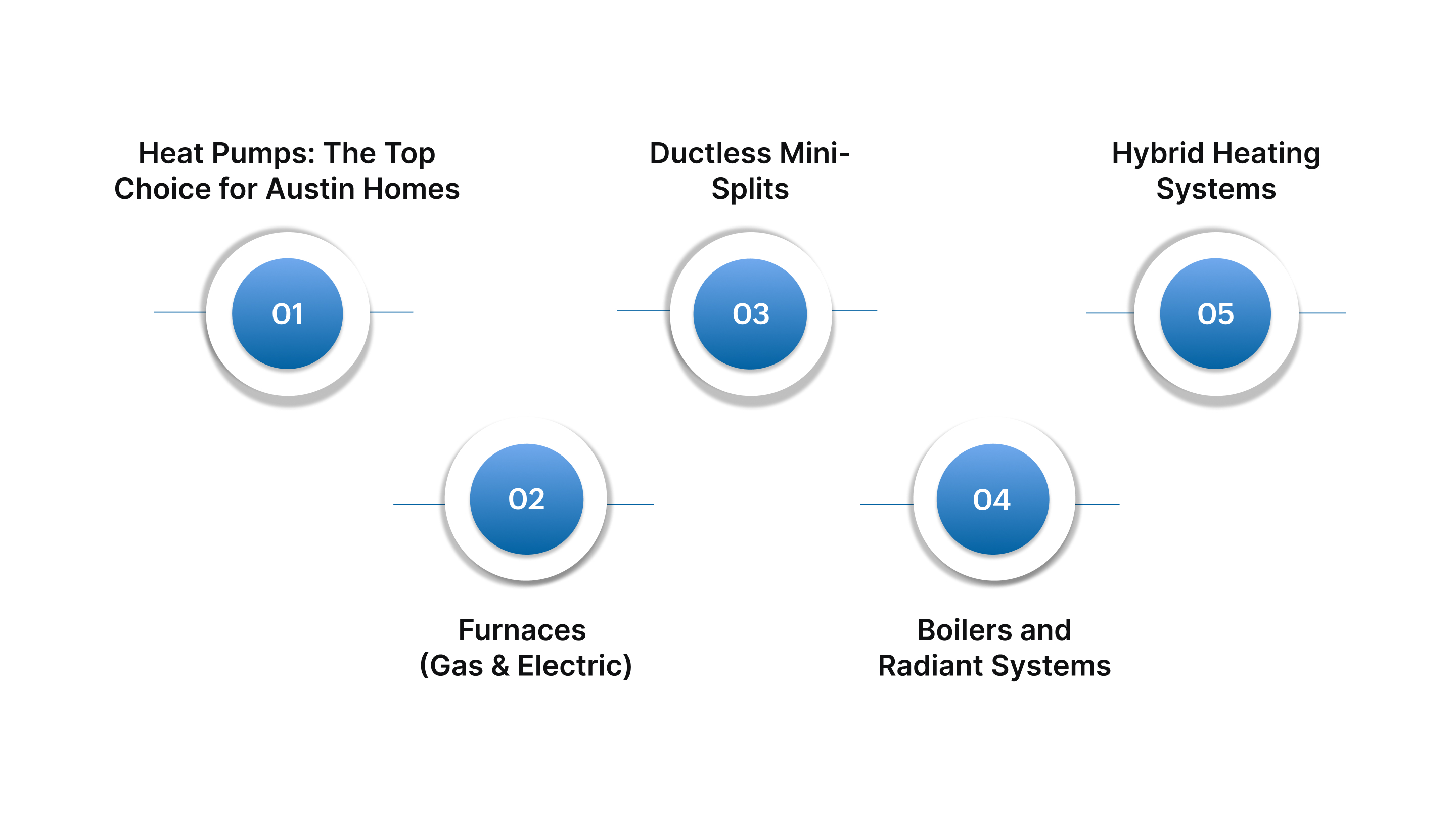
1. Heat Pumps: The Top Choice for Austin Homes
Heat pumps are popular across Austin because they handle both heating and cooling. Instead of generating heat like a furnace, they move it from one place to another, pulling warmth from the air outside and transferring it indoors.
They’re highly efficient for Austin’s mild winters and can reduce energy use by up to 30% compared to electric furnaces.
Typical cost: $5,000–$9,000 installed
Best for: Homes needing efficient year-round climate control
2. Furnaces (Gas and Electric)
Furnaces are reliable and fast-heating systems.
Gas furnaces are ideal where natural gas is available, offering lower operating costs and strong heat output.
Electric furnaces are easier to install and safer for homes without gas lines.
However, electric models tend to have higher operating costs in larger homes.
Typical cost: $4,000–$7,000 installed
Best for: Medium to large homes needing strong, consistent heat
3. Ductless Mini-Splits
A ductless mini-split system provides zoned heating and cooling without requiring ductwork. Each indoor unit controls one area, giving homeowners independent temperature control for different rooms.
Mini-splits are perfect for home additions, older properties without ducts, or rooms that stay colder than others.
Typical cost: $3,000–$8,000 per system
Best for: Homes without ducts or those needing targeted heating zones
4. Boilers and Radiant Systems
Less common in Austin, boilers heat water and circulate it through radiators or underfloor piping. They deliver steady, quiet warmth and work well for large homes or multi-unit properties.
While highly efficient, boilers can have higher upfront costs and longer installation times.
Typical cost: $6,000–$12,000 installed
Best for: Large or multi-story homes needing even, silent heating
5. Hybrid Heating Systems
Hybrid systems combine a heat pump with a gas furnace. The heat pump handles mild weather, while the furnace takes over when temperatures drop below a certain point.
This approach provides the best balance of comfort and energy efficiency in Austin’s variable climate.
Typical cost: $7,000–$10,000 installed
Best for: Homeowners who want maximum efficiency year-round
Energy Sources in Austin Homes
Most Austin homes use either natural gas or electricity for heating. Gas remains slightly cheaper per BTU, but electric systems, especially high-efficiency heat pumps, are becoming more popular due to lower maintenance needs and environmental benefits.
Homeowners in rural areas sometimes rely on propane or dual-fuel systems, though these are less common inside city limits.
System Type | Energy Source | Efficiency | Best For |
Heat Pump | Electricity | 15–20 SEER2 | Year-round comfort |
Gas Furnace | Natural Gas | 80–98% AFUE | Consistent heat |
Electric Furnace | Electricity | 95–100% | Smaller homes |
Ductless Mini-Split | Electricity | 16–25 SEER2 | Zoned control |
Boiler/Radiant | Gas/Electric | 85–95% | Large homes |
Hybrid System | Gas + Electric | 90–95% AFUE | Efficiency + flexibility |
Pro Tip: If your heating system is more than 12 years old or struggling to keep up, a high-efficiency heat pump may cut your energy costs and simplify year-round comfort.
Understanding Heating Efficiency Ratings
When comparing heating systems, efficiency ratings tell you how much energy becomes usable heat versus what is lost. Understanding these numbers helps Austin homeowners choose systems that save energy and reduce costs.
AFUE (Annual Fuel Utilization Efficiency)
AFUE measures how efficiently a furnace converts fuel into heat.
A 95% AFUE furnace converts 95% of fuel energy into heat, wasting only 5%.
Older models can rate as low as 70%, which means nearly a third of energy, and your money goes up the flue.
If you use natural gas, look for high-efficiency furnaces rated 90% AFUE or higher. They perform better and qualify for rebates from local Austin utilities.
SEER2 and HSPF (for Heat Pumps)
Because heat pumps handle both heating and cooling, their efficiency is rated differently:
SEER2 (Seasonal Energy Efficiency Ratio 2) measures cooling efficiency.
HSPF (Heating Seasonal Performance Factor) measures heating efficiency.
Higher numbers mean better performance and lower utility costs.
In Austin, a heat pump with 16–20 SEER2 and 8.5–10 HSPF is ideal for energy-efficient comfort year-round.
Energy Star Certification and Rebates
Systems that meet Energy Star standards exceed minimum federal efficiency requirements. Many Austin homeowners qualify for Austin Energy or federal tax rebates when they install certified high-efficiency systems.
These programs can save hundreds of dollars on installation while lowering long-term energy use.
Choosing the Right Heating System for Your Home
Selecting the best heating system goes beyond brand or price. The right choice depends on your home’s size, insulation quality, layout, and long-term energy goals.
Austin’s mild winters make efficiency and system flexibility more important than raw heating power.
Proper Sizing and Load Calculation
One of the biggest mistakes in heating installation is choosing the wrong system size.
An oversized unit cycles on and off frequently, wasting energy.
An undersized system runs constantly and struggles to maintain temperature.
Professional HVAC contractors perform a Manual J load calculation to match your system precisely to your home’s heating needs. This ensures steady comfort without unnecessary energy use.
Home Design and Insulation
Austin’s varied home styles, ranging from older bungalows to newer open-concept builds, affect heating performance. Poor insulation, leaky windows, or unsealed ducts can cause warm air loss and uneven temperatures.
Before upgrading your system, inspect insulation and air sealing. Improving these can reduce heating demand by up to 20%.
When to Repair or Replace Your System
You may not always need a full replacement. Consider replacing your system if:
It’s 12–15 years old or older.
You notice rising energy bills despite regular maintenance.
Certain rooms never reach the right temperature.
Repairs are becoming frequent or costly.
In these cases, upgrading to a modern, high-efficiency heat pump or hybrid system offers better comfort and long-term savings.
Importance of Professional Evaluation
Every Austin home is different. A professional assessment from Abba HVAC includes checking your ductwork, insulation, and thermostat placement before recommending the best system.
This ensures your investment aligns with both your comfort needs and energy goals.
Heating System Costs and Maintenance in Austin, TX
Whether you are installing a new home heating system or maintaining an existing one, understanding costs in the Austin market helps you budget wisely and avoid surprises.
Operating Costs and Maintenance
After installation, regular maintenance keeps systems efficient and avoids major repairs. In Austin:
The average furnace repair cost is $235, with most homeowners spending between $128 and $400, depending on the part.
Basic tune-ups or preventive maintenance might cost $75 to $200 for a service call/time.
A well-maintained system can save money on energy bills, reduce breakdowns, and extend lifespan. Neglected systems often cost more over time in both repairs and energy use.
Pro Tip: Ask for a maintenance plan with your installation. With scheduled inspections, you’ll avoid many costly repairs and keep your system running efficiently.
Schedule a Heating Tune-Up with Abba HVACKeep your home warm and your system efficient all winter long. Abba HVAC offers seasonal heating maintenance plans designed specifically for Austin homes. Our licensed technicians inspect, clean, and optimize your system to help you:
📞 Call Abba HVAC today to schedule your next heating tune-up or request a free system inspection. Enjoy dad-level care and professional-grade service, trusted by Austin homeowners since 2007. |
Thermostats and Smart Heating Controls
Modern controls help you get more from your heating system; comfort, efficiency, and convenience are all improved.
1. Programmable vs. Smart Thermostats
A basic programmable thermostat allows you to set schedules: warmer when you’re home, cooler when you’re not. That alone saves energy.
A smart thermostat goes further: remote control via phone, learning your habits, and integrating with smart home systems. For Austin homes, this means better control when temperatures drop unpredictably.
2. Zoning and Multi-Room Control
Smart controls also support zoning, multiple thermostats controlling different areas or floors of your home. Zoning helps avoid heating unoccupied rooms, cuts energy waste, and improves comfort.
Smart thermostats for each zone may cost more upfront, but they boost efficiency, especially in multi-level homes or homes with uneven heat distribution.
3. Installation and Savings
Installing a smart thermostat or zoning control typically adds $200-$400 per zone, depending on brand and features. These controls help you monitor usage and adjust settings for optimal performance.
Because Austin winters are mild but unpredictable, the ability to fine-tune your system gives you comfort without overspending on energy.
Pro Tip: When installing your new heating system, ask your contractor to include smart thermostat setup and zoning controls. With the right settings, you’ll maximize both comfort and savings.
Modern Heating Upgrades and Energy-Saving Tips
Even if your current heating system works, a few smart upgrades can improve comfort and cut energy bills. Austin homeowners can benefit from small changes that make a big difference during the colder months.
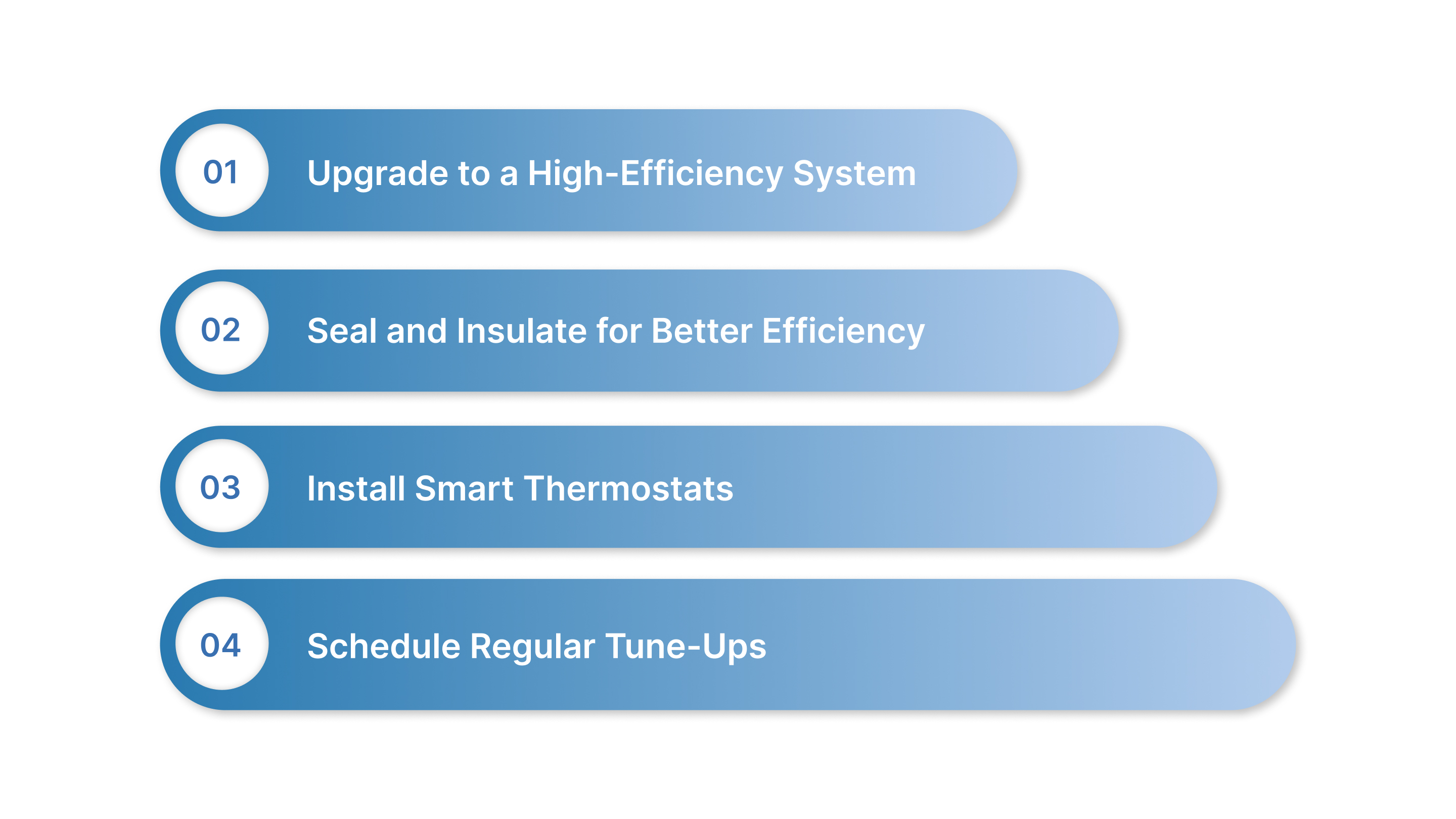
Upgrade to a High-Efficiency System
If your system is more than 12 years old, it’s likely using more energy than necessary. Modern furnaces and heat pumps operate at much higher efficiency levels, meaning they produce more heat using less energy.
High-efficiency systems with Energy Star certification can reduce energy use by up to 30 percent, making them a smart investment for Austin’s mild winters.
Seal and Insulate for Better Efficiency
Poor insulation and leaky ducts allow heat to escape, forcing your system to work harder. Sealing air leaks, adding attic insulation, and cleaning ducts can significantly improve efficiency.
For many Austin homes, simple insulation upgrades lower heating costs by 10 to 20 percent each winter.
Install Smart Thermostats
A smart thermostat adjusts automatically based on your schedule and weather conditions. You can control it from your phone, which is especially helpful for unpredictable Texas weather.
Smart thermostats also track energy use, helping you spot waste before it becomes costly.
Schedule Regular Tune-Ups
Preventive maintenance keeps your system running efficiently and reduces unexpected repair costs. Professional inspections before winter ensure filters, sensors, and motors are in good condition.
Why Austin Homeowners Trust Abba HVAC
Since 2007, Abba HVAC has served homeowners and small businesses across the Greater Austin area with reliable, energy-efficient heating and cooling solutions tailored to local needs.
As a licensed and insured contractor, we provide end-to-end expertise for every system and season.
Our Key Heating and HVAC Services Include:
Heating system installation and repair for furnaces, heat pumps, and hybrid systems
Full HVAC maintenance programs are designed to prevent costly breakdowns
Ductwork inspection, sealing, and insulation to improve airflow and efficiency
Indoor air quality services, including filter replacement and air purification
Energy efficiency audits and system upgrades for lower utility bills
24/7 emergency HVAC support for urgent heating or cooling issues
At Abba HVAC, we believe in long-term comfort and honest workmanship. Our promise is simple: Dad-level care and professional-grade service for every Austin home we visit.
Conclusion
Choosing the right heating system for your Austin home is about more than comfort; it’s about long-term efficiency, reliability, and peace of mind.
With so many options available, from furnaces to heat pumps, the key is selecting a system that matches your home’s design, energy goals, and local climate.
At Abba HVAC, we help homeowners make informed decisions through expert guidance, honest recommendations, and precision installation.
Whether you need a new system, a performance upgrade, or routine maintenance, our team delivers dependable solutions built for Austin living.
Contact Abba HVAC today to schedule your heating system consultation.
FAQs
1. What is the most efficient way to heat a home in Austin?
For Austin’s climate, electric heat pumps or hybrid systems are the most efficient. They provide both heating and cooling, using far less energy than traditional systems.
2. How much does it cost to install a new heating system?
In Austin, homeowners typically spend $4,000 to $9,000 for a complete heating installation, depending on system type, home size, and ductwork condition.
3. Can a heat pump handle both heating and cooling?
Yes. A heat pump works year-round; it heats your home in winter and cools it in summer by transferring heat instead of generating it.
4. How often should I service my heating system?
Schedule one maintenance visit per year, ideally in early fall. This helps identify issues before the cold season and ensures safe, efficient operation.
5. What heating system is best for older Austin homes?
Older homes without ductwork often benefit from ductless mini-splits. They provide targeted heating and cooling without major remodeling.
6. When should I replace my heating system?
If your system is over 12 years old, needs frequent repairs, or struggles to heat evenly, it’s likely time for an upgrade to a more efficient model.