_____________________________________________________________________
A carbon monoxide leak in your furnace is one of the most dangerous issues that can go unnoticed in your home. The risk of poisoning is real, and it can be hard to detect since carbon monoxide is both odorless and colorless.
As a homeowner or facility manager, ensuring your furnace operates safely should be a top priority. Even minor furnace issues can lead to potentially fatal carbon monoxide exposure if not addressed quickly.
In this article, you'll learn how to spot the signs of carbon monoxide leaks in your furnace, what causes them, and when to seek professional help to keep your home or business safe.
In a nutshell
Carbon monoxide leaks in your furnace can cause health risks like headaches and dizziness.
Look for signs like flickering pilot lights, soot, discoloration, or rust around the furnace.
Condensation on windows and poor indoor air quality may indicate an issue with venting or combustion.
Increased energy bills can signal an inefficient furnace, often linked to CO leaks.
Abba HVAC offers 24/7 emergency service and regular maintenance plans to prevent CO leaks and ensure furnace safety.
What Is Furnace Carbon Monoxide and Why Is It Dangerous?
Furnace carbon monoxide (CO) is a colorless, odorless gas produced when fuel is burned. In a furnace, it's typically vented out of the home through a flue, but issues like faulty venting or combustion can cause it to leak into the living space.
Why is it dangerous?
Invisible and odorless, you can't detect it without a CO detector.
It can cause poisoning, leading to symptoms like dizziness, headaches, and nausea.
Long-term exposure can lead to confusion, unconsciousness, and even death.
Toxic to pets, they are often more sensitive and show symptoms faster.
A significant health risk in poorly ventilated spaces, especially in colder months.
Understanding the dangers of CO helps emphasize the importance of identifying the warning signs early. Let's explore the common signs of a carbon monoxide leak in your furnace and how to recognize them.
Key Warning Signs of Carbon Monoxide Leaks
Carbon monoxide leaks in your furnace are dangerous and often go unnoticed until it's too late. Recognizing the early signs is critical to preventing serious health risks and system damage. If you notice any of these warning signs, it's essential to take immediate action.
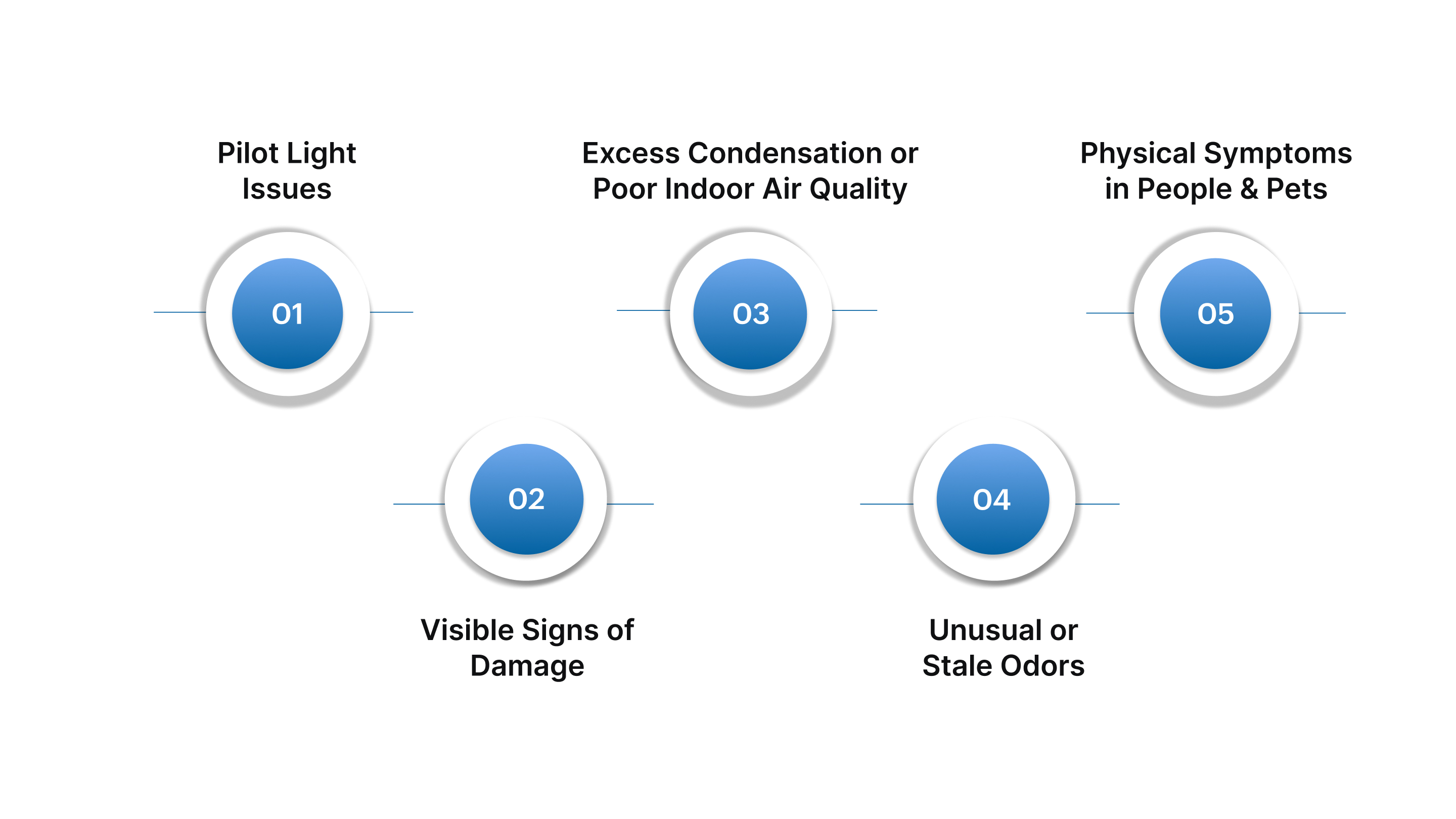
Here are the key warning signs that indicate a potential carbon monoxide leak in your furnace:
Pilot Light Issues (Flickering or Failing to Stay Lit)
A flickering or failing pilot light is often an early indicator of a carbon monoxide leak. The pilot light should burn a steady blue color. A yellow or orange pilot light or one that flickers repeatedly can indicate incomplete combustion, a blocked vent, or a malfunctioning component in the furnace.
This can lead to the buildup of carbon monoxide inside the furnace instead of being vented outside.
Solution:
Turn off the furnace and let it cool before inspecting the pilot light.
Check the pilot light's color. A steady blue flame indicates proper combustion, while yellow or flickering flames are a red flag.
A faulty thermocouple can cause the pilot light to go out, preventing the furnace from heating properly.
Check the air vents. Blockages or dirt buildup can restrict airflow and cause improper combustion.
Call a professional to examine the furnace and diagnose any deeper issues, such as a cracked heat exchanger or venting problems, that may be causing the CO leak.
Regular checks and professional maintenance help prevent these issues from becoming hazardous.
Visible Signs of Damage (Soot, Discoloration, or Corrosion)
Soot, discoloration, or corrosion around the furnace or vent pipes indicates improper combustion, often due to a carbon monoxide leak. These marks suggest the furnace is not venting gasses correctly, which can lead to dangerous CO buildup inside your home.
Solution:
Inspect the furnace and vent pipes for black soot or brown stains.
Look for rust or corrosion around the furnace or venting components.
Check the venting system for obstructions or signs of wear that could prevent proper gas expulsion.
Is your furnace showing signs of soot, discoloration, or corrosion?
These could be symptoms of a carbon monoxide leak that needs immediate attention. Abba HVAC, with years of experience in HVAC systems, can inspect your furnace, identify the cause, and fix the issue to ensure safe, efficient operation.
Excess Condensation or Poor Indoor Air Quality
Excess condensation on windows or around the furnace, along with poor indoor air quality, can indicate improper combustion or a carbon monoxide leak. When the furnace is not venting properly, moisture and pollutants accumulate, leading to increased humidity and stale air.
Solution:
Check for condensation around windows or near the furnace, especially in colder months.
Monitor humidity levels in your home; high humidity can be a sign of inadequate ventilation.
Ensure proper ventilation in areas with high moisture buildup to reduce humidity and improve air quality.
Replace filters regularly to keep the airflow clean and prevent contaminants from circulating.
These signs should not be ignored, as they can indicate a larger issue with your furnace's combustion process.
Unusual or Stale Odors
Unusual or stale odors around the furnace can be a sign of incomplete combustion or a carbon monoxide leak. While carbon monoxide itself is odorless, other gasses produced by a malfunctioning furnace may create foul or stale smells.
Solution:
A musty or burning odor can indicate a buildup of gasses.
Check the furnace's components for dust, debris, or corrosion that may contribute to the smell.
Ensure proper ventilation around the furnace and throughout the home to allow fresh air to circulate.
If you notice persistent odors from your furnace, it's important to investigate the source to avoid long-term issues.
Physical Symptoms in People & Pets
Exposure to carbon monoxide can cause flu-like symptoms in people and pets. As the gas accumulates, it displaces oxygen in the bloodstream, leading to symptoms like headaches, dizziness, nausea, and fatigue. Pets, particularly small animals, may show symptoms more quickly due to their size.
Solution:
Look out for symptoms in people, such as headaches, dizziness, or confusion, that improve when leaving the home.
Monitor pets for signs of lethargy, loss of coordination, or unusual behavior.
Evacuate immediately if these symptoms occur and seek fresh air, then contact a professional to inspect the furnace for a carbon monoxide leak.
Carbon monoxide exposure is a serious health risk, so quick action is essential to avoid long-term damage.
Unexplained Increase in Energy Bills
An unexplained rise in energy bills can indicate an inefficient furnace, often due to a carbon monoxide leak. When the furnace is not working efficiently, it runs longer and harder to maintain the desired temperature, leading to higher energy consumption.
Solution:
Compare your energy bills from previous months to spot any significant increases.
Inspect your furnace for any signs of malfunction, like inconsistent heating or longer run times.
Do regular maintenance to ensure the system is operating efficiently and address any underlying issues.
This increase in energy costs can point to deeper issues with your furnace.
Let's explore why these signs happen and what's going wrong inside the system.
Why These Signs Happen: What’s Going Wrong Inside the Furnace
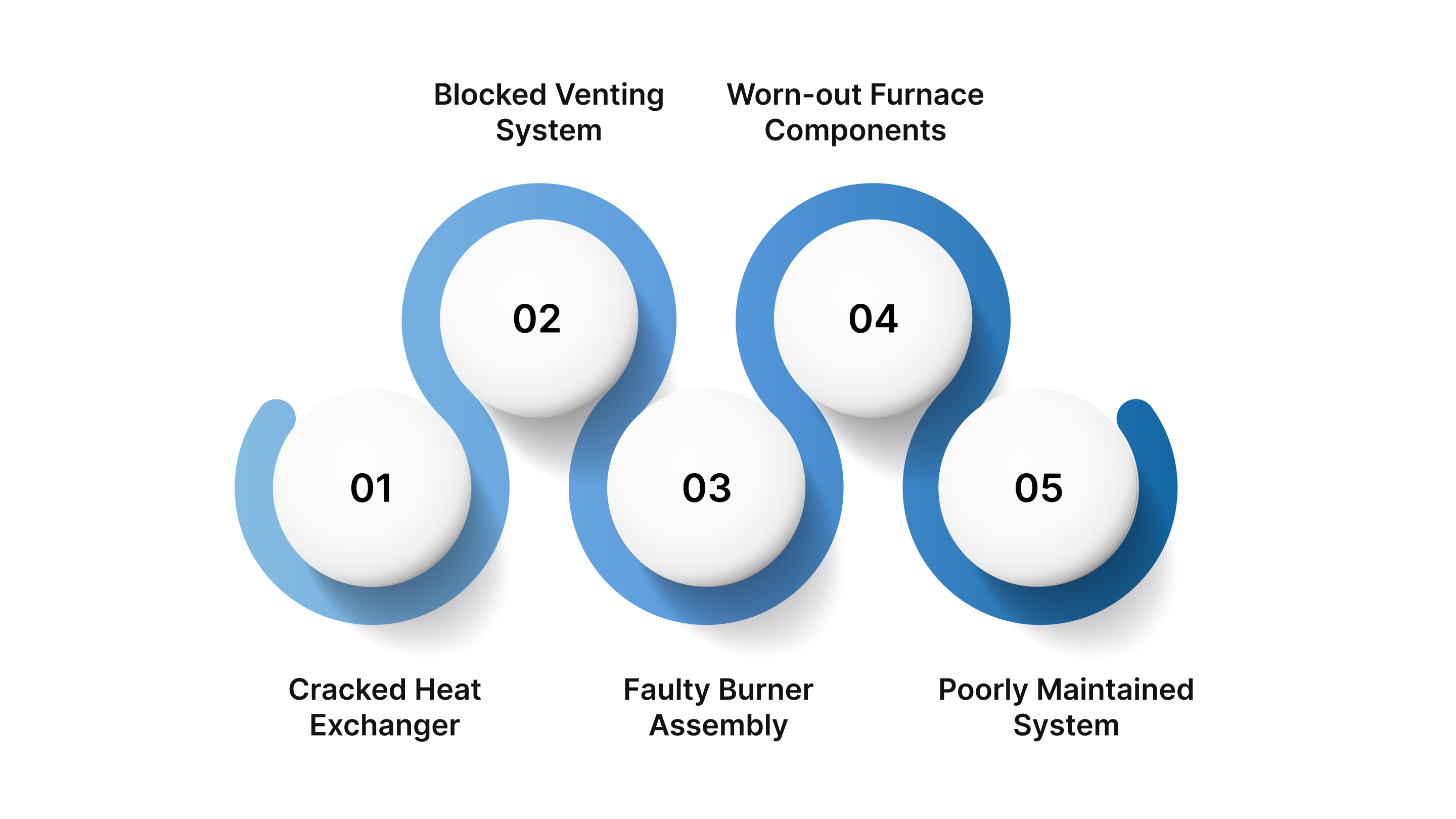
The signs of a carbon monoxide leak typically stem from malfunctions inside the furnace. These issues can prevent the furnace from operating efficiently and safely, leading to carbon monoxide buildup.
Here's a breakdown of what could be causing the problem:
Cracked Heat Exchanger: A crack in the heat exchanger allows carbon monoxide to escape into the home instead of being vented safely.
Blocked Venting System: Blockages in the vent pipes, often from debris or dirt buildup, prevent CO from being expelled outside.
Faulty Burner Assembly: A malfunctioning burner disrupts combustion, leading to incomplete burning of fuel and carbon monoxide formation.
Worn-out Furnace Components: Over time, blowers, sensors, or ignition systems can wear down, affecting airflow and combustion.
Poorly Maintained System: Lack of regular service can cause buildup in components, reducing efficiency and increasing CO risks.
These issues emphasize the importance of timely furnace inspections and maintenance. Now, let's explore how to act if you spot these signs in your system.
What to Do if You Spot These Signs
If you notice any of the warning signs of a carbon monoxide leak in your furnace, it's crucial to act quickly to ensure safety. The risks of CO exposure can be severe, so timely action is essential.
Here's what you should do if you spot any of these signs:
Shut off the furnace and open windows for ventilation.
Evacuate the home if symptoms like dizziness or headaches appear.
Install a CO detector if you don't already have one, and test it regularly.
Contact a professional HVAC technician immediately to inspect and repair the system.
Taking these actions can help protect your health and prevent further damage.
Next, let's look at how a professional HVAC service can resolve and prevent CO leaks in your furnace.
How a Professional HVAC Service Helps Prevent and Resolve Furnace CO Leaks?
A professional HVAC service plays a crucial role in identifying and addressing carbon monoxide leaks. Technicians are equipped to detect issues that aren't visible to homeowners, such as cracked heat exchangers or blocked vents, which can lead to dangerous CO buildup.
As a full-service HVAC contractor based in Austin, Texas, Abba HVAC specializes in inspecting, diagnosing, and resolving CO leaks in furnaces. With years of experience and a commitment to safety, they offer:
24/7 Emergency HVAC Services: Immediate assistance for CO leaks or furnace malfunctions, ensuring quick resolution.
Comprehensive System Diagnostics: Checking heat exchangers, burners, and venting for potential CO risks.
Preventive Maintenance Plans: Regular servicing to prevent leaks and keep your furnace running efficiently year-round.
Expert Furnace Repairs & Replacements: Repairing or replacing worn-out components like the heat exchanger and burner to prevent CO buildup.
CO Detector Installation: Ensuring your home is equipped with the right CO detectors for early warning and safety.
With Abba HVAC, you can trust that your furnace is in safe hands, reducing the risk of CO exposure and improving system performance.
Wrapping Up
Carbon monoxide leaks in your furnace are a serious safety risk. Spotting early signs like pilot light issues, discoloration, or symptoms in people and pets can prevent dangerous CO buildup and system failure.
As a full-service HVAC contractor in Austin, Texas, Abba HVAC specializes in carbon monoxide leak detection and prevention. With 24/7 emergency service and regular maintenance plans, they ensure your furnace operates safely and efficiently.
If you notice any warning signs, don't wait. Contact Abba HVAC today to schedule an inspection and keep your home safe.
FAQs
How do I know if my furnace is leaking carbon monoxide?
Signs like a yellow or flickering pilot light, soot or discoloration around the furnace, or symptoms like headaches and dizziness in your household are key indicators. If you notice any of these, it's important to get your furnace inspected immediately by a professional.
Can a furnace carbon monoxide leak happen in an old system?
Yes, older furnaces are more prone to issues like cracked heat exchangers and damaged venting systems, both of which can lead to carbon monoxide leaks. Regular maintenance and inspections can catch these issues before they become hazardous.
How often should I schedule maintenance for my furnace to prevent CO leaks?
It's recommended to have your furnace professionally inspected at least once a year. Regular servicing ensures that the system is functioning properly and helps identify any potential issues that could lead to a carbon monoxide leak.
What should I do if I suspect a carbon monoxide leak in my furnace?
If you suspect a CO leak, immediately turn off the furnace, open windows for ventilation, and evacuate the home if anyone feels ill. Call a professional HVAC technician to inspect the furnace and address the issue.
Can carbon monoxide poisoning occur from a gas furnace?
Yes, gas furnaces are a common source of carbon monoxide poisoning if the furnace is malfunctioning. CO leaks can happen due to issues like a faulty heat exchanger or blocked vents, so regular inspection and maintenance are crucial for safety.