_____________________________________________________________________
Is your heater giving off a burning plastic smell? This issue is more common than it seems, especially during colder months when heating systems are in heavy use. Many times, the smell is linked to simple problems that can be addressed quickly before they cause more serious damage.
A burning plastic smell from your heater often points to dust buildup, clogged filters, or even electrical issues. Identifying the cause early can help avoid costly repairs and ensure your heating system operates efficiently and safely.
In this article, the 8 most common causes of a burning plastic smell from your heater will be discussed, along with practical solutions to resolve the issue.
At a glance
Burning plastic smells are commonly caused by dust buildup, clogged filters, or damaged wiring.
Gas leaks or electrical faults can create serious hazards and should be addressed immediately.
Bacteria and mold buildup inside the system can lead to unpleasant odors.
Regular filter changes and vent cleaning help prevent these issues and maintain system efficiency.
Abba HVAC offers expert diagnostics and repairs to quickly resolve burning smells and ensure your heater operates safely.
How Heaters Work and Why Maintenance Matters?
Heating systems, such as furnaces and heat pumps, are designed to provide efficient heating by converting energy into heat and distributing it through your home. These systems rely on several key components to operate smoothly.
Regular maintenance is necessary to ensure these parts continue working effectively and to prevent issues that may arise from wear and tear.
How Heaters Work:
Heating Elements: Electric coils or gas burners generate heat, which is transferred to the air passing through the system to warm your home.
Blower Motor: Circulates heated air from the furnace or heat pump through ducts to ensure even temperature distribution in your living spaces.
Thermostat: Monitors the room temperature and activates the system to maintain the desired temperature, turning the heater on or off as needed.
Heat Exchanger: In gas furnaces, the heat exchanger transfers heat from combustion gases to the air circulating inside the system, heating the home efficiently.
Combustion Chamber (Gas Heaters): Burns fuel to generate heat. The combustion process heats the air, which is then circulated through the house.
Why Maintenance Matters:
Maintains Efficiency: Regular maintenance keeps components like the thermostat and blower motor functioning optimally, preventing energy waste and reducing costs.
Prevents System Failures: Small issues such as dirty filters or misaligned components can escalate into costly repairs without routine checks.
Extends Lifespan: Servicing key parts regularly reduces wear and tear, helping your heating system last longer and avoiding premature replacement.
Improves Air Quality: Cleaning filters, ducts, and vents prevents dust, allergens, and debris from circulating, keeping the air inside your home cleaner.
Reduces Safety Risks: Regular inspections prevent dangerous issues, like gas leaks or faulty wiring, that could lead to health hazards or system breakdowns.
Now that we understand how heaters work and why maintenance is essential, let’s explore the common reasons for a burning smell in your heater and how to prevent them.
Common Reasons for a Burning Smell in Your Heater
A burning smell from your heater can be alarming, but most of the time, it's caused by common issues that are relatively easy to fix. Understanding the root causes can help you take swift action and prevent more serious problems down the line.
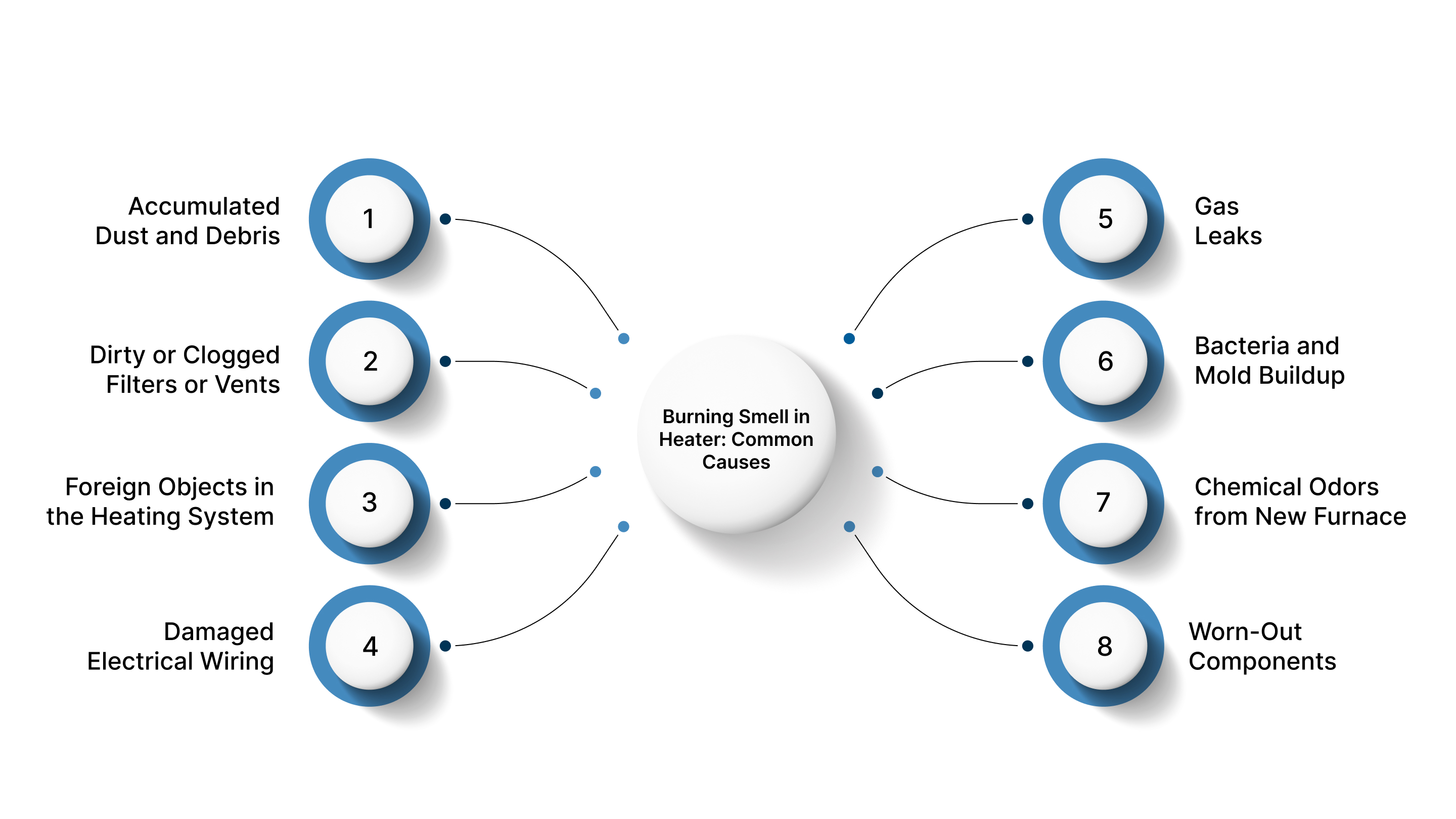
Here are the 8 most common causes of a burning smell in your heater and the simple solutions to keep your system running smoothly:
Accumulated Dust and Debris
When a heater is not in use for a while, dust and debris can accumulate on its components, particularly the heating elements. When the system turns on, this buildup burns off, producing a distinct burning plastic smell.
Solution:
Turn off the heater before cleaning to ensure safety.
Vacuum or wipe down areas around the heater, especially near vents and ducts.
Clean the heating elements regularly during maintenance checks.
Schedule annual inspections to keep the system free of debris year-round.
Pro Tip: Use a microfiber cloth to clean the heating elements. It’s more effective at trapping dust without pushing it further into the system, reducing the chance of clogging or debris buildup.
Dirty or Clogged Filters or Vents
Clogged or dirty filters restrict airflow, causing your heater to overheat and leading to burning smells. This issue is especially common during high usage periods when filters accumulate dust, allergens, and other debris, making it harder for the system to perform effectively.
Solution:
Replace filters every 1-3 months, particularly during peak heating season.
Check vents for blockages, ensure they are fully open and unobstructed.
Inspect filters regularly to make sure they are free of dust and debris, cleaning them if necessary.
Schedule regular maintenance with professionals like Abba HVAC to ensure your system stays clean and performs at its best, preventing any clogs or overheating.
Foreign Objects in the Heating System
Small objects such as toys, paper, or even debris from outdoor areas can make their way into the heating system. When these objects heat up, they produce burning odors, sometimes resembling plastic. These objects may also cause blockages or damage internal components over time.
Solution:
Inspect intake areas and vents for any foreign objects or debris.
Vacuum the area around your heater regularly, especially in high-traffic zones where debris can accumulate.
Check your ducts for obstructions during annual inspections to ensure airflow is not being compromised.
Avoid placing objects near heater intakes or vents, especially small items that could be easily sucked into the system.
Pro Tip: Keep a protective screen or grate over heater intakes to prevent foreign objects from being drawn in, particularly in high-traffic areas or households with children.
Damaged Electrical Wiring
Faulty or exposed electrical wiring can overheat and emit a burning smell. This is a serious issue that can lead to electrical malfunctions, fire risks, or system failure. Wiring damage may occur due to aging systems, improper installation, or wear and tear over time.
Solution:
Turn off the heater immediately if you notice any burning smell or suspect electrical issues.
Inspect exposed wiring for visible signs of wear, burning, or fraying.
Avoid attempting repairs yourself, as electrical issues can be dangerous and should be handled by a licensed professional.
Damaged wiring should never be handled by anyone other than a qualified technician. Schedule regular electrical inspections with professionals like Abba HVAC to ensure your system remains safe, functional, and free from potential hazards.
Gas Leaks
Gas leaks in the heater can lead to a strong burning smell and pose serious safety risks, including fire or carbon monoxide poisoning. These leaks often occur in the gas line or burners, especially if the system is old or poorly maintained.
Solution:
Shut off the gas supply immediately and evacuate the area to ensure safety.
Check for visible signs of a gas leak, such as oily spots or frost around the gas lines.
Contact a professional immediately to inspect and repair the gas line.
Gas leaks are a critical issue that requires professional attention. Abba HVAC can quickly and safely address gas leak concerns to keep your home or business secure.
Bacteria and Mold Buildup
Moisture accumulation in your heating system can create the ideal environment for bacteria and mold growth. Over time, this buildup leads to unpleasant, musty odors when the heater is in use, which can resemble a burning smell. This issue is more common in humid climates or homes with poor ventilation.
Solution:
Clean and disinfect your HVAC system regularly to prevent mold and bacteria growth.
Use a dehumidifier or improve ventilation to reduce moisture buildup in your system.
Inspect the drain line regularly to ensure it's free of blockages and that moisture doesn't accumulate.
Replace filters frequently to maintain clean airflow and limit the growth of mold inside your system.
Chemical Odors from New Furnace
A newly installed furnace may emit a chemical smell, which can resemble burning plastic. This is common during the initial use, as factory coatings or oils used in manufacturing burn off. While the smell is typically harmless, it can be unpleasant.
Solution:
Run the system for a few hours after installation to burn off any residual oils or chemicals.
Ventilate the area properly during the first few uses to allow the smell to dissipate more quickly.
If the smell persists beyond the first few days of operation, inspect the system to ensure there are no underlying issues.
Malfunctioning or Worn-Out Components
Over time, components such as the blower motor, heating elements, or fan can become worn out or malfunction. This can result in unusual smells, including burning odors, which may be mistaken for plastic burning. These worn-out parts can affect the system's efficiency and performance.
Solution:
Inspect key components like the blower motor, heating elements, and fan regularly during maintenance.
Replace malfunctioning or worn-out parts as soon as possible to prevent more significant failures.
Upgrade older components to more energy-efficient models, which can improve overall system performance and longevity.
If you're experiencing burning smells due to worn-out components, it's important to have your system inspected by a professional. This ensures the issue is properly addressed, preventing further damage and ensuring the safety and efficiency of your heater.
How Abba HVAC Can Safely Resolve Burning Smells in Your Heater?
If your heater smells like burning plastic, it's important to address the issue before it escalates. Whether it's dust buildup, clogged filters, or damaged components, Abba HVAC can help identify the root cause and get your system back to optimal performance.
Abba HVAC, a full-service HVAC contractor, provides thorough heating diagnostics and repairs customized to issues that commonly cause burning odors. With years of experience in the industry, our technicians provide prompt and reliable services, ensuring that your heater is safe and functioning efficiently.
Why Austin homeowners and businesses rely on Abba HVAC:
24/7 Emergency Heating Service: Immediate support when burning smells appear unexpectedly or start worsening.
Licensed & Insured Technicians: Every inspection and repair is performed by qualified professionals with extensive HVAC experience.
Detailed System Diagnostics: Technicians use advanced tools to track down electrical faults, component failures, or blockages causing burning odors.
Full Heating System Servicing: From filter replacements to component repairs, they handle everything needed to eliminate unusual smells safely.
Preventive Maintenance Options: Regular tune-ups help reduce heater strain, lower the chances of burning odors, and support long-term system performance.
Abba HVAC serves the Greater Austin and Central Texas areas, including Austin, Cedar Park, Round Rock, Georgetown, Leander, and Pflugerville.
If your heater smells like burning plastic or shows early warning signs, our team can respond quickly and restore safe, efficient operation.
Wrapping Up
A burning plastic smell from your heater can stem from issues like dust buildup, clogged filters, or damaged components. Identifying the cause early is crucial to avoiding more serious problems and costly repairs.
Abba HVAC delivers Dad-level care. Professional-grade HVAC service, offering thorough diagnostics and 24/7 emergency support to keep your system running safely.
If you're noticing a burning smell or other issues, contact Abba HVAC today to schedule an inspection. Get your heater serviced now and enjoy a reliable, efficient heating system all season long.
FAQs
Why does my heater smell like burning plastic when I first turn it on?
This is usually caused by dust and debris burning off the heating elements after the unit has been idle. The smell should subside after a few hours of use. If it persists, there may be an underlying issue like clogged filters or worn components.
Can a dirty air filter cause a burning smell in my heater?
Yes, a clogged filter restricts airflow, causing the system to overheat and produce a burning smell. Replacing the filter regularly, especially during high-use periods, helps prevent this problem and improves system efficiency.
What should I do if my heater smells like burning plastic and I see smoke?
Turn off the heater immediately and disconnect the power to prevent further damage. Smoke can indicate serious electrical issues or overheating, requiring professional inspection and repair.
How can I stop my heater from smelling like burning plastic?
Regular maintenance, like filter replacement and cleaning vents, can prevent burning smells. Scheduling annual inspections ensures the system is running smoothly and helps detect potential issues early.
Why does my new furnace smell like burning plastic?
New furnaces often emit a burning smell due to residual oils used during manufacturing. This is normal and should go away after a few hours of use. If the smell persists, it may require further inspection.