_____________________________________________________________________
Choosing the right heating system for your home is more important than ever. With heating accounting for over half of a typical American household's energy use during winter, the decision can significantly impact both comfort and cost.
Rising energy bills and shifting fuel trends make selecting the most efficient system crucial. In 2024, 42% of U.S. households reported using electricity as their primary heating fuel. This highlights the need for a heating best solution that fits your home's unique needs.
This guide walks you through the best heating systems for your home, providing a clear breakdown of each system's benefits, efficiency, and ideal use cases. By the end, you'll be equipped to make an informed decision.
In a nutshell
Choosing the right system: The best heating system depends on your home's size, climate, and budget. Consider both efficiency and long-term costs.
Geothermal and air-source heat pumps: Highly efficient, these systems provide year-round comfort and work well in moderate to cold climates.
Gas furnaces and boilers: Ideal for cold climates, these systems offer fast heating and reliable warmth, especially in extreme cold.
Ductless mini-splits: Perfect for homes without existing ductwork, they allow for zoned heating, improving energy efficiency and control.
Regular maintenance: Ensuring your system is routinely inspected helps maintain optimal performance, extending its lifespan and reducing long-term costs.
8 Best Heating Systems for Your Home
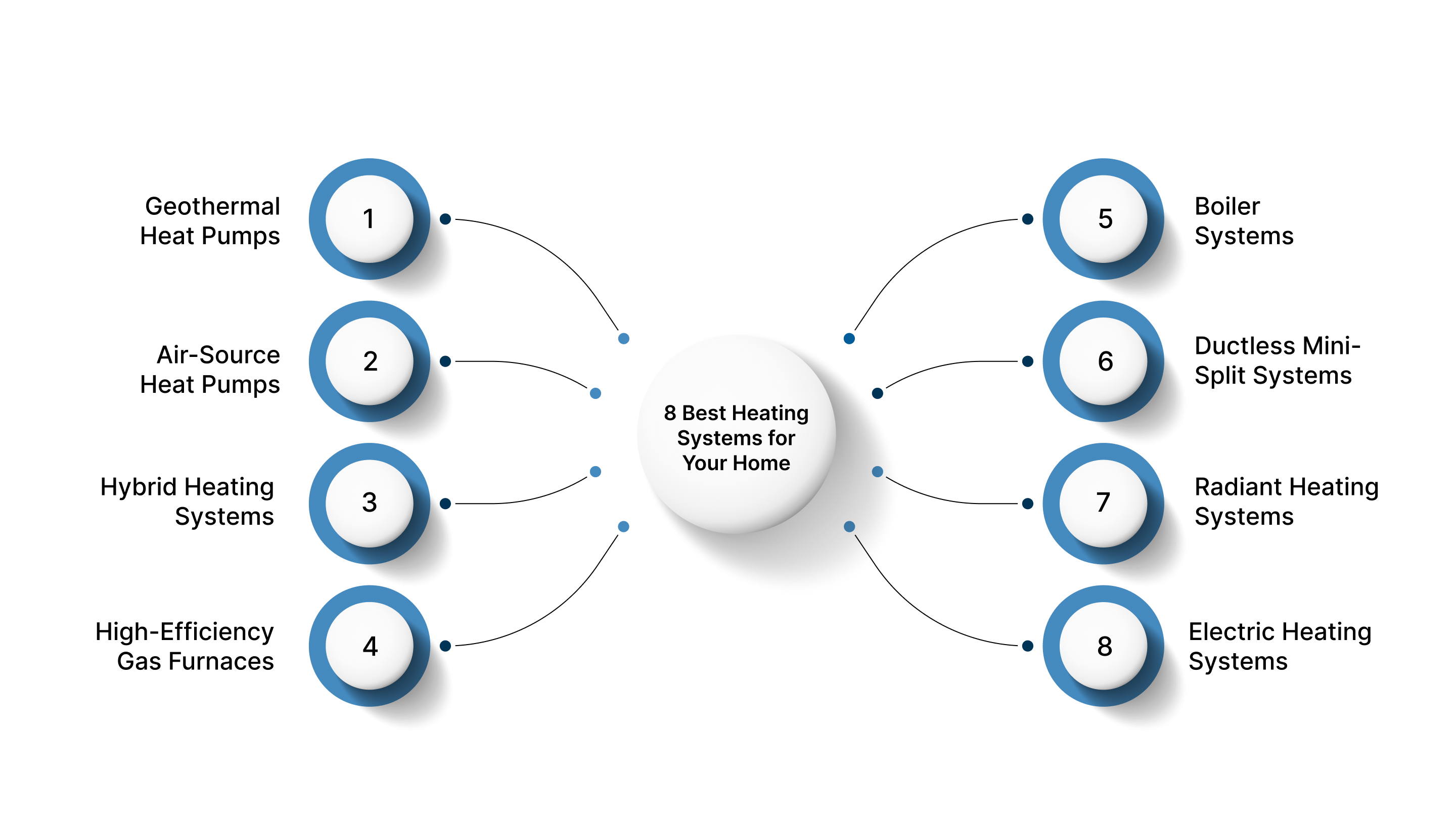
Choosing the right heating system can feel overwhelming with so many options available. Factors like climate, energy efficiency, and installation costs play a crucial role in making the right choice.
Here's a quick comparison of the best heating systems to help you find the perfect fit for your home:
Heating System | Best For | Efficiency | Installation Cost | Key Benefits |
Ground-Source (Geothermal) Heat Pumps | Homes in moderate to cold climates | Very High | High | Long-term savings, eco-friendly |
Air-Source Heat Pumps | Homes in temperate to cold climates | High | Moderate | Versatile, efficient in cold climates |
Hybrid Heating Systems | Homes with fluctuating heating needs | Very High | Moderate to High | Flexibility, energy cost savings |
High-Efficiency Gas Furnaces | Homes in colder climates | High | Moderate | Reliable, fast heating |
Boiler Systems (Hydronic Heating) | Larger homes, open floor plans | High | Moderate to High | Even heat distribution, quiet |
Ductless Mini-Split Systems | Homes without ductwork or limited space | High | Moderate | Zoned heating, flexible installation |
Radiant Heating Systems | Homes with open floor plans | High | Moderate to High | Even heat distribution, comfort |
Electric Heating Systems | Smaller homes, supplementary heating | Low to Moderate | Low | Easy installation, low upfront cost |
Each of these heating systems brings unique benefits, making it important to choose the right one based on your home's specific needs. Let's take a closer look at each system, how it works, and what makes it a good fit for different types of homes and climates.
Ground-Source (Geothermal) Heat Pumps
Ground-source heat pumps use the stable temperature of the ground to heat and cool your home. A loop system buried in the ground circulates fluid that transfers heat between the earth and your home, making it one of the most energy-efficient systems available.
Ideal Use Cases:
Best for homes with ample yard space.
Ideal for homes in moderate to cold climates, seeking an eco-friendly and long-term investment.
Efficiency: Geothermal heat pumps are the most efficient heating system, with COP ratings of 3-5, meaning they produce 3 to 5 times more energy than they consume.
Installation Costs: High, typically ranging from $10,000 to $30,000, depending on the system size and installation complexity.
Pros:
Energy-efficient and eco-friendly.
Low operating costs and long lifespan (up to 50 years).
Cons:
High upfront cost.
Requires ample land area for installation.
Air-Source Heat Pumps (Including Cold-Climate Models)
Air-source heat pumps extract heat from the outside air and transfer it into your home. These systems work by absorbing ambient heat from the air, even in cooler temperatures, and can reverse the process in warmer months to provide cooling as well.
Ideal Use Cases:
Perfect for homes in temperate to cold climates where heating and cooling are both needed.
Ideal for homes with limited space for installation or those looking for a dual-purpose heating and cooling solution.
Efficiency: Air-source heat pumps are highly efficient, with COP ratings typically around 3 to 4, meaning for every unit of energy consumed, 3 to 4 units of heat are delivered.
Installation Costs:
The installation cost of an air-source heat pump generally ranges from $3,500 to $7,500, depending on the size of the home, the model, and the complexity of installation.
Cold-climate models may have a slightly higher installation cost due to their advanced technology designed for extreme conditions.
Pros:
Energy-efficient, offering both heating and cooling capabilities in one unit.
Lower installation costs compared to ground-source systems, and no need for ductwork if going ductless.
Cons:
Efficiency decreases in extremely cold temperatures (though cold-climate models are improving).
May require back-up heating systems in colder regions for peak winter conditions.
Hybrid Heating Systems
Hybrid heating systems combine an electric heat pump with a gas furnace to provide flexible heating options. The system switches between the heat pump for energy efficiency in milder weather and the gas furnace for reliable heating in extreme cold.
Ideal Use Cases:
Best for homes in areas with fluctuating seasonal temperatures.
Ideal for homeowners who want the best of both worlds, a balance of energy efficiency and reliable heat.
Efficiency: Hybrid systems are highly efficient, with the heat pump delivering cost savings during milder months, and the gas furnace stepping in for peak winter heating.
Installation Costs: Typically range from $5,000 to $8,000, depending on the size of the system and the home.
Pros:
Energy-efficient, cost-saving, and flexible operation based on weather conditions.
Lower operating costs during moderate weather with long-term savings.
Cons:
Higher initial installation cost than a single-source system.
It may not be as effective in extreme temperatures without the gas furnace.
High-Efficiency Gas Furnaces
High-efficiency gas furnaces burn natural gas to heat the air in your home, which is then distributed through the ducts. These furnaces have advanced features that maximize fuel efficiency, achieving AFUE (Annual Fuel Utilization Efficiency) ratings of over 90%, meaning they use less gas to generate more heat.
Ideal Use Cases:
Best for homes in cold climates that require consistent heating during the winter months.
Ideal for homeowners looking for fast, reliable heat with a proven, cost-effective system.
Efficiency: For all-electric furnaces, the AFUE rating ranges between 95% and 100%, offering nearly complete energy utilization.
Installation Costs: Typically range from $3,000 to $6,000, depending on the furnace size, installation complexity, and location. These systems are more affordable to install compared to heat pumps or geothermal systems.
Pros:
Fast heating and reliable performance in extreme cold weather.
Energy-efficient and cost-effective, especially for homes in cold climates.
Cons:
Requires access to natural gas; not an option for homes without gas lines.
Higher operational costs if gas prices increase over time.
Boiler Systems (Hydronic Heating)
Boiler systems use heated water to distribute warmth throughout your home via radiators, baseboard heaters, or underfloor pipes. The water is heated in a boiler, then pumped through the system to radiate heat into the living spaces.
Ideal Use Cases:
Best for larger homes or homes with open floor plans, where even and comfortable heating is essential.
Ideal for cold climates where consistent, long-lasting warmth is required through the winter months.
Efficiency: Modern boilers are highly efficient, with many achieving 95% AFUE or higher.
Installation Costs: Typically range from $4,000 to $10,000, depending on the size of the system, the home, and whether the system is being installed in new construction or retrofitted into an existing home.
Pros:
Even, quiet heat distribution, reducing drafts and providing a comfortable indoor environment.
Highly efficient, particularly for larger homes or spaces that need consistent heating.
Cons:
Higher initial installation costs, and it can be more complicated to install in older homes without existing infrastructure.
Maintenance may require professional inspections and occasional repairs, especially if the system is old or improperly maintained.
Ductless Mini-Split Systems
Ductless mini-split systems consist of an indoor unit and an outdoor compressor that are connected by a small conduit, which carries refrigerant and power. These systems provide zoned heating by allowing different areas of your home to be heated independently.
Ideal Use Cases:
Best for homes with no existing ductwork or homes requiring zoned heating.
Ideal for smaller homes, additions, or homes with limited space for installation.
Efficiency: Ductless mini-splits are highly efficient, with SEER (Seasonal Energy Efficiency Ratio) ratings typically between 15-35, and HSPF (Heating Seasonal Performance Factor) ratings up to 10 for heat pump models.
Installation Costs: The installation cost of ductless mini-split systems generally ranges from $2,000 to $7,000, depending on the number of indoor units and the complexity of installation.
Pros:
Zoned heating allows you to control the temperature in each room, improving comfort and reducing energy waste.
Easy installation without the need for extensive ductwork, making it ideal for home additions or renovations.
Cons:
The initial installation cost can be higher compared to traditional systems.
Aesthetic concerns, the indoor units are visible on the walls and may not appeal to every homeowner.
Radiant Heating Systems
Radiant heating systems deliver heat directly through floors, walls, or ceilings. Electric cables or hot water tubes are embedded in the floors or walls, allowing heat to radiate evenly across the space. This type of heating eliminates drafts and provides consistent warmth throughout the home, without relying on forced air or vents.
Ideal Use Cases:
Best for homes with open floor plans, where even heat distribution is needed.
Ideal for new builds or homes undergoing renovations, as the system works best when installed during construction.
Efficiency: Radiant heating systems are highly efficient, providing even heat with minimal heat loss. Hydronic radiant systems, in particular, can be more energy-efficient than traditional forced-air systems, especially in homes with large, open spaces.
Installation Costs: Installation costs typically range from $6,000 to $15,000, depending on the system type (electric or hydronic), home size, and the complexity of installation.
Pros:
Even, consistent warmth throughout the space, with no drafts or cold spots.
Silent operation, making it ideal for living areas or bedrooms.
Lower energy bills in the long term, especially with hydronic systems.
Cons:
High installation costs, particularly for hydronic systems, which require significant retrofitting in older homes.
Disruption during installation, as the system needs to be embedded in floors or walls.
Electric Heating Systems
Electric heating systems, such as baseboard heaters, space heaters, and electric furnaces, convert electricity directly into heat. Most electric heating systems operate through resistance heating, where electrical energy is turned into heat via resistance coils.
Electric heat pumps work similarly to air-source heat pumps but are powered by electricity.
Ideal Use Cases:
Best for smaller homes, apartments, or rooms with low heating demands.
Ideal for supplementary heating in homes that already have another primary heating source.
Efficiency: Electric heating systems are nearly 100% efficient in converting energy to heat. However, they can be more expensive to operate compared to heat pumps or gas furnaces due to higher electricity costs.
Installation Costs: Installation is cost-effective, ranging from $500 to $2,500. These systems are ideal for smaller spaces or temporary heating, but may not be economical for larger homes.
Pros:
Low upfront costs and easy installation.
No need for ductwork or complex systems, providing flexibility for smaller spaces.
Quick, on-demand heating for smaller rooms or areas.
Cons:
Higher operating costs for larger spaces, as electricity is typically more expensive than other heating fuels.
Limited capacity for heating large homes or multiple rooms effectively.
Note: The COP values and installation costs mentioned are approximate estimates based on industry sources and may vary depending on factors like system design, climate, and installation specifics.
Now that you’re familiar with the different heating options, let’s explore how to choose the best heating system based on your home’s specific needs and climate.
Choosing the Right Heating System for Your Home
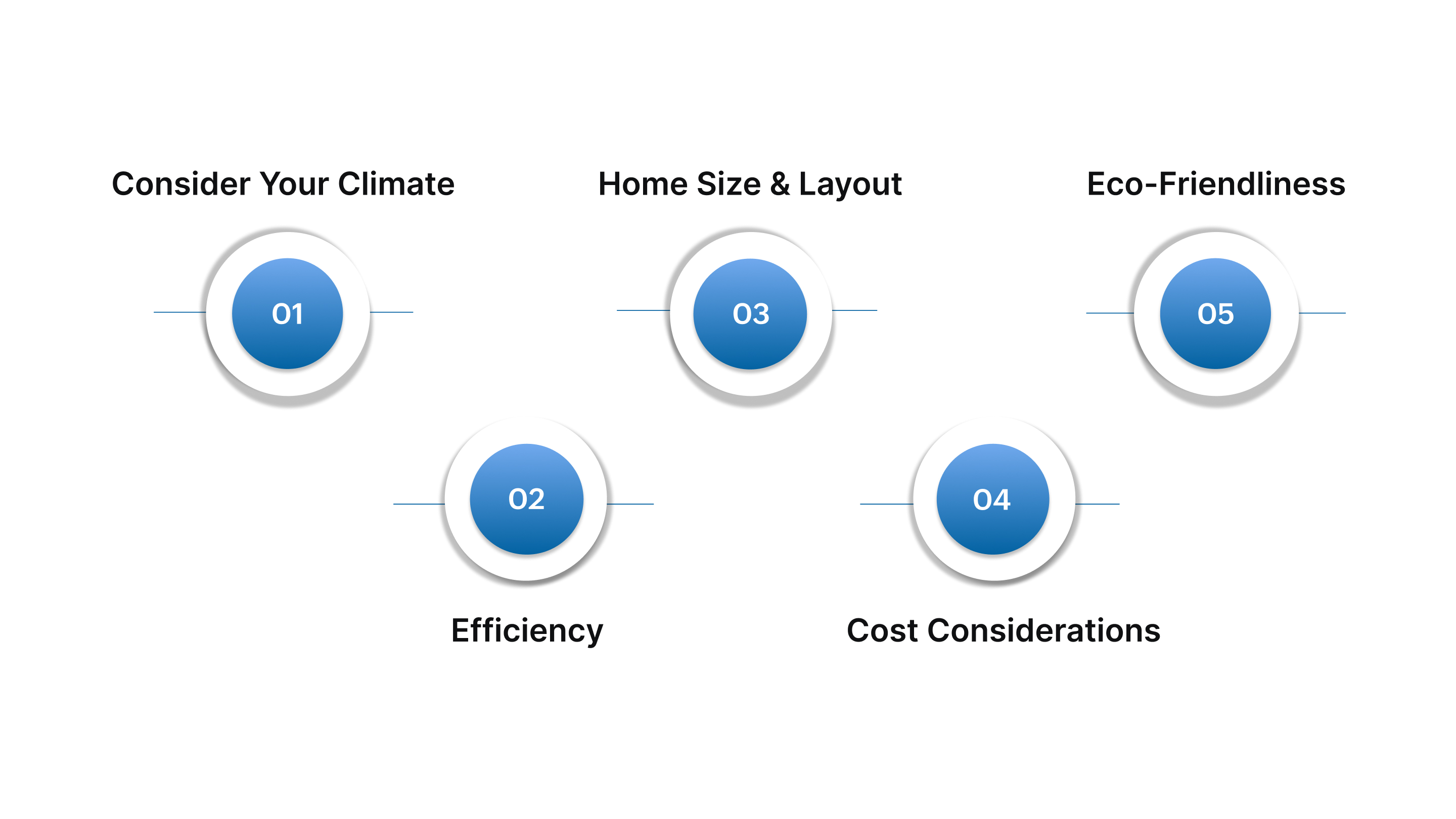
Choosing the best heating system involves considering your home's size, climate, and efficiency needs. The right system can keep your home comfortable while saving on energy costs.
Let's break down what to focus on when selecting the ideal system.
Consider Your Climate:
Geothermal/air-source heat pumps are ideal for moderate to cold climates.
Gas furnaces/boilers are best for extreme cold.
Efficiency:
Look for high-efficiency ratings (e.g., AFUE over 90% for gas furnaces, COP 3-5 for heat pumps).
Home Size & Layout:
Ductless mini-splits are great for small homes or areas without ducts.
Hydronic heating systems are suitable for larger homes.
Cost Considerations:
Weigh installation costs against long-term savings, particularly with geothermal and air-source heat pumps.
Eco-Friendliness:
For an eco-conscious solution, go with geothermal or air-source heat pumps for a reduced carbon footprint.
Choosing the right heating system for your home can be overwhelming, especially with so many options available. It's crucial to ensure that the system you select is both energy-efficient and personalized to your specific needs.
That's where Abba HVAC, a full-service HVAC contractor based in Austin, Texas, comes in. With expertise in installation and maintenance, they ensure that your heating system is optimized for comfort and efficiency year-round.
How Abba HVAC Ensures Your Heating System’s Optimal Performance?
Abba HVAC, a full-service HVAC contractor, specializes in keeping your heating system operating efficiently. Serving the Greater Austin and Central Texas areas, including Cedar Park, Round Rock, Georgetown, Leander, and Pflugerville, they offer expert diagnostics, repairs, and maintenance to ensure your system's optimal performance.
Why homeowners and businesses rely on Abba HVAC:
24/7 Emergency Heating Service: Quick response to heating issues that arise unexpectedly, ensuring comfort and safety.
Licensed & Insured Technicians: All services are performed by certified professionals with extensive experience in HVAC systems.
Thorough System Diagnostics: Advanced tools and techniques used to identify problems like electrical faults, faulty components, or energy inefficiencies.
Comprehensive Heating Repairs: From filter replacements to component repairs, Abba HVAC handles all repairs to keep your system running smoothly.
Preventive Maintenance Programs: Regular service that maximizes system efficiency, reduces breakdowns, and extends the lifespan of your heating system.
With Abba HVAC by your side, your heating system will stay efficient, reliable, and ready for the seasons ahead.
Wrapping Up
Choosing the right heating system is a critical decision for ensuring your home stays comfortable and energy-efficient year-round. With so many options available, it's important to select a system that fits your specific needs, climate, and budget.
Abba HVAC, based in Austin, Texas, offers expert guidance and installation to ensure your heating system runs at its best. Their team of licensed technicians is dedicated to keeping your home warm and energy-efficient with reliable, professional service.
Is your heating system ready for the season? Contact Abba HVAC today for a consultation and let their experts ensure your system runs at peak performance, keeping your home warm all year long.
FAQs
What is the most efficient heating system for a home in a cold climate?
For homes in cold climates, ground-source heat pumps and high-efficiency gas furnaces are excellent choices. Geothermal systems offer the highest efficiency, while gas furnaces provide reliable and quick heating during extreme cold.
How long does it take to install a heating system in my home?
Installation times vary depending on the system. Ductless mini-split systems can be installed in as little as a day, while systems like geothermal heat pumps or boilers might take several days or even weeks, due to their complexity.
Can I use an air-source heat pump for heating and cooling?
Yes, air-source heat pumps are dual-purpose systems that provide both heating and cooling. They are an energy-efficient option for homeowners looking to minimize upfront costs while offering year-round comfort.
How do I maintain my heating system to ensure it operates efficiently?
Regular maintenance is essential. Changing filters, inspecting ducts, and scheduling annual professional inspections can extend the life of your system and keep it running efficiently. Abba HVAC offers maintenance plans to ensure your system stays in top condition.
Is radiant floor heating worth the investment for my home?
Radiant floor heating provides even warmth and quiet operation, making it ideal for homes with open floor plans or new builds. Though it requires a higher initial investment, it can offer significant long-term comfort and energy savings, especially in colder climates.