
Temperature comfort is not the same in every room. Upstairs feels warmer, while the office stays cool. That’s where an HVAC zoning system helps.
Zoning divides your building into controlled areas, each managed by its own thermostat. It improves comfort, cuts energy waste, and provides balance throughout your property.
For Austin homeowners and business owners, understanding the HVAC zoning system cost is key before installation or replacement. In this guide, we’ll cover average prices, cost factors, system options, and local insights to help you plan your investment confidently.
Key Takeaways
Average cost in Austin: Adding an HVAC zoning system costs between $1,500 and $8,500, with most homeowners paying around $3,000 for two zones.
Main cost drivers: Prices depend on zone count, ductwork condition, system type, and thermostat choice. New ductwork can add $2,100 to $4,000.
Energy and comfort benefits: Zoning reduces energy waste by cooling or heating only occupied areas, cutting bills by up to 30% while improving comfort.
Local expertise matters: Abba HVAC, Austin’s trusted full-service contractor since 2007, offers zoning design, installation, and maintenance customized to local homes and businesses.
What Is an HVAC Zoning System?
An HVAC zoning system divides your heating and cooling system into separate areas, or “zones.” Each zone has its own thermostat that communicates with a central control panel and a series of dampers inside your ductwork.
When a thermostat calls for cooling or heating, the dampers open only in that zone, directing airflow exactly where it’s needed. This creates precise comfort without wasting energy in unused rooms.
How Zoning Systems Work
Think of your HVAC zoning system as a team. The main unit handles airflow, while dampers act like gates that open and close based on thermostat signals.
Key components include:
Thermostats – One per zone, allowing separate temperature settings.
Dampers – Installed in duct lines to regulate airflow.
Control Panel – The “brain” that manages all thermostats and dampers together.
For example, you can keep your upstairs cooler at night while your office area stays warmer during the day.
This system reduces strain on your HVAC equipment, allowing it to run more efficiently and last longer.
Benefits of a Zoned System
Zoning systems offer several advantages for Austin homes and businesses:
Better comfort: Adjust temperatures for different rooms or floors.
Energy savings: Heat or cool only the areas in use, lowering energy bills.
Extended system life: Less frequent cycling reduces wear and tear.
Improved air quality: Controlled airflow minimizes dust circulation between zones.
For larger homes or multi-level buildings, zoning often delivers noticeable improvements in both comfort and energy use.
When Zoning Makes Sense
Not every building needs zoning, but it’s ideal for:
Multi-story homes where the upper floors get hotter.
Open-plan offices with varied occupancy.
Homes with large windows or uneven sunlight exposure.
Additions or remodeled spaces where comfort differs from the rest of the building.
In Austin’s hot climate, zoning helps maintain consistent temperatures across rooms exposed to different sun levels, especially west-facing areas that overheat in summer.
Pro Tip: Zoning works best when combined with regular maintenance. Schedule quarterly tune-ups with Abba HVAC to keep your system efficient all year.
Average HVAC Zoning System Costs in Austin, TX
Every building in Austin is different, and so are zoning system costs. The price depends on your system type, how many zones you need, and whether you already have usable ductwork.
In Austin, many homeowners spend around $3,000 to add an HVAC zoning system to an existing home.
Here’s a clearer breakdown based on realistic scenarios.
Typical Cost Range
Adding a zoning system to an existing house: typically $1,500 to $8,500.
Most homeowners pay around $3,000 for standard two-zone setups.
For full multi-zone installations (new system + multiple zones + ductwork), costs can move toward the top end of that range or higher.
Two-Zone System Example
A two-zone setup is one of the most common configurations, especially if you have upstairs/downstairs or a main floor plus a bonus room.
With existing ductwork in good condition, about $1,700 to $2,000 for a two-zone system.
Each extra zone typically adds $350 to $500.
If you choose to install a separate second HVAC system rather than zoning the existing one, expect higher costs ($12,000 to $20,000 or more, depending on capacity) , especially for larger homes in Austin’s climate.
Commercial vs. Residential Pricing
Commercial zoning systems cost more due to bigger units, more zones, and stricter codes.
Local home-installation pricing tends to stay in the mid-thousands for light residential applications.
Commercial or multi-unit buildings can easily reach $8,000 to $15,000+, depending on size and complexity.
Local Factors That Affect Austin Pricing
Labor rates: Skilled HVAC labor in Austin runs between $75 and $150 per hour, depending on job complexity.
Ductwork condition: Many older Austin homes need duct sealing or modifications. If new ductwork is required, add $2,100 to $4,000 or more.
Climate: Austin’s long cooling season means equipment must handle heavy loads, pushing preference toward higher-efficiency components.
Permits & electrical work: Local permits may cost $250–$400, and minor electrical upgrades may also be required.
Factors That Influence HVAC Zoning System Costs
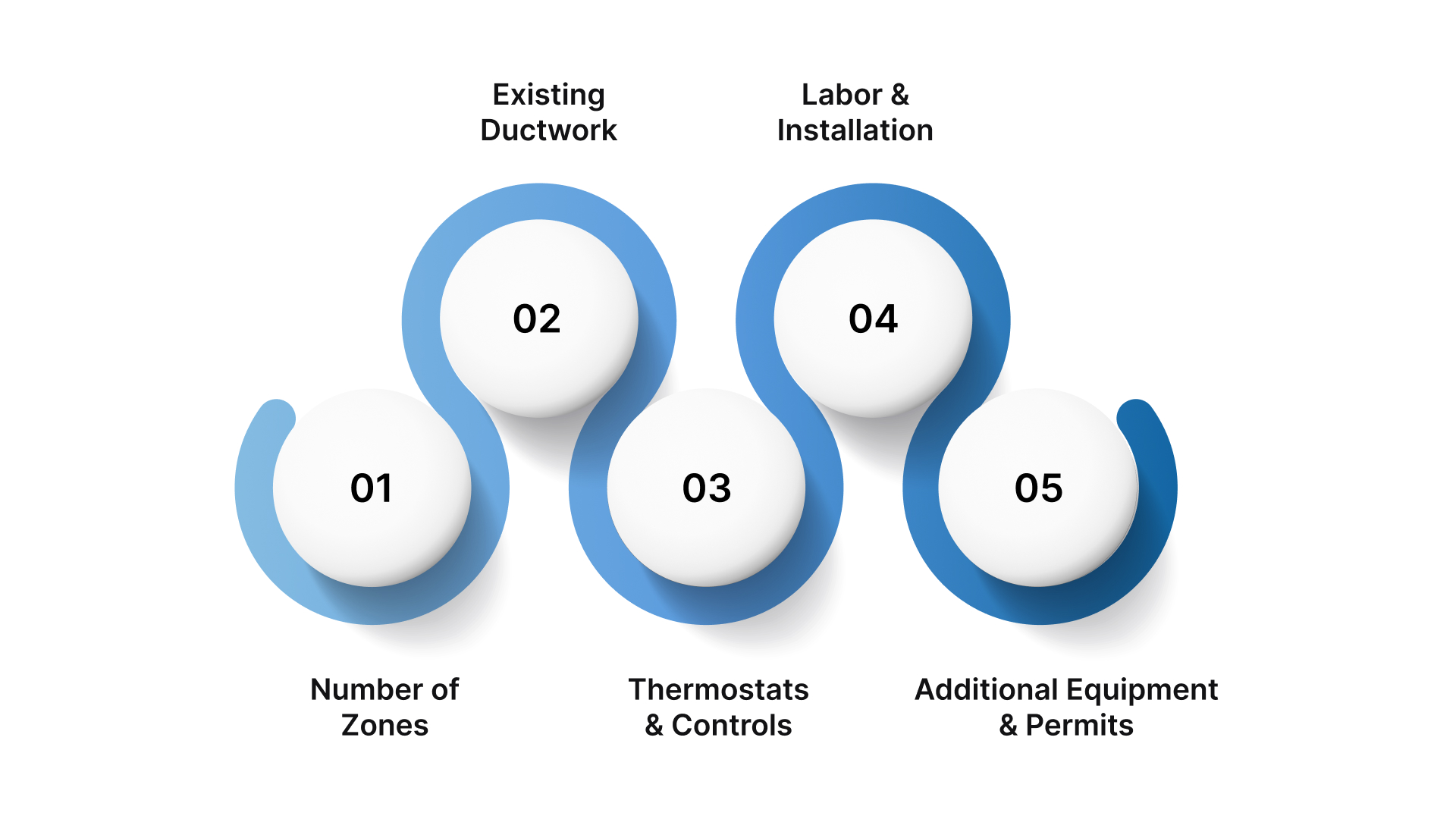
Every HVAC zoning project in Austin is unique. The total price depends on several factors, from the number of zones to the condition of your existing ductwork. Understanding these variables helps you plan your budget and avoid surprises during installation.
1. Number of Zones
The number of climate-controlled zones is the most direct cost driver. A basic two-zone system installed with existing ducts usually costs around $1,700 to $2,000. Each additional zone adds roughly $350 to $500.
For example, a four-zone home with separate thermostats for each floor could range between $3,000 and $4,000, excluding new ductwork.
More zones require additional dampers, thermostats, and control wiring, which increases both equipment and labor time.
2. Existing Ductwork
If your current ductwork is in good shape, costs remain much lower. Adding a zoning system to existing ducts is straightforward because dampers can be installed inside your current airflow system.
However, damaged or undersized ducts will need repair or replacement.
Installing new ductwork adds $2,100 to $4,000 to your total. This is common in older Austin homes that were not built for zoning or multi-level temperature control.
Well-insulated ducts not only improve comfort but also help zoning systems run more efficiently, reducing long-term energy costs.
System Type (Ducted vs. Ductless)
The type of HVAC system you use changes the project scope.
Ducted systems: These use motorized dampers in the ductwork to redirect air. They are less expensive if your ducts are in good condition.
Ductless systems (mini-splits): These rely on separate indoor units for each zone. While ideal for homes without ducts, they cost more—usually $2,000 to $6,000 per room.
For homes without central ducts, ductless systems can be the best choice despite the higher upfront cost because they eliminate energy loss from duct leaks.
3. Thermostats and Controls
Each zone needs its own thermostat. You can use standard digital models or advanced smart thermostats with multiple sensors.
A smart multi-zone thermostat costs more but provides better temperature accuracy and remote control through mobile apps.
Expect to spend an extra $200–$400 per zone for these systems, depending on brand and features.
In Austin’s energy-conscious market, smart controls can lower utility bills, making them a worthwhile upgrade.
4. Labor and Installation
Labor costs in the Austin area typically range between $75 and $150 per hour, depending on system complexity. Homes that require new wiring, duct modifications, or ceiling access may take longer to complete.
Professional installation is highly recommended because zoning involves electrical wiring, damper placement, and HVAC system calibration. Poor installation can lead to airflow imbalance or system strain.
5. Additional Equipment and Permits
Extra equipment like zone control panels ($120–$300) and temperature sensors ($30–$60 each) adds to the total. If your home is large, you may need an additional HVAC unit for balanced airflow, especially in multi-story properties.
In Austin, local building codes often require permits and inspections for zoning installations. Expect permit fees between $250 and $400, depending on project scope and city requirements.
Comparing Single-Zone vs. Multi-Zone HVAC Systems
Choosing between a single-zone and multi-zone HVAC system depends on your building’s layout, comfort needs, and budget. In Austin’s variable climate, zoning often pays for itself through better energy control and reduced strain on equipment.
Cost Comparison
Here’s a general cost comparison to help you evaluate which system best fits your situation:
System Type | Typical Cost (Austin, TX) | Ideal Use |
Single-Zone | $6,000 – $12,000 | Smaller homes or single-floor spaces |
Two-Zone (Dual) | $3,000 – $7,000 | Homes with upstairs/downstairs or split layouts |
Multi-Zone (3+ zones) | $8,000 – $15,000+ | Large homes, offices, or multi-tenant buildings |
Single-zone systems are cheaper upfront but less efficient in buildings with uneven heating and cooling needs. Multi-zone systems cost more initially but provide long-term energy savings and improved comfort.
Energy Savings Potential
Zoning systems reduce wasted energy by conditioning only the spaces that need it. Homeowners in Austin typically save 10 – 30 % on cooling and heating costs after installing a zoning system.
With Austin’s long, hot summers, this reduction in runtime can significantly lower electricity bills and reduce wear on the HVAC unit.
When Two Systems Make Sense
In very large homes, sometimes it’s more practical to install two separate HVAC units instead of one zoned system. For example, a 4,000-square-foot home may use one system for upstairs and another for downstairs.
Although this approach costs more, typically $12,000 – $20,000 total, it allows for complete system redundancy and simpler maintenance.
Now that we’ve compared configurations, let’s see what’s involved in adding zoning to a system you already own.
Can You Add Zoning to an Existing HVAC System?
Yes, most Austin homeowners can add zoning to their existing HVAC system, but the process and cost depend on the current setup and ductwork condition.
Adding zones is a practical way to improve comfort without replacing your entire HVAC system. However, it requires an experienced technician to ensure proper airflow and system balance.
What’s Involved in a Retrofit Installation
Retrofitting a zoning system into an existing home includes several key steps:
Inspecting ducts to confirm they’re accessible and airtight.
Installing motorized dampers inside the duct lines.
Wiring thermostats in each zone and connecting them to a new control panel.
Calibrating the control board to communicate with your current HVAC equipment.
This process typically takes one to two days for a residential two-zone setup, depending on access and duct layout.
Retrofit Cost Range in Austin
The average cost to add zoning to an existing system in Austin ranges from $1,500 – $8,500, with most homeowners paying around $3,000.
Costs are lowest when ducts are in good condition and only two zones are added. Each extra zone raises the total by $350 – $500. If new ductwork or electrical upgrades are required, expect the price to rise toward the higher end of that range.
When Replacement Is Better Than Retrofit
Sometimes replacing the system is a smarter long-term investment. Consider replacement if:
Your system is over 12–15 years old.
Efficiency is low, or repair costs keep increasing.
Ductwork is damaged or too small for zoning.
A new system with integrated zoning controls can be more efficient, quieter, and covered by warranty, saving more money over time.
Pro Tip: Schedule a professional inspection before deciding. A qualified Austin HVAC contractor like Abba HVAC can assess your current setup, explain retrofit options, and recommend whether upgrading or replacing makes more sense.
Is a Zoned HVAC System Worth the Cost?
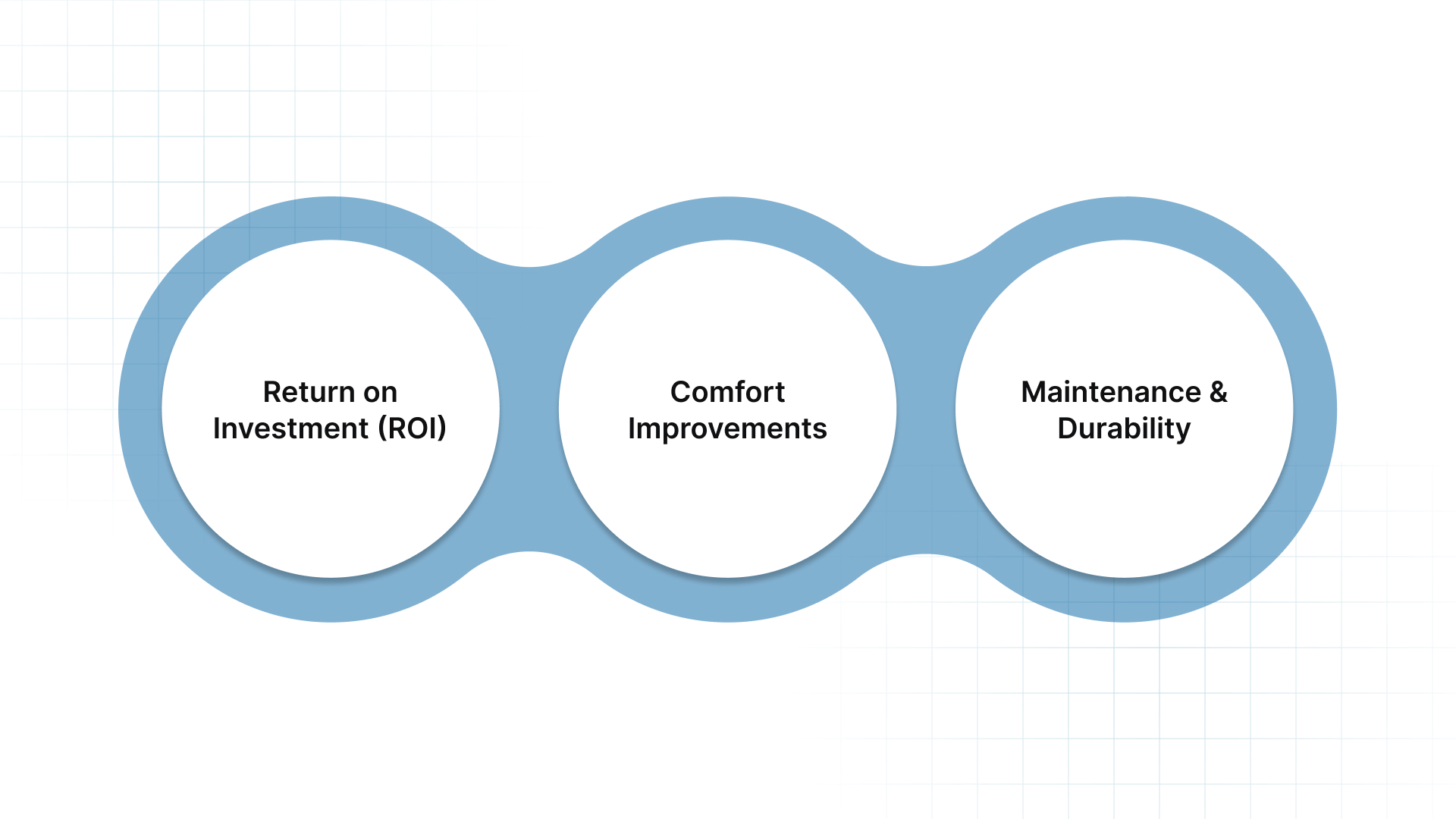
For many Austin homeowners and small businesses, the answer is yes. While the upfront investment can seem high, zoning systems offer measurable comfort, energy, and longevity benefits that often outweigh the initial expense.
Return on Investment (ROI)
A properly installed zoning system can reduce annual energy costs by 10–30 percent, depending on usage and building layout, with Austin’s long cooling season, which means real savings on utility bills every month.
Most homeowners recover the additional cost of zoning within three to five years, especially if they pair the system with programmable or smart thermostats. Over time, zoning not only pays for itself but also helps extend the lifespan of your HVAC equipment.
Comfort Improvements
Zoning eliminates common temperature differences between rooms or floors. Each area stays at the temperature you prefer, without affecting others.
For example, a west-facing room in Austin might stay much warmer in the afternoon. Zoning allows you to cool that room separately without overcooling the rest of the house.
This targeted comfort also reduces system cycling, creating a quieter, more consistent indoor climate.
Maintenance and Durability
Zoned systems often experience less wear because they do not operate at full capacity all the time. Routine tune-ups, like those offered by Abba HVAC, help prevent airflow issues and keep each zone balanced.
A well-maintained zoning system can last 15–20 years, with only minor component replacements, such as thermostats or dampers, over time.
Pro Tip: Combine your zoning system with a regular maintenance plan. Seasonal inspections ensure your dampers, sensors, and thermostats continue to perform efficiently.
Why Austin Homeowners and Businesses Choose Abba HVAC
Abba HVAC has been helping Austin residents and businesses stay comfortable since 2007. As a full-service HVAC contractor, the company provides installation, repair, and maintenance for heating, cooling, and air quality systems across Central Texas.
Experience and Local Expertise
With over 15 years of service, Abba HVAC understands the challenges of Austin’s long summers and unpredictable cold snaps. Their licensed technicians design zoning systems tailored to each property, whether it’s a downtown office, a suburban home, or a retail space.
Comprehensive Services
Abba HVAC does more than HVAC zoning. Their team handles ductwork cleaning and sealing, heat pump and AC repairs, and even basic plumbing and electrical work. This full-service approach means one trusted contractor handles every aspect of your building’s comfort system.
Transparent Estimates and Reliable Service
Customers value Abba HVAC for its clear communication and detailed quotes.
Before any installation, technicians explain all options, costs, and potential savings so you can make an informed decision.
The company also provides:
24/7 emergency HVAC service across Austin and nearby cities
Preventive maintenance agreements for long-term reliability
Energy-efficient system recommendations to help reduce utility costs
For homeowners and businesses looking to install or upgrade a zoning system, Abba HVAC combines technical expertise with personal attention—what they call “Dad-level care and professional-grade service.
Conclusion
An HVAC zoning system is an upgrade; it is a smart, long-term investment in comfort and efficiency. By dividing your home or building into temperature-controlled zones, you use energy only where it’s needed and reduce strain on your system.
In Austin’s long, hot summers, zoning can make a significant difference. It keeps rooms evenly cooled, cuts utility bills, and extends the life of your equipment.
When you work with Abba HVAC, you get local expertise, clear pricing, and reliable service from a licensed team that understands Central Texas homes and businesses.
If you are planning to install, replace, or retrofit a zoning system, Abba HVAC can help design a custom plan that fits your property and budget.
Contact Abba HVAC today for a free, no-obligation consultation and quote. Experience dad-level care and professional-grade service that keeps Austin comfortable all year.
FAQs
1. How much does an HVAC zoning system cost in Austin, TX?
The average cost to add zoning to an existing system in Austin is $1,500 to $8,500, with most homeowners paying about $3,000. Costs vary based on the number of zones, ductwork condition, and thermostat type.
2. Can I add zoning to my current HVAC system?
Yes. Most systems can be upgraded with zoning controls. A professional inspection ensures your ducts and equipment can support additional zones safely and efficiently.
3. What affects the total cost the most?
The biggest cost factors are the number of zones, ductwork condition, system type (ducted or ductless), and labor time. Adding zones or new ductwork increases both material and installation costs.
4. Is a zoned HVAC system worth the investment?
For many Austin homes and businesses, yes. Zoning systems improve comfort, reduce energy use, and can pay for themselves within a few years through lower utility bills.
5. How long does installation take?
A basic two-zone retrofit usually takes one to two days. Larger or more complex systems may require additional time, especially if new ducts or wiring are needed.
6. Do zoning systems need extra maintenance?
Zoning systems need routine maintenance, similar to standard HVAC systems. During seasonal tune-ups, dampers, thermostats, and sensors should be inspected to ensure proper performance.