
Your water heater quietly handles one of the most important tasks in your home, supplying hot water for showers, laundry, and cleaning. But without yearly maintenance, that reliability can fade quickly.
In Austin, hard water adds minerals that settle at the bottom of your tank, creating buildup that forces your heater to work harder. Over time, this strain can lead to higher energy bills, reduced efficiency, and even premature failure.
That’s why scheduling annual water heater service is not just a good habit, it’s essential for performance and peace of mind. In this guide, we’ll explain what maintenance involves, how it saves money, and why having your system serviced by a trusted Austin professional keeps your hot water flowing year-round.
Key Takeaways
Annual maintenance prevents costly repairs. Flushing your water heater and checking key components yearly helps avoid breakdowns and extend system life.
Austin’s hard water increases service importance. Mineral buildup reduces efficiency by up to 20% each year if not cleaned regularly.
Professional care saves time and energy. Certified technicians ensure safe, thorough flushing, valve testing, and thermostat calibration.
Abba HVAC keeps Austin homes comfortable. We provide expert water heater maintenance, reliable repairs, and flexible service plans to keep your hot water running year-round.
Why Annual Water Heater Service Matters
Many homeowners wait until their water heater stops working before calling for help. Regular service prevents that problem long before it starts.
Annual maintenance extends your system’s lifespan, improves efficiency, and keeps your water clean and consistent. More importantly, it prevents small issues, like sediment buildup or pressure imbalance, from turning into costly breakdowns.
In Austin, TX, where hard water accelerates scale accumulation, skipping maintenance even for one year can reduce your heater’s efficiency by up to 20 percent.
Sediment acts like insulation inside the tank, forcing the system to use more energy to heat the same amount of water.
Key Benefits of Annual Service
Energy Efficiency: A clean tank and calibrated thermostat reduce power or gas use.
Longevity: Regular flushing and inspection help your heater last longer, often 10–12 years for well-maintained units.
Consistent Hot Water: Maintenance keeps performance stable, preventing temperature fluctuations.
Safety: Testing pressure valves and thermostat settings prevents dangerous overheating or leaks.
For Austin homeowners, annual service is a small investment that protects your comfort, your budget, and your equipment.
Pro Tip: Schedule your water heater service right before the winter months. It ensures your system runs efficiently when demand for hot water is highest.
What Maintenance Does a Water Heater Need?
Annual water heater maintenance isn’t complicated, but it must be done correctly. Each step plays an important role in keeping your system efficient and safe.
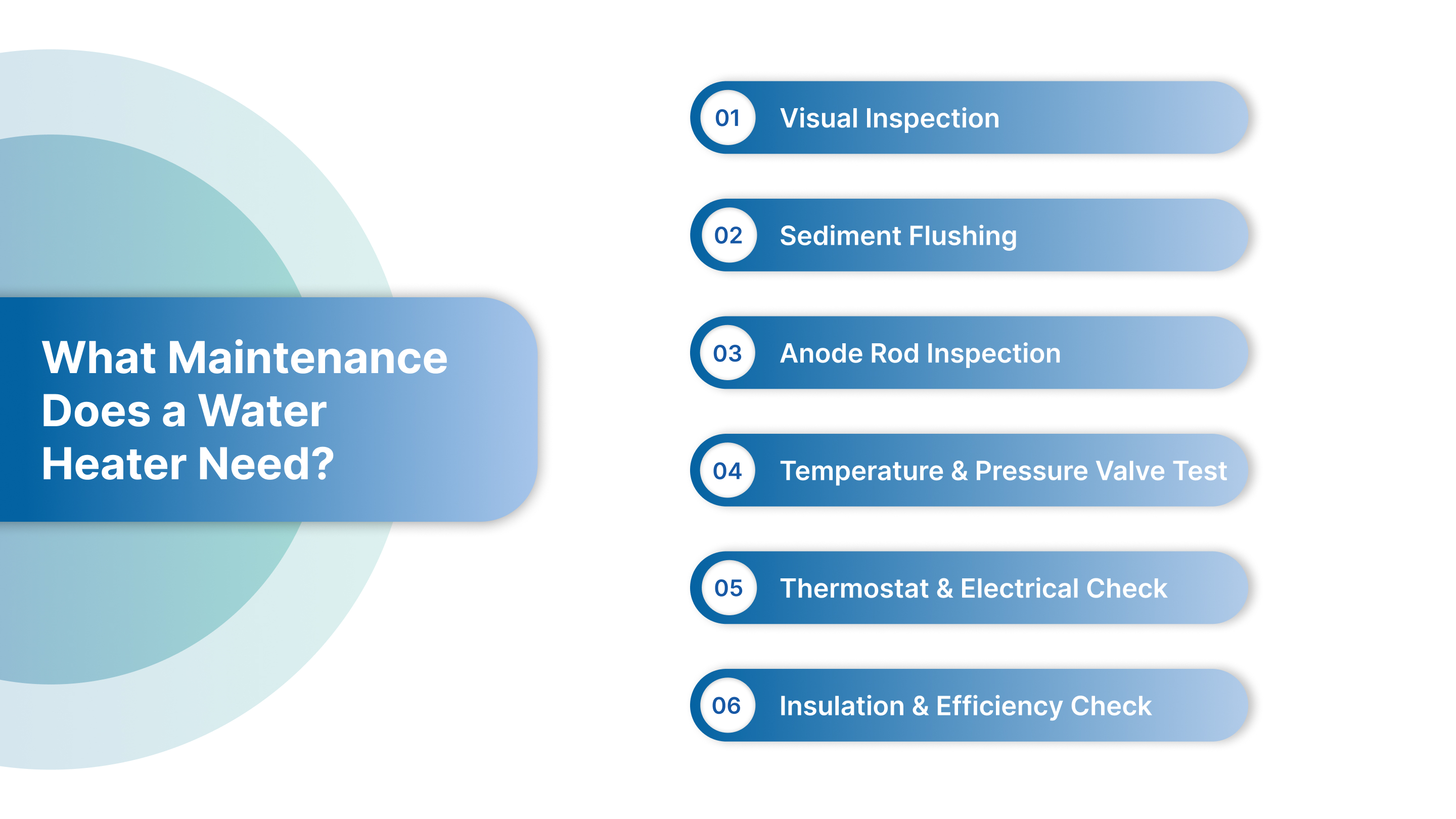
Here’s what a complete annual water heater service should include:
1. Visual Inspection
A technician begins by inspecting the tank and connections for any signs of rust, corrosion, or leaks. Loose fittings, worn seals, or discolored areas can indicate early damage that’s easier and cheaper to fix before it spreads.
2. Sediment Flushing
Over time, minerals in Austin’s hard water settle at the bottom of the tank. This sediment buildup creates a barrier between the burner and the water, forcing the system to use more energy.
Flushing the tank once a year removes sediment, restores heating efficiency, and prevents noise caused by trapped air or boiling water pockets.
3. Anode Rod Inspection
The anode rod is a key corrosion defense for your tank. It attracts minerals that would otherwise rust the steel lining. A professional checks and replaces it when necessary, usually every 3–5 years, to extend your tank’s lifespan.
4. Temperature and Pressure Valve Test
This safety device releases excess pressure if the tank overheats. Testing ensures it’s functioning properly, protecting against leaks or potential bursts.
5. Thermostat and Electrical Check
A technician verifies that the thermostat and heating elements (for electric units) or gas burner (for gas units) are operating correctly. Incorrect calibration can waste energy and shorten equipment life.
6. Insulation and Efficiency Check
The outer tank and connecting pipes are checked for proper insulation. Adding insulation wraps can reduce heat loss and lower your energy costs.
Pro Tip: Ask your technician to record readings and test results after each visit. A documented maintenance log supports warranty coverage and tracks performance changes over time.
Signs Your Water Heater Needs Maintenance
Even with regular care, your water heater gives early signs when it needs attention. Recognizing these symptoms can help prevent bigger issues or even a full system failure.
1. Fluctuating Water Temperature
If your water turns hot, then suddenly cold, sediment buildup or thermostat issues may be disrupting heating cycles.
2. Rumbling or Popping Sounds
Noise inside the tank usually means air is trapped beneath hardened sediment layers. Regular flushing eliminates these sounds and restores quiet operation.
3. Rusty or Cloudy Water
Brown-tinted or murky water can signal corrosion inside the tank or failing anode rods. This requires professional inspection right away.
4. Low Water Pressure
Mineral deposits can clog pipes or valves, reducing flow. Cleaning and flushing typically restore pressure.
5. Higher Utility Bills
If your energy bills increase without other changes, your heater may be overworking due to sediment buildup or faulty heating elements.
6. Older Unit (8+ Years)
Even if your water heater seems fine, older systems benefit from annual inspections. Regular service can add several years of dependable use before replacement becomes necessary.
Pro Tip: In Austin, where water hardness is above the national average, these warning signs often appear sooner. Scheduling preventive maintenance every 12 months keeps your system clean and efficient.
DIY vs. Professional Water Heater Maintenance
It’s natural for homeowners to handle basic upkeep around the house, but water heaters involve pressurized systems, high temperatures, and, in some cases, gas connections.
Knowing what you can safely do yourself, and what should be left to a licensed professional keeps your equipment running efficiently without risking damage or safety hazards.
Safe DIY Tasks
Homeowners can safely manage a few simple maintenance steps between professional visits:
Check the thermostat setting: Keep it around 120°F to balance comfort, safety, and energy savings.
Inspect for leaks or corrosion: A quick monthly visual check helps spot early warning signs.
Drain a few gallons of water: Light flushing every few months removes some sediment and improves efficiency.
Test the pressure relief valve: Lift the lever slightly to make sure water flows freely, then reseal it.
Tasks for a Licensed Professional
Other services require training, tools, and safety testing:
Full tank flushing and descaling (especially for Austin’s hard water)
Anode rod inspection or replacement
Gas burner or electrical component testing
Comprehensive system calibration and leak testing
Professionals not only ensure safety, but they also perform efficiency checks and verify your water heater meets local codes and manufacturer warranty requirements.
Pro Tip: A professional technician from Abba HVAC can service both tank and tankless units, ensuring reliable hot water and maximum efficiency year-round.
How Annual Maintenance Saves Money
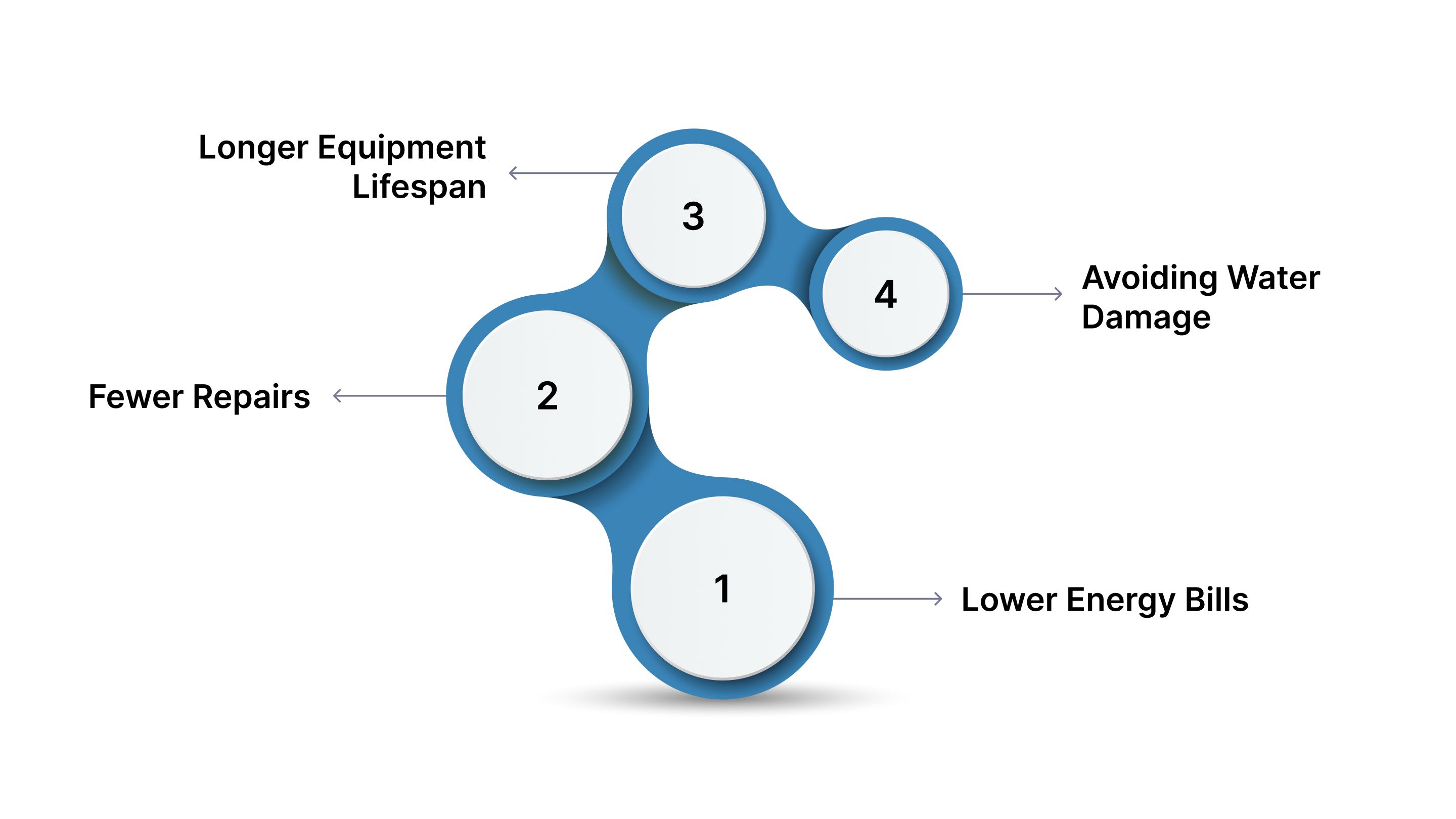
Routine water heater service may seem like an expense, but it pays off in multiple ways. Regular maintenance reduces energy use, prevents breakdowns, and extends the life of your system, saving you money in both the short and long term.
1. Lower Energy Bills
Sediment buildup acts like insulation inside your tank, forcing it to work harder to heat water. A clean, flushed system can reduce energy consumption, keeping your bills manageable even during Austin’s colder months.
2. Fewer Repairs
Minor issues, when ignored, turn into costly emergencies. Regular inspection and flushing prevent corrosion, leaks, and premature heating element failure, the leading causes of expensive repairs.
3. Longer Equipment Lifespan
With proper maintenance, most water heaters last 10–12 years. Neglected units often fail much sooner due to mineral buildup and overheating.
4. Avoiding Water Damage
A failing tank can leak or burst, causing hundreds, even thousands, in water damage. Annual service helps catch small leaks early, protecting your property and wallet.
Pro Tip: Combine your water heater service with your annual HVAC maintenance appointment. It saves time, reduces service costs, and keeps your home running efficiently from season to season.
Tank vs. Tankless Water Heater Maintenance
Not all water heaters require the same care. Whether you have a traditional tank model or a modern tankless system, each type has unique maintenance needs. Knowing the difference helps you keep your system efficient and long-lasting.
Tank Water Heaters
Traditional tank models store and heat water continuously, which makes them more vulnerable to sediment buildup, a major concern in Austin’s hard-water areas.
Key maintenance steps include:
Annual tank flushing to remove mineral deposits
Anode rod inspection and replacement every 3–5 years
Thermostat calibration to maintain safe, efficient operation
Checking pressure relief valves and seals for leaks
Regular flushing is especially important for Austin homeowners, where high mineral content can reduce tank capacity and heating efficiency in as little as a year.
Tankless Water Heaters
Tankless systems heat water on demand, offering space savings and energy efficiency, but they’re not maintenance-free.
Essential annual services include:
Descaling the heat exchanger to remove mineral buildup
Cleaning the air intake and water filters
Inspecting sensors and flow control valves
Verifying venting and exhaust systems
Even though tankless models don’t store water, Austin’s hard water can clog internal passages and reduce flow if not descaled regularly.
Pro Tip: Have your technician perform a complete descaling at least once a year for tankless units, or twice yearly if your home doesn’t use a softener.
Annual Maintenance Schedule for Austin Homes
Timing your maintenance can make a big difference in performance and convenience. For most Austin homeowners, one annual water heater service is enough, ideally scheduled during early fall, before the colder months.
Here’s a simple guide to keeping your system in top condition year-round:
Spring to Summer:
Check for leaks and corrosion around fittings.
Drain a few gallons of water to remove light sediment.
Verify thermostat settings (120°F is ideal).
Early Fall (Annual Professional Service):
Schedule your complete water heater inspection and flush.
Have your technician test the pressure relief valve and inspect the anode rod.
For tankless units, request a descale service.
Combine your water heater and HVAC tune-up to save time and ensure overall system efficiency.
Winter:
Inspect for condensation or unusual noises.
Avoid turning the temperature above 125°F to prevent scalding and energy waste.
Consistent maintenance keeps your water heater efficient, prevents surprises, and ensures you always have hot water, even during Austin’s unpredictable temperature swings.
Why Austin Homeowners Trust Abba HVAC for Water Heater Service
At Abba HVAC, we have been serving Austin and the surrounding communities since 2007. Our goal is simple: to keep your home comfortable, efficient, and worry-free year-round.
We don’t just handle heating and cooling systems. We also provide comprehensive plumbing services, including water heater maintenance, repair, and replacement.
Whether you have a traditional tank or a tankless model, our licensed technicians understand exactly how Austin’s hard water affects performance and lifespan.
Each service visit is designed to deliver dependable results.
We inspect every key component for safety and efficiency.
We perform full flushes or descaling as needed.
We test valves, thermostats, and anode rods to ensure your water stays hot and your system runs efficiently.
Our maintenance plans are flexible and built around your schedule, not ours. You choose the timing, and we handle the rest with dad-level care and professional-grade service.
Conclusion
Your water heater works hard every day, often without much attention. But in Austin’s hard-water conditions, skipping annual service can lead to rising energy bills, rust, and even early system failure.
A quick yearly appointment keeps your system efficient, extends its lifespan, and ensures dependable hot water when you need it most.
Regular service is not just maintenance, it’s protection for your comfort, home, and wallet.
Trust Abba HVAC to handle your annual water heater maintenance with care, expertise, and attention to detail that only comes from years of local experience.
Ready to schedule your annual water heater service?
Contact Abba HVAC today to book your inspection and enjoy consistent hot water all year long.
FAQs
1. How often should I service my water heater?
We recommend scheduling a professional inspection and flush once every 12 months. Austin’s hard water causes mineral buildup that requires consistent cleaning.
2. What happens if I skip maintenance?
Skipping maintenance allows sediment to collect, reducing heating efficiency and leading to higher energy bills or early tank failure.
3. How long does a water heater last with regular maintenance?
With annual service, most water heaters last 10–12 years. Tankless units can last up to 20 years with proper descaling.
4. Can I perform water heater maintenance myself?
You can do light tasks such as checking the thermostat and draining a few gallons of water. A licensed professional should always handle full flushing and component checks.
5. Do you service both tank and tankless water heaters?
Yes. We maintain and repair both types of systems across Austin and Central Texas. We also provide replacement options if your system is nearing the end of its lifespan.