Your HVAC system is one of the most important investments in your home; it keeps temperatures comfortable and air quality healthy year-round. But like any piece of equipment, it won’t last forever. Over time, efficiency drops, repairs become more frequent, and energy costs climb.
Meanwhile, the global HVAC market continues to grow rapidly, valued at $157.71 billion in 2023 and projected to reach $228.74 billion by 2030, expanding at a 5.5% CAGR. This surge reflects how homeowners are increasingly investing in energy-efficient replacements over costly repairs.
In this guide, we’ll help you understand when it’s time to replace your HVAC system, what signs to look for, and how a timely upgrade can improve comfort, reliability, and long-term savings.
Need to know
The global HVAC market is growing fast, projected to reach $228.74 billion by 2030, showing how essential system upgrades are becoming.
Six key signs include uneven temperatures, loud noises, poor airflow, and rising maintenance costs.
New HVAC technologies like smart thermostats and variable-speed systems enhance comfort and cut energy use.
The best time to replace is during the spring or fall to avoid the peak-season rush.
Partner with Abba HVAC for expert installation and tailored energy-efficient solutions across Texas.
How Long Does an HVAC System Last?
On average, an HVAC system lasts 10 to 20 years, depending on several factors, including brand quality, installation precision, and routine maintenance.
Systems that are professionally installed and receive annual tune-ups often reach or exceed the 20-year mark, while neglected units may fail closer to 10 years.
High-efficiency and ENERGY STAR®-rated systems not only last longer but also consume up to 15% less energy than standard models, making early replacement a financially smart choice.
6 Signs It’s Time to Replace Your HVAC System
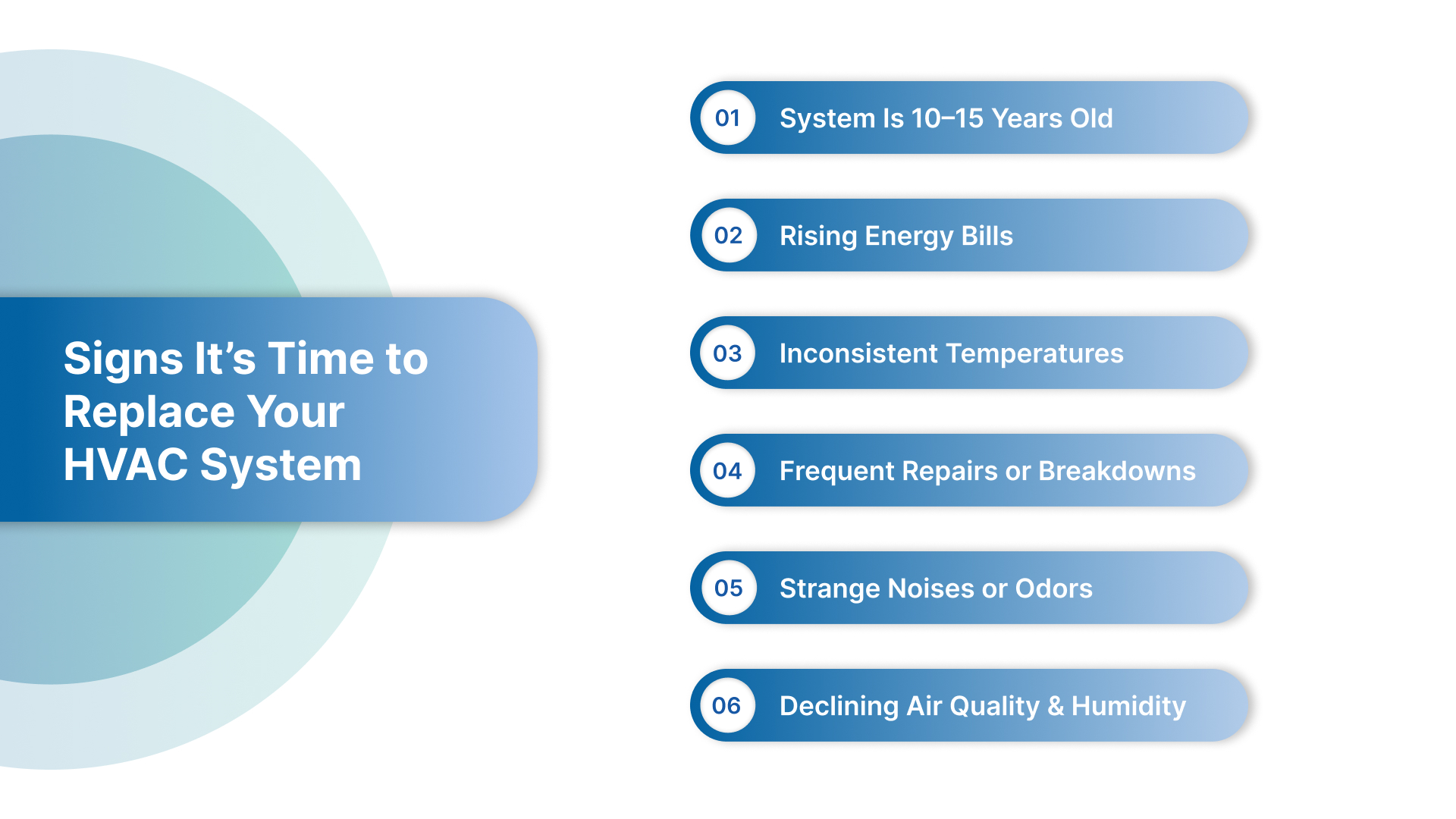
Even with regular maintenance, HVAC systems eventually reach a point where repairs and higher energy bills outweigh the benefits. Recognizing the warning signs early helps you plan an upgrade before breakdowns hit.
Here are key indicators that it may be time to replace your HVAC system:
1. Your System Is Over 10–15 Years Old
Most HVAC units are designed to last between 10 and 20 years. However, once your system crosses the 15-year mark, its efficiency often starts to decline. Older systems use outdated technology and may not meet current energy-efficiency standards, leading to higher bills and reduced comfort. If your unit is approaching this age, and repairs are becoming frequent, replacement is often the more cost-effective option.
2. Energy Bills Are Consistently Rising
A sudden or gradual increase in your energy bills, even when your usage hasn’t changed, is a major red flag. It usually means your HVAC system is working harder to maintain the same temperature due to worn components or reduced efficiency. Upgrading to a modern ENERGY STAR®-certified unit can lower energy costs by up to 20–30%.
3. Uneven Temperatures or Poor Airflow
If some rooms in your home are too hot while others stay cold, your HVAC system may be struggling with airflow or failing components. This imbalance can indicate issues with the compressor, ductwork, or thermostat, all of which might mean your system can no longer circulate air efficiently.
4. Frequent Repairs or Breakdowns
Needing multiple repairs each year is a strong indicator that your HVAC unit is nearing the end of its lifespan. As systems age, major parts like compressors, motors, and coils start to fail more often. If repair costs add up to more than half the price of a new system, replacement is the smarter long-term choice.
5. Strange Noises or Odors During Operation
Banging, rattling, or hissing sounds can indicate loose or failing internal components. Musty or burning odors may point to electrical issues, mold growth, or overheating parts. These are not just comfort concerns; they can signal serious safety hazards that warrant immediate inspection and possibly a system replacement.
6. Declining Indoor Air Quality and Humidity Control
Older HVAC systems often struggle to filter dust, allergens, and humidity effectively. If you notice more dust buildup, worsening allergies, or sticky indoor air, it’s a sign your unit is no longer maintaining proper indoor air balance. A newer system with upgraded filtration and humidity control can significantly improve air quality and comfort.
If you’re noticing one or more of these signs, it’s time to have a professional assess your system’s health. A proactive replacement not only prevents unexpected breakdowns but also improves efficiency, air quality, and long-term savings.
Want a more efficient, reliable HVAC system? Trust the licensed experts at Abba HVAC for seamless installation, energy-smart upgrades, and year-round comfort.
Schedule your consultation online.
Let’s break down how to decide whether repairing or replacing your HVAC system makes the most sense.
Repair vs. Replace: How to Decide What’s Right for You
Not every HVAC problem means you need a full replacement, but when issues become frequent or costly, it’s worth comparing the numbers before calling for another repair.
Once you start noticing performance issues, the big question becomes whether to repair your existing system or invest in a new one. The answer depends on several key factors, cost, age, efficiency, and long-term comfort.
Here’s how to evaluate your options:
System age: If your HVAC system is under 10 years old and has been regularly maintained, repair might make sense. For systems older than 15 years, replacement is often the more cost-effective path.
Repair cost vs. replacement value: A general rule of thumb, if a repair costs more than 50% of the price of a new unit, it’s wiser to replace it. Frequent service calls add up fast.
Energy efficiency: Older systems often run below 13 SEER, while modern models reach 16 SEER and higher, cutting energy bills by up to 30–40%. Upgrading to an ENERGY STAR® unit pays off in the long run.
Comfort level: If some rooms feel too hot while others stay cold, your system’s airflow and duct design may be outdated. A new system with variable-speed technology can balance indoor comfort more effectively.
Environmental impact: Newer HVAC units use eco-friendly refrigerants and operate more efficiently, reducing your carbon footprint while improving indoor air quality.
Considerations for a New HVAC System
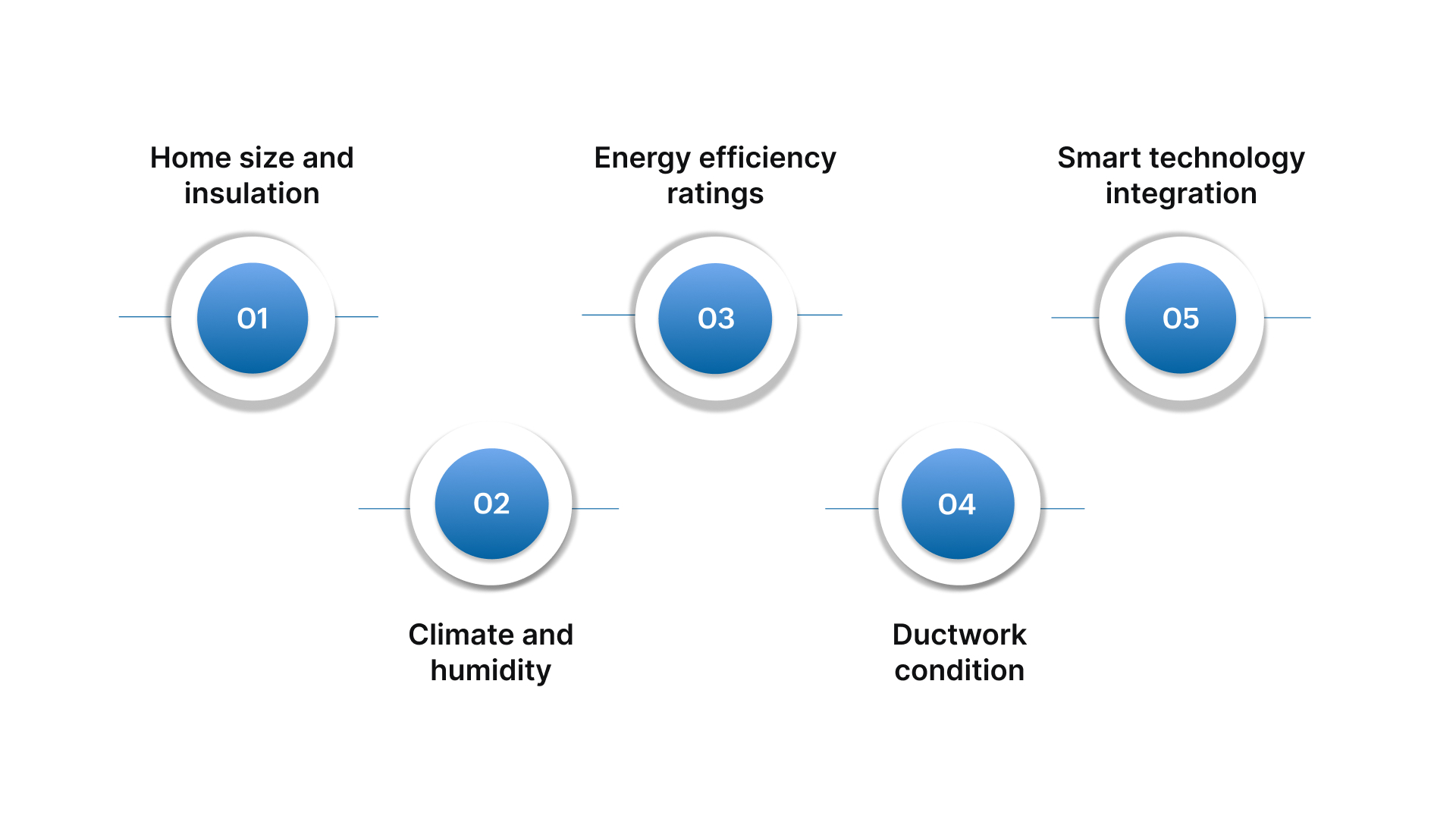
Before investing in a new HVAC system, taking time to evaluate a few key factors ensures your purchase delivers lasting comfort and efficiency.
Home size and insulation: The right system capacity depends on your home’s square footage and insulation. Undersized units overwork; oversized ones short-cycle, wasting energy.
Climate and humidity: Homes in humid or extreme climates may need advanced humidity control or dual-stage systems for balanced comfort.
Energy efficiency ratings: Look for ENERGY STAR®-certified systems with high SEER (cooling) and AFUE (heating) ratings to maximize performance and reduce long-term energy costs.
Ductwork condition: Replacing an HVAC unit without checking the ducts can reduce efficiency. A quick duct inspection can reveal leaks or blockages that affect performance.
Smart technology integration: Modern systems often pair with smart thermostats for better control, remote monitoring, and reduced energy waste.
Each of these considerations helps ensure your replacement system fits your home’s needs, not just for today, but for years to come.
Before moving forward with installation, it’s essential to work with professionals who understand your system’s specific needs and can deliver reliable, long-term comfort. That’s where a trusted local expert like Abba HVAC makes all the difference.
Abba HVAC: Your Reliable Partner for HVAC Replacement and Efficiency
Choosing the right HVAC contractor can make or break your system’s performance and lifespan. With years of experience and a commitment to energy-efficient solutions, Abba HVAC ensures your replacement is done right, from evaluation to installation.
Here’s what sets them apart:
Licensed & Insured Professionals: Abba HVAC holds all necessary Texas licenses and insurance, ensuring your replacement meets top industry standards.
Comprehensive Expertise: From HVAC installation to ductwork optimization and electrical support, Abba provides end-to-end comfort solutions.
24/7 Availability: Whether it’s an urgent breakdown or planned replacement, their team is always ready to help when you need it most.
Local Knowledge, Personalized Service: Based in Central Texas, Abba understands local weather demands, delivering systems designed for your region’s unique climate.
Efficiency-Driven Results: Every replacement focuses on reducing energy waste, lowering utility bills, and enhancing overall comfort.
With Abba HVAC, you get more than just a system replacement; you get trusted craftsmanship, lasting reliability, and peace of mind that your comfort is in expert hands.
Smart Upgrades: Modern HVAC Technologies to Consider
Modern HVAC systems have evolved far beyond basic heating and cooling. Today’s technology offers smarter, quieter, and more energy-efficient options that can make a real difference in comfort and cost. When planning a system replacement, it’s worth exploring these key innovations:
Smart thermostats: These devices provide precise temperature control and can automatically adjust settings based on your habits. Many models also integrate seamlessly with smart home systems, helping you save energy without sacrificing comfort.
Zoned HVAC systems: By dividing your home into separate zones, these systems let you heat or cool specific areas independently. That means you can keep commonly used rooms comfortable while saving energy in unused spaces.
Variable-speed units: Unlike traditional single-speed systems, variable-speed compressors and blowers adjust output to meet your home’s exact needs. This ensures consistent temperatures, quieter operation, and improved energy efficiency, all while extending the lifespan of your HVAC equipment.
Together, these advancements make modern HVAC systems smarter, greener, and far more adaptable to your home’s comfort goals.
Final Words
Replacing your HVAC system is a big decision, but when done at the right time, it delivers lasting comfort, efficiency, and savings. A new, high-efficiency unit not only keeps your home’s temperature balanced but also cuts down on monthly energy bills, improves air quality, and eliminates the stress of frequent breakdowns.
When it’s time to replace your HVAC system, Abba HVAC is your trusted partner for professional, energy-efficient solutions. Our licensed experts specialize in full-system installations, ductwork upgrades, and smart home integrations designed for long-term comfort and performance.
Contact Abba HVAC today to schedule your replacement consultation and discover how the right system can transform your home’s comfort, efficiently, reliably, and affordably.
FAQs
1. How long does a typical HVAC system last?
Most HVAC systems last between 10 to 20 years, depending on maintenance, usage, and environmental conditions. Regular servicing can extend the lifespan by several years.
2. Is it better to repair or replace my HVAC system?
If repairs cost more than 50% of a new system’s price, or your system is over 10–15 years old, replacement is usually more cost-effective in the long run.
3. Can replacing my HVAC system lower my energy bills?
Yes. Newer, ENERGY STAR®-certified systems can reduce energy bills by 20–30% compared to older, inefficient units.
4. What time of year is best for HVAC replacement?
The spring or fall is ideal since HVAC technicians have more availability, and you can avoid peak-season pricing in summer or winter.
5. How do I choose the right HVAC system for my home?
Consider your home’s size, climate, ductwork condition, and energy goals. A licensed HVAC professional can perform a load calculation to recommend the right system capacity and efficiency rating.