If your air conditioner has been running for years and doesn’t cool like it used to, it may be time to think about a replacement. Older AC units often work harder to deliver the same comfort, leading to higher energy bills, frequent repairs, and inconsistent temperatures.
Knowing when to replace your air conditioning system can save you time, money, and frustration, especially before the peak summer months. In this guide, we’ll help you understand the signs of an aging unit, when repairs stop being worth it, and what to consider when choosing a new, efficient replacement.
A quick summary
Average Lifespan: Most air conditioners last 10–15 years, depending on maintenance, usage, and environment.
Replacement Signs: Frequent breakdowns, uneven cooling, rising energy bills, or outdated refrigerants (like R-22) signal it’s time to replace.
Energy Savings: Upgrading to a high-efficiency AC can cut cooling costs by 20–40%, according to the U.S. Department of Energy.
More Than Savings: Newer units offer better comfort, quieter operation, improved air quality, and higher home resale value.
Professional Help Matters: Licensed experts like Abba HVAC ensure proper installation, long-term efficiency, and reliable performance.
How Long Do Air Conditioners Last?
Every air conditioner has a lifespan, and knowing where yours stands helps you plan. On average, most systems perform reliably for over a decade, but several factors can extend or shorten their life expectancy. Regular maintenance, climate, and how often it runs all play a major role.
Here’s a general guide to how long different air conditioning units last:
Central air conditioners: Typically last 12–15 years with consistent maintenance.
Ductless mini-splits: Can run efficiently for 15–20 years, especially in mild climates.
Window and portable units: Usually last 8–10 years, depending on usage and care.
Heat pump systems: Average lifespan of 10–15 years, though heavy use can shorten this.
Keeping up with seasonal tune-ups and cleaning filters regularly can help your unit last closer to the upper end of its range, and delay the need for a costly replacement.
If your AC is nearing the end of its expected lifespan, it’s time to pay attention to how it’s performing. Subtle changes in comfort, energy bills, or noise could be early warning signs that your system is wearing out.
Let’s look at some common signs your air conditioner is too old to repair.
Signs Your Air Conditioner Is Too Old to Repair
As air conditioners age, performance tends to decline gradually rather than all at once. Recognizing the early signs of failure helps you plan a replacement before you’re left without cooling in the middle of summer.
Here are some of the most telling indicators your AC might be reaching the end of its life:
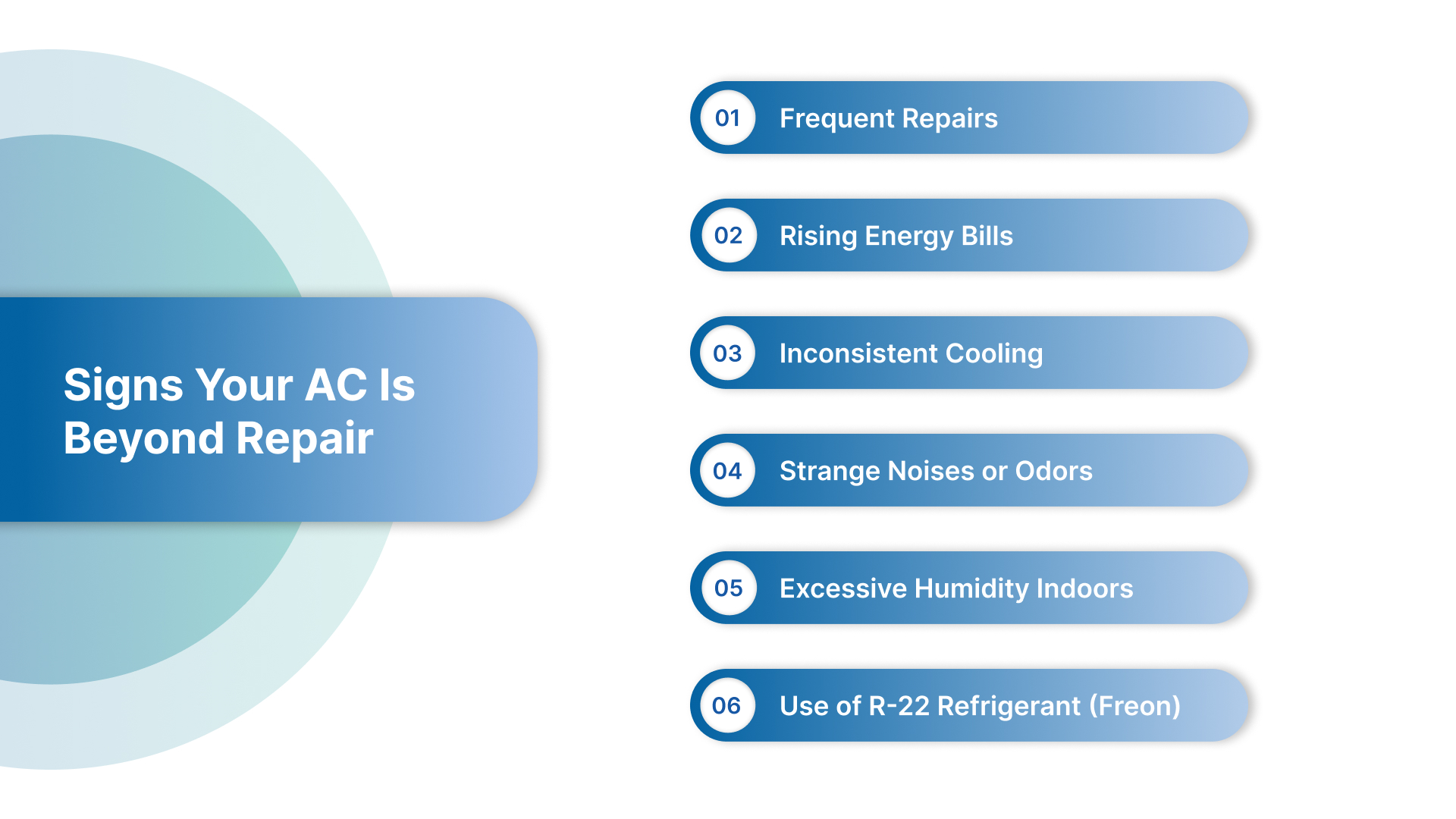
1. Frequent Repairs
If your air conditioner needs repairs more than once or twice a year, it’s a red flag. Aging systems often develop multiple failing components, such as compressors, capacitors, or fan motors, and repair costs can quickly add up. When repairs total more than half the cost of a new unit, replacement usually makes more financial sense.
2. Rising Energy Bills
An old AC unit works harder to maintain the same temperature, which increases energy consumption. Even if your usage habits haven’t changed, a steady rise in electricity bills can signal your system is losing efficiency due to worn-out parts or refrigerant leaks.
3. Inconsistent Cooling
Uneven temperatures across rooms or weak airflow could mean your unit is struggling to distribute air properly. This often happens when components like coils or blowers degrade, or when ductwork is no longer tightly sealed, both common issues in older systems.
4. Strange Noises or Odors
Banging, rattling, or screeching noises indicate mechanical wear, while musty or burning smells may signal mold growth or electrical problems. These issues tend to worsen with age and are often not worth repairing on older equipment.
5. Excessive Humidity Indoors
Air conditioners don’t just cool, they also help control humidity. When an older unit can’t remove moisture effectively, your home may feel sticky or uncomfortable, suggesting the evaporator coil or drainage system isn’t performing efficiently anymore.
6. Use of R-22 Refrigerant (Freon)
If your AC still relies on R-22, it’s outdated. This refrigerant has been phased out due to environmental concerns, and servicing such systems is expensive since R-22 is no longer manufactured. Replacing the unit with a modern, eco-friendly model is often the best option.
Ready for Reliable Comfort All Year Long? Don’t wait for your system to break down before acting. Whether it’s a replacement, tune-up, or new installation, Abba HVAC delivers expert solutions tailored to your home’s needs.
5 Factors to Consider Before Replacing Your Air Conditioner
Replacing your air conditioner is a major investment, so it’s important to evaluate a few key factors before making the decision. Understanding your system’s current condition, energy efficiency, and overall comfort impact can help ensure you choose the best long-term solution.
Age of the Unit: If your AC is more than 10–15 years old, it’s nearing the end of its expected lifespan. While proper maintenance can extend its life, newer models offer significantly better efficiency and reliability that justify the upgrade.
Repair Costs vs. Replacement Costs: A good rule of thumb: if repairs cost more than 50% of a new system, replacement is usually the smarter choice. Ongoing small fixes can also add up over time; investing in a modern unit can prevent repeated expenses and unexpected breakdowns.
Energy Efficiency (SEER Rating): The Seasonal Energy Efficiency Ratio (SEER) measures how efficiently your AC operates. Older units might have SEER ratings as low as 8–10, while newer systems reach 15–25+, offering up to 40% energy savings and lower monthly bills.
Home Comfort and Air Quality: If your system struggles to maintain consistent cooling, or if humidity and air quality are ongoing problems, it might not be sized or configured correctly. Modern systems include features like variable-speed fans and improved filtration for better comfort and air purity.
Environmental Impact: Newer air conditioners use eco-friendly refrigerants like R-410A or R-32, which reduce carbon emissions and are compliant with current environmental standards. Replacing older R-22-based systems is not just practical, it’s environmentally responsible.
Old vs. New AC: Which One Saves You More?
Air conditioning systems have come a long way in the past decade. Modern units are built with advanced compressors, eco-friendly refrigerants, and smart controls that outperform older models in every category, from cooling speed to energy efficiency.
Older ACs, especially those with low SEER ratings or outdated refrigerants like R-22, struggle to keep up with today’s comfort and environmental standards. They not only consume more electricity but also require more frequent maintenance as internal components wear down over time.
How Much Can a New AC Unit Save You?
The short answer? A lot.
According to the U.S. Department of Energy, homeowners can save between 20% and 40% on cooling costs by replacing an old air conditioner with a high-efficiency model.
Here’s a quick look at potential savings:
System Type | Estimated Annual Cooling Cost |
10 SEER (Old Unit) | $1,200+ |
16 SEER (New Unit) | $900 |
20+ SEER (Top-Tier) | $700 or less |
These savings add up year after year, especially in regions with long, hot summers where your AC works hardest.
Benefits of Replacing Your Old Air Conditioner
Upgrading your air conditioning system is more than just a comfort upgrade; it’s an investment in your home’s value, energy efficiency, and peace of mind.
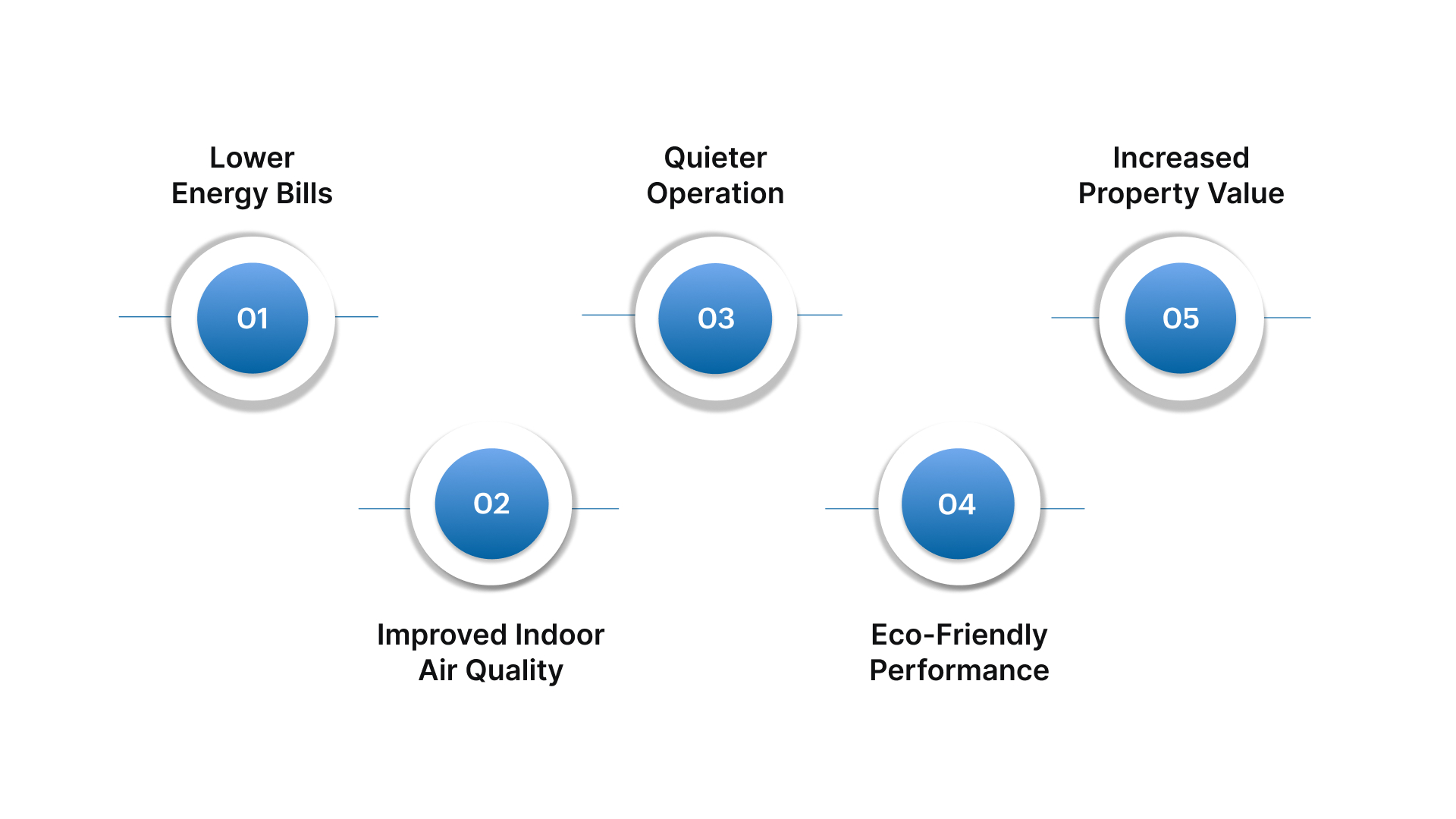
Lower Energy Bills: High-efficiency units use advanced compressors and fan motors to deliver the same cooling power with less electricity. Over time, this can lead to substantial savings on monthly utility costs.
Improved Indoor Air Quality: Modern systems include better filtration and humidity control, helping reduce allergens, mold, and dust for a cleaner, healthier indoor environment.
Quieter Operation: Newer models are designed for noise reduction with insulated compressor compartments and variable-speed technology, making your home more peaceful.
Eco-Friendly Performance: Switching to systems that use R-410A or R-32 refrigerant helps reduce your carbon footprint and ensures compliance with environmental regulations.
Increased Property Value: Energy-efficient HVAC systems appeal to homebuyers and can raise the overall resale value of your property, a win for both comfort and return on investment.
Once you’ve recognized the signs and decided to upgrade, the next step is choosing a trusted HVAC partner who can ensure your new system is installed correctly and performs at its peak from day one. That’s where Abba HVAC comes in.
Abba HVAC: Your Trusted Partner for AC Replacement and Installation
When it’s time to replace your old air conditioning system, you need more than just equipment; you need a reliable partner who understands how to design and install it for long-term comfort and efficiency. That’s exactly what Abba HVAC delivers.
Here’s what makes them the right choice for your next AC upgrade:
Licensed and Insured Professionals: Serving Texas since 2007, Abba HVAC is fully licensed and insured, ensuring every installation meets safety and performance standards.
Local Expertise: Their team understands the unique cooling challenges of Texas homes and tailors every system to handle extreme summer temperatures efficiently.
Energy-Efficient Solutions: From SEER 16 to top-tier SEER 22 systems, Abba HVAC helps you choose units that lower energy bills and improve comfort.
Comprehensive Services: Beyond AC installation, they also handle ductwork, thermostat upgrades, and preventive maintenance to keep your system running flawlessly.
24/7 Availability: Whether it’s a sudden breakdown or an emergency installation, their round-the-clock service ensures you’re never left without cooling.
Customer-Focused Care: With over 20 years of industry experience, their team prioritizes transparency, quality workmanship, and long-term customer satisfaction.
With Abba HVAC, you’re not just replacing an old system, you’re upgrading to comfort, reliability, and peace of mind that lasts for years.
Smarter and Greener: Energy-Saving Features in Modern AC Systems
Today’s air conditioners are built to do more with less, less energy, less noise, and less environmental impact. Here are some of the key innovations driving modern efficiency:
Variable-Speed Compressors: Instead of running at full capacity all the time, variable-speed compressors adjust output based on your home’s cooling needs. This means steadier comfort, quieter operation, and significantly lower energy use.
Smart Thermostat Integration: Modern AC systems pair seamlessly with smart thermostats, allowing you to set schedules, track usage, and adjust temperatures remotely, all from your phone. It’s convenience and savings in one touch.
Eco and Energy-Saver Modes: Many systems now include eco-friendly modes that automatically balance performance with power consumption, helping you stay comfortable without inflating your energy bills.
Advanced Air Filtration and Humidity Control: New air conditioners aren’t just efficient; they also improve indoor air quality. Multi-stage filtration and humidity regulation keep the air cleaner, healthier, and more balanced.
ENERGY STAR® Certified Efficiency: AC units with the ENERGY STAR® label meet rigorous EPA standards for efficiency, guaranteeing you a system that performs better while using up to 15% less energy than standard models.
Final Thoughts
Replacing an old air conditioning unit isn’t just a maintenance decision; it’s an investment in your home’s comfort, efficiency, and future savings. With the latest technology, modern systems deliver quieter operation, better cooling, and long-term reliability that older models simply can’t match.
If your AC is showing signs of wear or falling behind on performance, now’s the perfect time to explore your options and enjoy a cooler, more efficient home. With Abba HVAC makes replacing your air conditioner simple, transparent, and stress-free. From helping you choose the right high-efficiency system to expert installation and 24/7 support, our licensed professionals handle it all.
Call us today or schedule your consultation online to experience the difference of a properly installed, energy-saving AC system, built for Texas comfort and built to last.
FAQs
1. How long do air conditioners usually last?
Most AC units last between 12 to 15 years with regular maintenance. However, lifespan varies depending on usage, climate, and how well the system has been cared for over the years.
2. What’s the best time of year to replace an old AC unit?
Spring or early fall is ideal, demand is lower, contractors have more availability, and you can avoid delays before peak summer heat.
3. Can replacing my old AC really lower my energy bills?
Yes. Upgrading to a high-efficiency system can reduce cooling costs by 20–40%, especially if your current unit is over a decade old.
4. Should I replace my furnace when I replace my AC?
If your furnace is also aging or inefficient, replacing both together ensures better compatibility, energy efficiency, and long-term cost savings.
5. How do I know what size AC unit my home needs?
Proper sizing depends on your home’s square footage, insulation, and layout. A professional HVAC technician can perform a load calculation to determine the right system capacity for optimal performance.