_____________________________________________________________________
Is your water heater frequently running out of hot water when you need it most? This common issue can lead to frustration, especially in households with high hot water demands. The limitations of traditional water heaters often become evident during peak usage times.
Tankless water heaters offer a modern solution, providing hot water on demand without the need for a bulky storage tank. In fact, the U.S. The Department of Energy estimates that tankless water heaters can save homeowners up to 34% on energy bills compared to conventional models.
But the question remains: are all tankless water heaters gas? The answer is no, and understanding the differences between gas and electric models is crucial to making the right choice. Let's explore.
Key Takeaways
Gas and electric tankless water heaters have distinct advantages depending on your home's size and water usage.
Gas models are ideal for large homes with high hot water demand, offering better flow rates.
Electric models are easier to install and better for smaller homes or apartments.
Installation and maintenance costs vary, with gas units generally being more expensive upfront but cheaper to operate long-term.
Factors like home size, fuel availability, and water demand will influence your choice of tankless water heater.
What Are Gas Tankless Water Heaters?
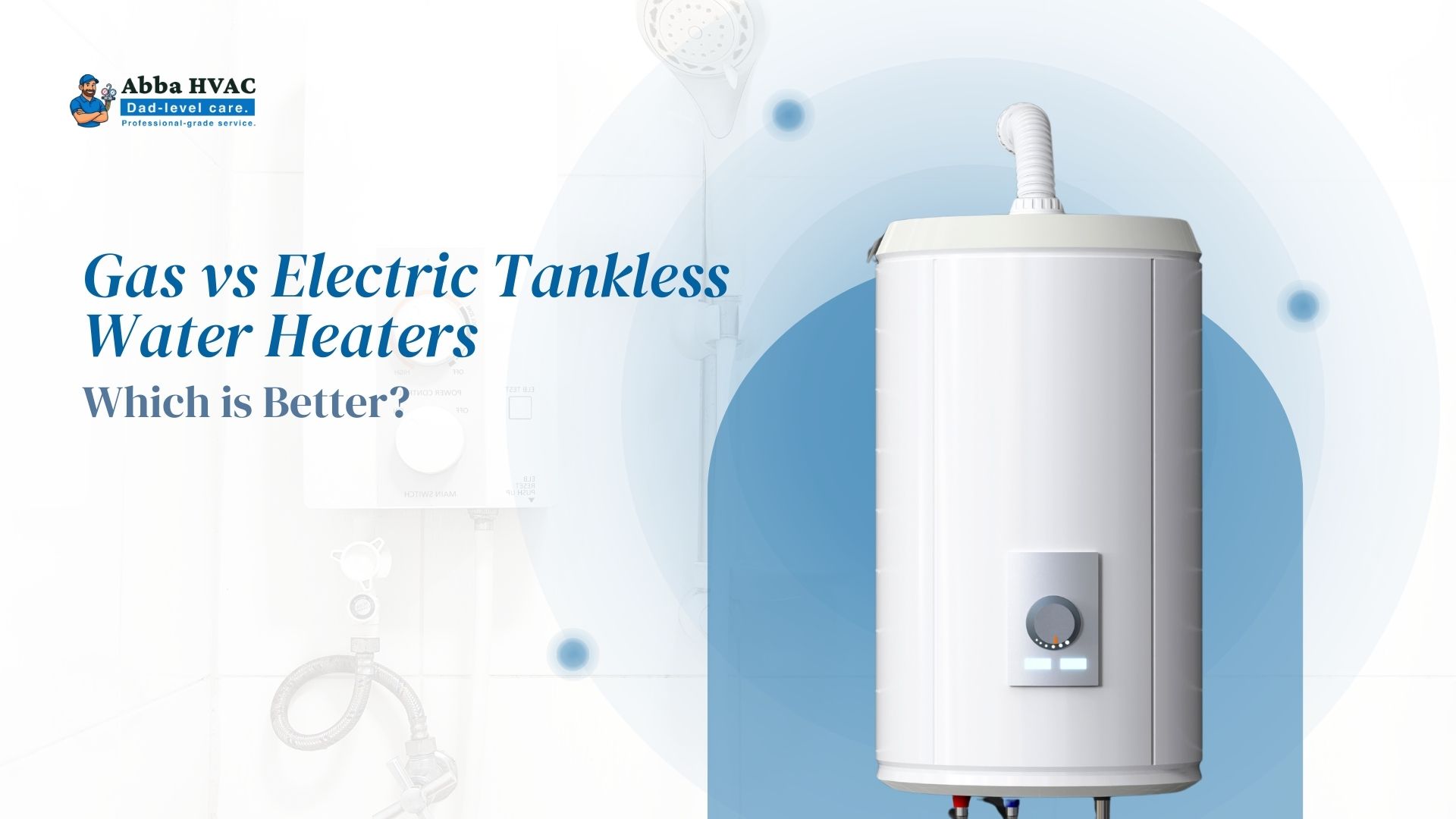
A gas tankless water heater heats water on demand using natural gas or propane. It does not store water but heats it instantly as it passes through the unit, providing continuous hot water. Gas models are ideal for larger households due to their higher flow rates and faster heating capacity.
Next, let's take a look at electric tankless water heaters and how they compare.
What Are Electric Tankless Water Heaters?
An electric tankless water heater uses electricity to heat water as it flows through the unit. It offers a compact design and is easier to install compared to gas models, making it ideal for smaller homes or apartments. However, it may have a lower flow rate, especially in high-demand situations.
Now, let's explore the key differences between gas and electric tankless water heaters to help you decide which is right for your home.
Key Differences Between Gas and Electric Tankless Water Heaters
Gas and electric tankless water heaters offer distinct advantages depending on your home's needs.
Here's a comparison of the key differences between the two types:
Feature | Gas Tankless Water Heaters | Electric Tankless Water Heaters |
Energy Source | Natural Gas or Propane | Electricity |
Installation | Requires venting and gas line installation | Easier installation; no venting required |
Flow Rate | High, suitable for larger homes or multiple outlets | Lower, best for small to medium homes |
Energy Efficiency | More efficient for large homes | More efficient for smaller homes |
Upfront Cost | $1,000 - $2,500 (depending on installation complexity) | $400 - $1,200 (depending on unit size) |
Space Requirements | Requires space for venting and gas lines | Compact and space-saving |
Maintenance | Requires periodic vent and gas line checks | Low maintenance, mainly filter checks |
Note: Costs are approximate and can vary depending on the size of the unit, installation requirements, and local utility rates.
Now that you know the key features and costs, let's look at the factors you should consider before switching to a tankless water heater.
Factors to Consider Before Switching to a Tankless Water Heater
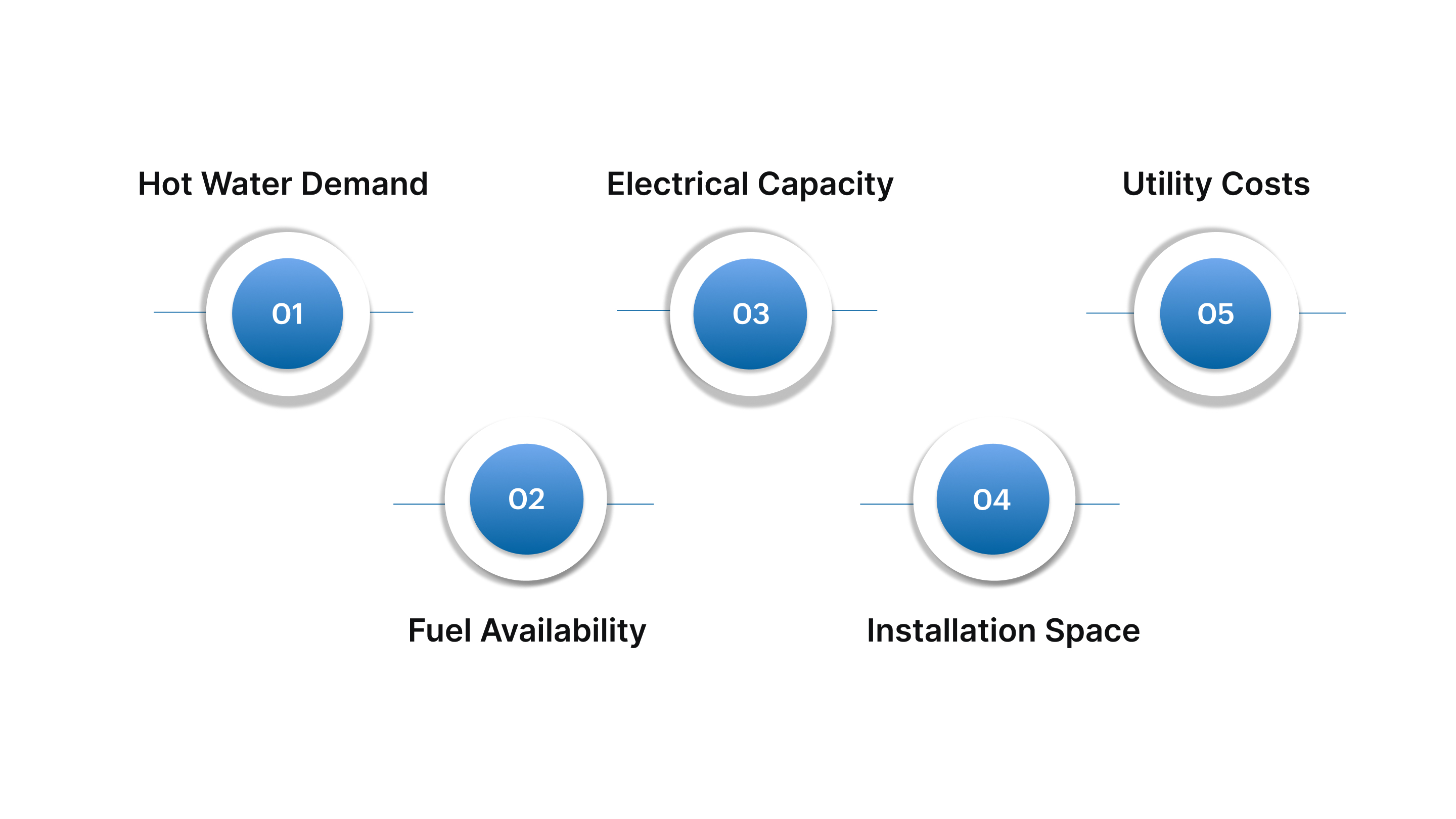
Before switching to a tankless water heater, it's essential to evaluate your specific needs and home requirements. The right choice depends on factors such as your household size, hot water usage, and the availability of fuel sources.
Let's explore the key considerations that will help you make an informed decision.
Hot Water Demand: Assess your household's daily hot water usage. Larger homes or families with multiple bathrooms may benefit from gas-powered units due to their higher flow rates, while smaller homes may find electric models sufficient.
Fuel Availability: Check whether natural gas is available in your area. If not, an electric tankless water heater might be your only option.
Electrical Capacity: Ensure your home's electrical system can handle the high power demand of an electric tankless water heater, especially in larger units.
Installation Space: Consider the space available for installation. Electric models are more compact, while gas units require additional space for venting and gas lines.
Utility Costs: Compare the ongoing operational costs of gas vs electric models. Electric heaters may have higher monthly costs in large homes due to their power consumption.
Now that you've considered these factors, let's take a closer look at the associated costs of both gas and electric tankless water heaters.
Gas vs Electric Tankless Water Heater Associated Costs
When choosing between gas and electric tankless water heaters, it's important to consider more than just the unit's performance. Each type comes with its own set of long-term considerations, including installation and maintenance.
Here's a breakdown of the costs involved:
Cost Type | Gas Tankless Water Heater | Electric Tankless Water Heater |
Upfront Installation Costs | $1,000 - $2,500 | $400 – $1,200 |
Monthly Operational Costs | $20 - $50 | $30 - $70 |
Annual Maintenance Costs | $150 - $300 | $100 - $200 |
Note: Costs are approximate and can vary depending on unit size, installation complexity, and local energy prices.
Factors That Influence Tankless Water Heater Costs in 2026:
Home Size & Water Usage: Larger homes or families need higher flow rates (GPM).
Fuel Type: Electric models cost less upfront, but gas models are more cost-effective for large homes.
Installation Location: Difficult-to-reach areas may incur higher labor costs.
New Installation vs Replacement: New installations are typically more expensive due to required upgrades.
Worried about the complexities of installation and ongoing maintenance for your tankless water heater? Abba HVAC provides professional installation and maintenance services, ensuring your system runs efficiently and is properly maintained for years to come.
Now that costs and key factors are clear, let's address some common myths and misconceptions about tankless water heaters.
Common Myths and Misconceptions About Tankless Water Heaters
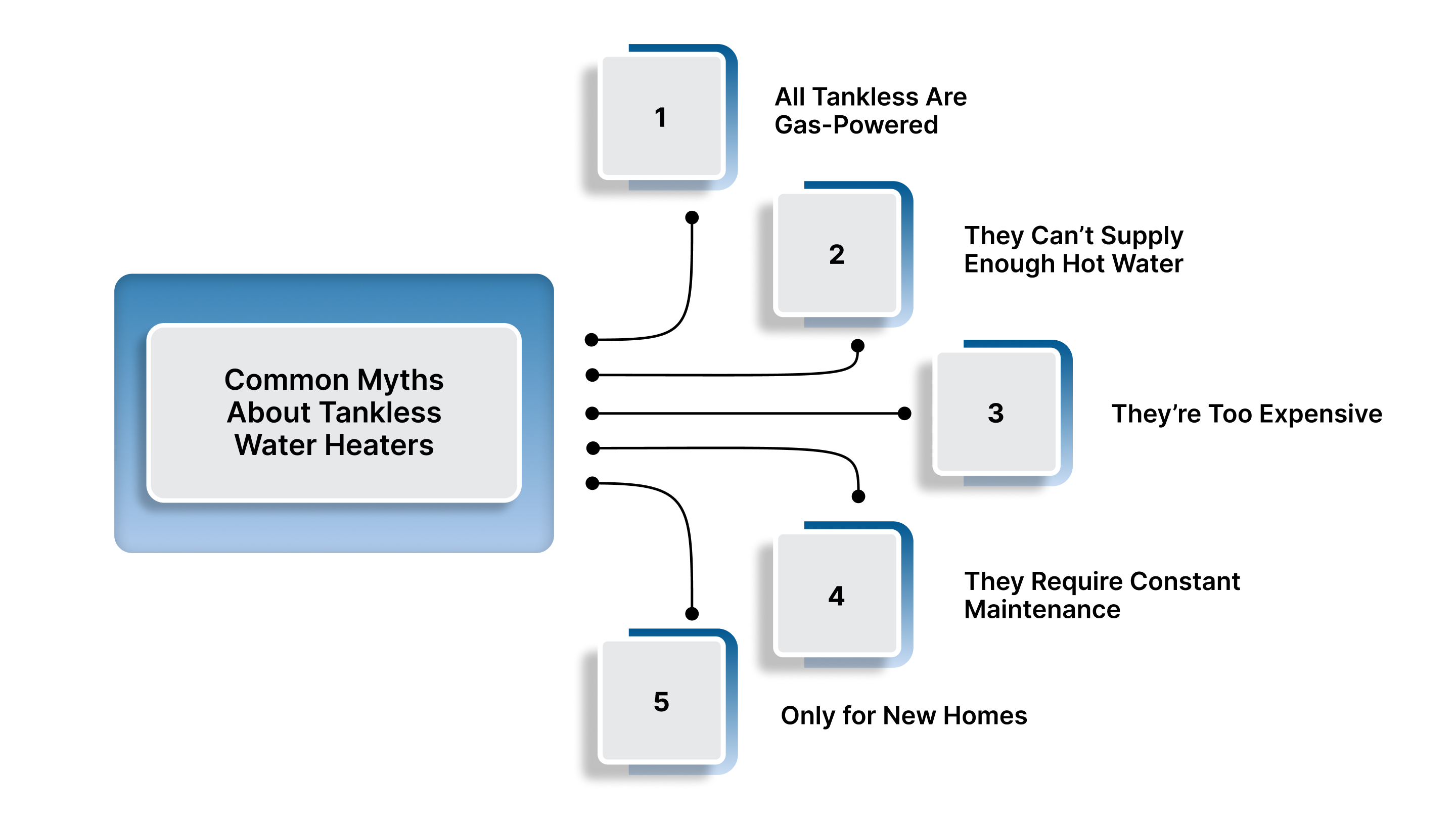
There are several misconceptions about tankless water heaters that can make it difficult for homeowners to make an informed decision. Let's clear up some of the most common myths surrounding these efficient systems.
Myth 1: All Tankless Water Heaters Are Gas-Powered
Fact: Tankless water heaters are available in both gas and electric models. While gas units offer higher flow rates, electric models are easier to install and ideal for smaller homes.
Myth 2: Tankless Water Heaters Can’t Supply Enough Hot Water
Fact: Modern tankless models can provide a steady supply of hot water, with the flow rate (GPM) varying depending on the unit size. Gas units are better for large households with high demand.
Myth 3: Tankless Water Heaters Are Too Expensive
Fact: The initial cost is higher, but tankless units save money in the long run through energy efficiency and reduced maintenance needs.
Myth 4: Tankless Water Heaters Require Constant Maintenance
Fact: Tankless units are low-maintenance compared to traditional water heaters and only need periodic inspections and cleaning.
Myth 5: Tankless Water Heaters Are Only for New Homes
Fact: Tankless water heaters can be installed in older homes with necessary upgrades to plumbing and electrical systems.
Now that these common myths are cleared up, let’s explore why Abba HVAC is the right choice for your tankless water heater installation.
Why Choose Abba HVAC for Your Tankless Water Heater Installation?
Abba HVAC is a full-service HVAC contractor based in Austin, Texas, serving the Greater Austin and Central Texas area, including cities like Cedar Park, Round Rock, Georgetown, Leander, and Pflugerville. With over 15 years of experience, Abba HVAC offers reliable and professional service for both residential and commercial projects.
What Abba HVAC Offers:
24/7 emergency HVAC service, ensuring you get help when you need it most.
Fully licensed and insured since 2007, providing certified and trusted expertise.
Expertise across HVAC, plumbing, and electrical work, making them your one-stop solution.
Preventive maintenance and energy-efficiency programs that help extend the life of your systems and reduce utility costs.
Certified for energy audits and inspections, ensuring your systems are running efficiently and safely.
A dedicated focus on both residential and commercial projects, ensuring personalized solutions for all types of properties.
Choose Abba HVAC for seamless, expert installation and maintenance of your tankless water heater, ensuring optimal performance and peace of mind.
Wrapping Up
Choosing the right tankless water heater, gas or electric, depends on your home's unique needs, including size, water usage, and fuel availability. Both types offer their own set of advantages, but the key is understanding how each aligns with your household's requirements.
Abba HVAC, with years of expertise, ensures expert installation and reliable maintenance for your tankless water heater. Their team is committed to providing efficient solutions personalized to both gas and electric models.
Ready to make the switch? Contact Abba HVAC today to schedule your tankless water heater installation and start enjoying continuous hot water whenever you need it!
FAQs
What is the lifespan of a tankless water heater?
Tankless water heaters typically last 15-20 years with proper maintenance. Regular descaling and filter checks help extend their lifespan. They are more durable than traditional water heaters.
Are tankless water heaters worth the investment?
Tankless units have a higher upfront cost but save on energy bills over time. They only heat water when needed, reducing energy waste. This makes them a cost-effective option in the long run.
How do I maintain my tankless water heater?
Maintenance involves descaling the system annually to remove mineral buildup. Checking filters, vents, and scheduling regular professional inspections will keep the unit running efficiently.
Can a tankless water heater handle multiple fixtures at once?
Yes, tankless units can supply hot water to multiple fixtures simultaneously. Gas units handle higher demand better than electric ones, making them ideal for larger homes.
Do I need a permit to install a tankless water heater?
Most areas require a permit for tankless water heater installation. Permits ensure the installation meets local building codes. A licensed professional can handle the necessary permits and installation.